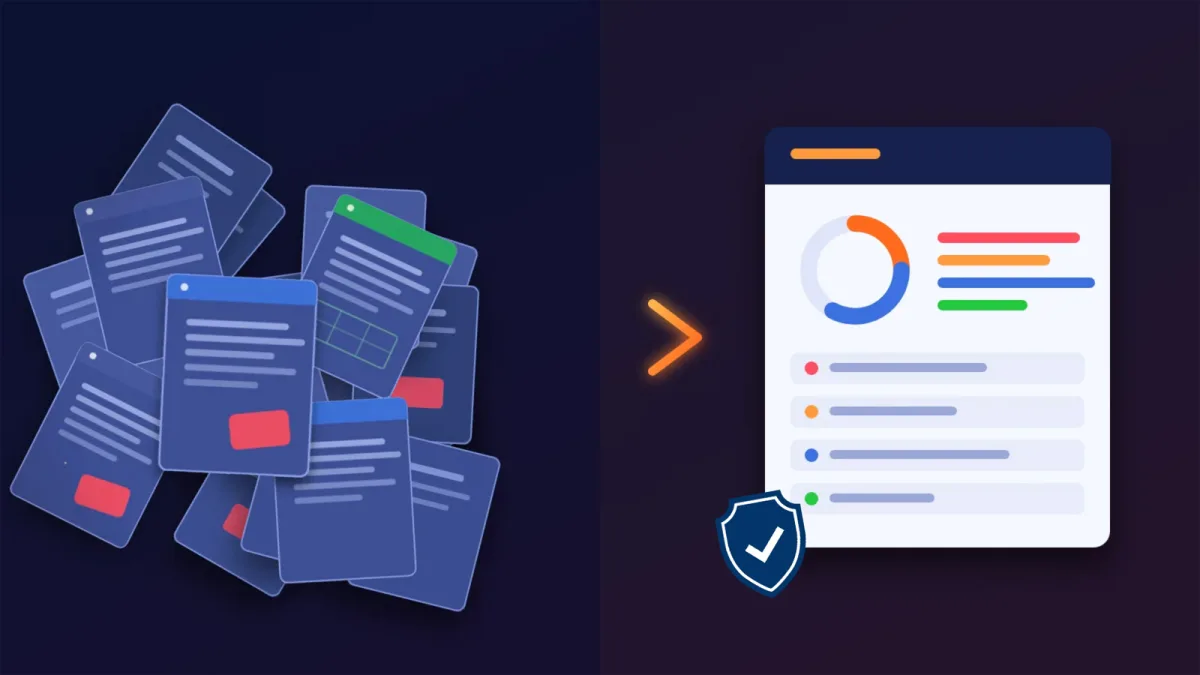
Regulatory mandates like DORA and NIS2, combined with customer security assessments, have driven penetration testing demand to new heights. Yet the market for qualified testers remains constrained, with hiring and training cycles stretching months and experienced professionals commanding premium rates. A significant portion of each engagement goes to tasks beyond actual testing—work that erodes margins for firms billing by the hour.
The challenge is measurable and addressable. By identifying where hours flow during an engagement and determining which tasks suit automation, organizations can deploy AI to handle documentation and report assembly without transmitting client vulnerabilities to external systems. The key is keeping sensitive data within organizational boundaries.
Mapping engagement time allocation
Most testing firms track billable hours but lack visibility into how remaining time distributes across phases. Tagging the last ten engagements by activity typically reveals patterns: finding composition, screenshot capture and formatting consume significant hours, as do report delivery, status communication and retesting cycles.
Two metrics matter most. The first is documentation and review as a percentage of actual testing time—this represents hidden cost. The second is calendar days between the final testing activity and report delivery—this is what clients perceive.
Appropriate tasks for language models
AI excels at work where the tester already possesses the answer and needs it articulated. Suitable applications include:
- Converting tester notes into finding descriptions using organizational vulnerability templates to maintain consistent tone and structure
- Consolidating and deduplicating output from Burp, Nessus, Nuclei and comparable scanners into unified draft findings
- Validating consistency across findings: confirming remediation guidance exists, verifying severity aligns with CVSS vectors, identifying duplicate issues expressed differently
- Generating executive summary drafts from validated findings for human editing
Organizations should establish clear boundaries for human judgment on severity classification, exploit verification and any assertion clients will rely upon as factual. An AI system confidently describing an unvalidated exploit chain poses greater risk than providing no assistance.
Workflow reference model
- Consolidate scanner output and tester notes into a single project as preliminary findings
- Retrieve matching entries from the organization's reusable vulnerability library
- Direct the model to rewrite each draft in house style; tester reviews and approves
- Attach supporting evidence to findings at the moment of discovery
- Senior reviewer examines report comments directly rather than through email chains
- Generate branded output in DOCX, PDF or other formats, or deliver via client portal
- Monitor remediation and retest status within the same findings system
When AI agents participate in the workflow, define their interface precisely rather than granting open-ended access. A typed tool interface such as MCP allows agents to create findings or retrieve project data while maintaining permissions, audit trails and data boundaries within the platform.
Measuring success
- Documentation-plus-review hours as a percentage of testing hours
- Days elapsed from final testing activity to report delivery
- Number of rework cycles per report
The change is working if the first two metrics decline while the third remains stable or improves.
Implementation: PentestPad
PentestPad is a pentest reporting and project-management platform structured around this methodology. It supports 20+ imports from Burp Suite, Nessus, Qualys, Nuclei, OpenVAS and other sources, alongside reusable vulnerability templates, CVSS calculation, custom branded report generation in DOCX, PDF and XLSX formats, a white-label client portal, an AI writing assistant compatible with self-hosted LLMs, an MCP server for agent integration, and deployment options including EU cloud or full self-hosting.
Core capabilities
- EU-based infrastructure or fully self-hosted deployment, including air-gapped environments, on all plans
- AI writing assistant pointing to a self-hosted LLM within your network
- MCP server plus CLI agent for macOS, Linux and Windows
- GDPR compliance and ISO 27001 certification
- Two-way Jira synchronization, REST API and imports from Burp Suite, Nessus, Qualys, Nuclei, OpenVAS, CSV and JSON
Agent-driven operation
PentestPad operates via both human operators and software agents, with the reasoning model residing in your own network. The writing assistant works from existing tester artifacts—scanner output, Burp findings, screenshots or logs—and returns structured findings formatted to your organization's specifications rather than generic templates. PentestPad serves as the knowledge base while a local model handles reasoning, connected through a terminal interface.
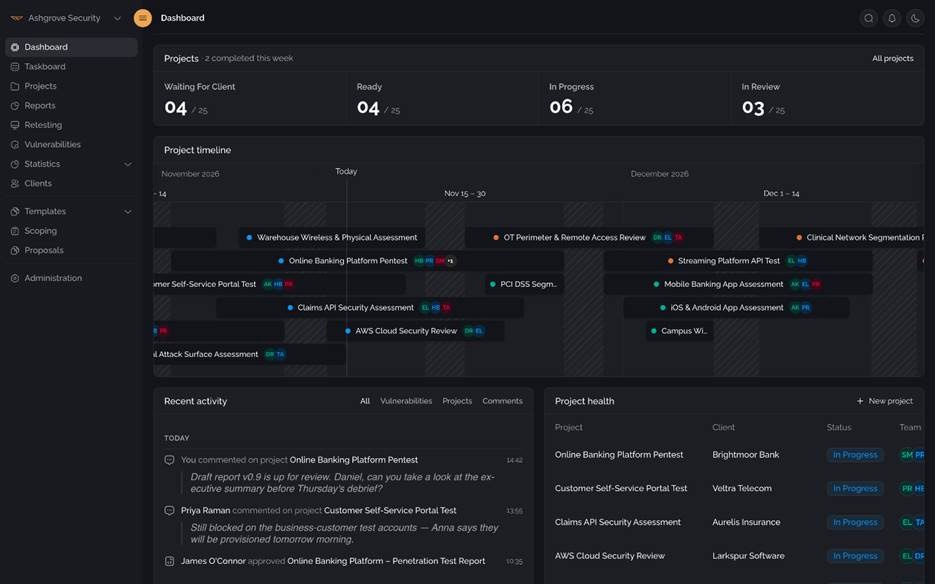
Access to the tested environment's context allows PentestPad to outperform generic automated vulnerability detection tools.
Platform features
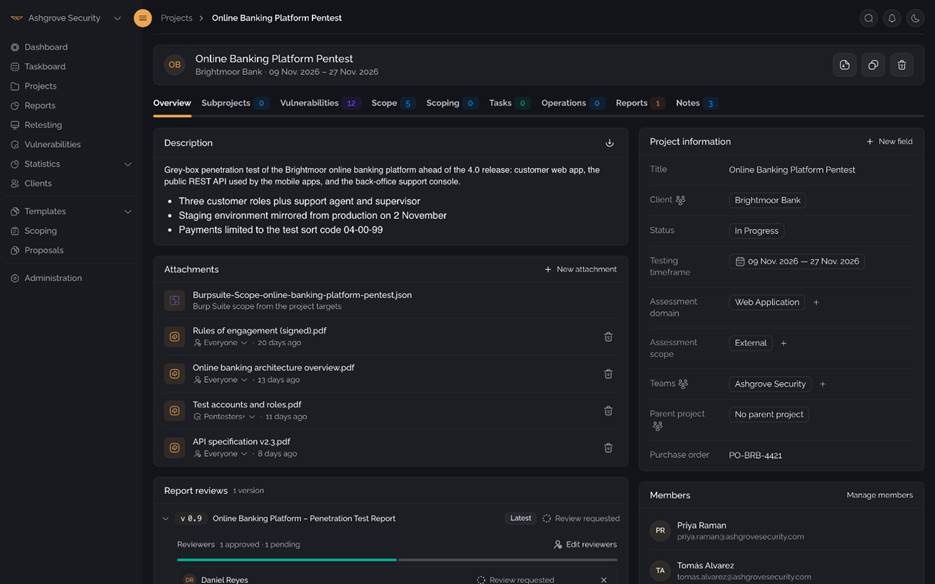
- Reporting: findings entered directly from terminal, custom branded templates, DOCX/PDF/XLSX export, password-protected encrypted PDFs and integrated CVSS calculator
- Proposal management with engagement scoping
- Jira sync: findings become tickets with reproduction steps and priority; developer completion moves findings to retest-ready status, reverting to open if retest fails
- Reusable vulnerability templates with evidence attached at capture time
- CSV and JSON exports; 20-plus imports from industry-standard tools
- Unified project management reducing overhead by approximately 60%
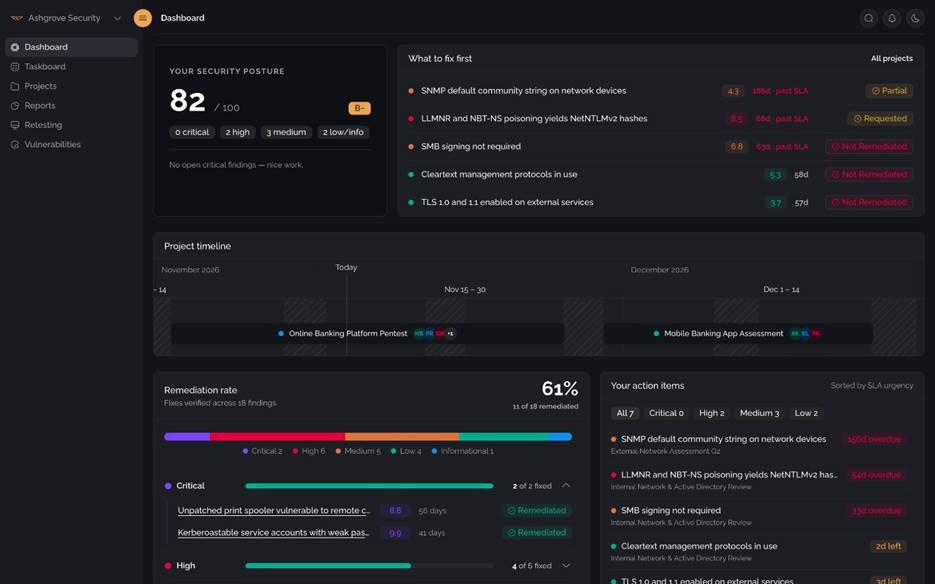
- White-labeled client portal with custom branding, colors, domain and two-factor authentication; clients access only their findings
- Permanently free supplementary resources including reporting documents and vulnerability templates
Perspectives from practitioners
It's definitely an essential tool for those in our line of work. Once you try it, you won't want to go back.
Luca Epifanio, CEO, Bitcube Security
Where a client's findings are allowed to live is decided by the team holding them, and for many that means nowhere outside their own infrastructure. That is the requirement we built the AI around, so the model runs wherever a team needs it to, including entirely inside their own network.
Luka Šikic, CEO, Secure Block