
The official download sites for Q-Dir and DesktopOK have been used to distribute trojaned versions of these Windows utilities, each containing a Python-based remote access trojan. Researchers at AhnLab discovered that the malicious installers carry valid digital signatures from the legitimate developers' certificates.
Q-Dir functions as a file manager offering expanded capabilities compared to the standard Windows File Explorer, while DesktopOK preserves desktop icon layouts when switching displays or adjusting screen resolution. Both applications were created by Nenad Hrg and made available through the SoftwareOK website. Though not widely used by general consumers, these tools have gained adoption among IT specialists, advanced users, and system administrators.

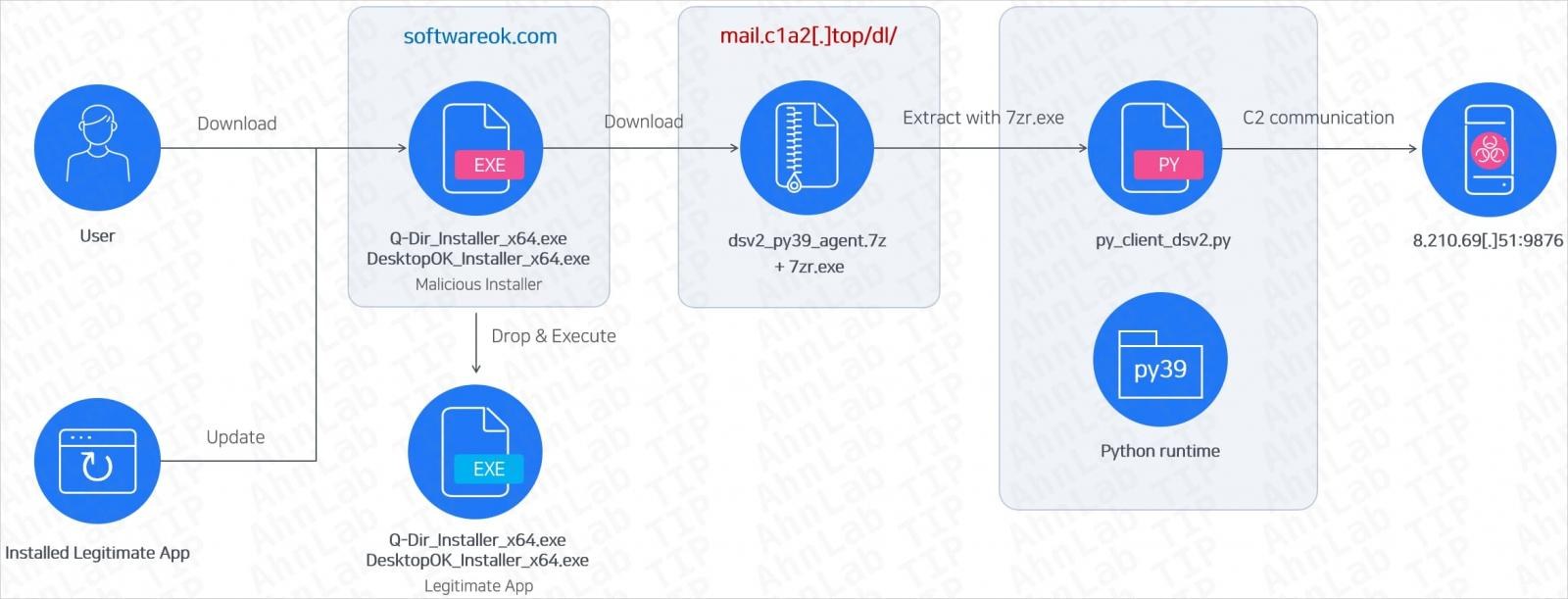
After receiving reports from users over a two-week span, AhnLab's Security Intelligence Center (ASEC) verified that installation packages for both utilities had been altered. The compromise affected fresh downloads as well as update mechanisms for systems that already had legitimate versions installed.
Some Q-Dir and DesktopOK installation files distributed on the official SoftwareOK website had been tampered with to contain malicious files. Evidence indicates that malicious files were generated not only when users downloaded the programs directly from the official download page but also during the update process of previously installed legitimate programs.
AhnLab's Security Intelligence Center
Affected Versions
ASEC identified the following release versions as potentially compromised:
- Q-Dir versions 12.83.0.0, 12.84.0.0, and 12.85.0.0
- DesktopOK versions 12.82.0.0 and 12.85.0.0
The research team clarified that not every listed version contained the malware and published SHA-256 hashes to enable users to verify whether their downloaded files are legitimate or compromised. Nevertheless, ASEC cautioned that anyone who recently installed or updated either application should assume their system may be infected, regardless of the specific version number.
Malware Capabilities
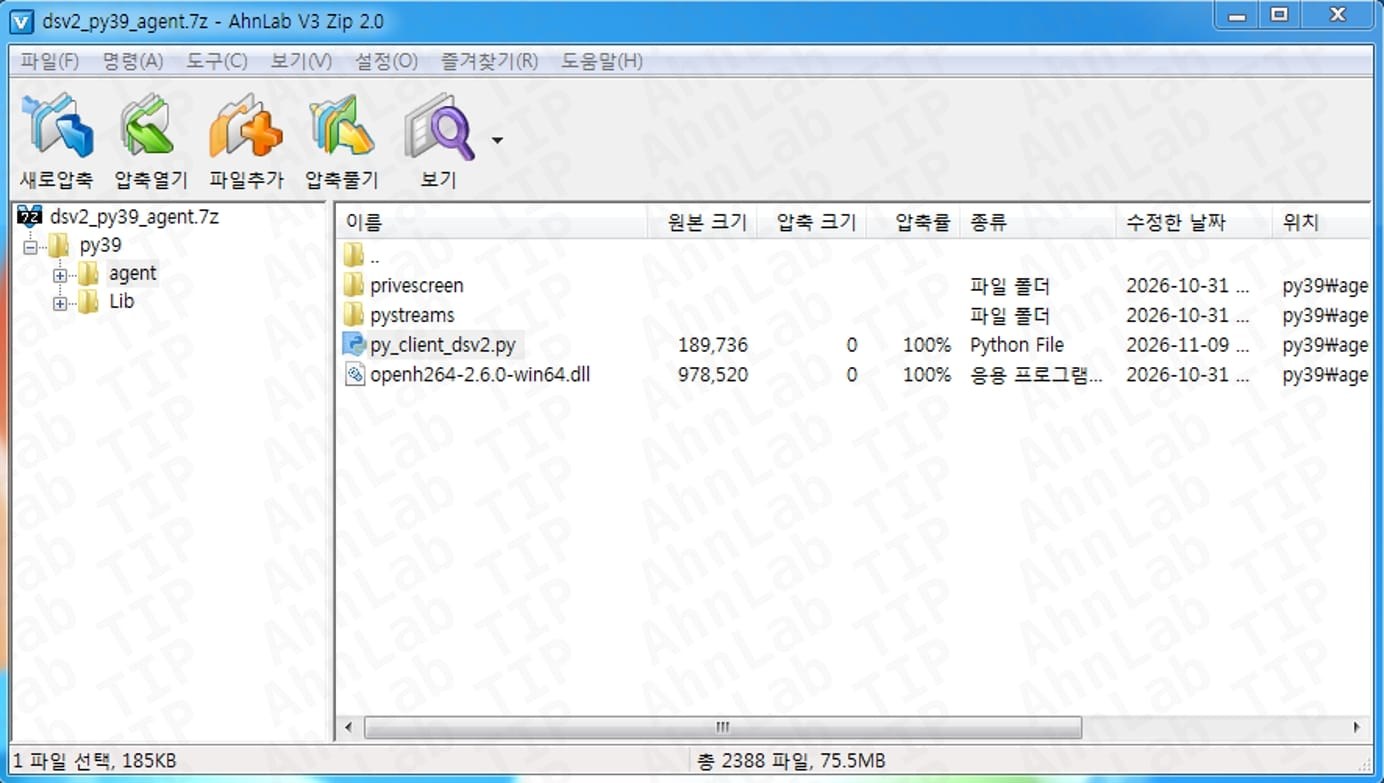
The Python RAT delivered through these trojaned installers establishes persistence by creating a scheduled task on the infected system. The malware can execute shell commands and Python code, transfer files, capture screenshots, and gather system details. It also inventories security software running on the device.
The malware payload contains references to 1,206 processes associated with antivirus and endpoint detection and response solutions from both Korean and international vendors. The list includes AhnLab V3, CrowdStrike Falcon, SentinelOne, Trend Micro, Avast, McAfee, ESET, Symantec, Kaspersky, Bitdefender, Sophos, Fortinet, Elastic Security, Malwarebytes, and FireEye. This inventory gets transmitted to the command and control server, allowing attackers to assess detection risks before proceeding with further malicious activity.
Investigation and Remediation
ASEC has not yet determined how the installers were replaced on the distribution servers or pinpointed the window during which malicious versions were available for download. Users should cross-reference their downloaded files against SHA-256 hashes posted on the official download page to verify authenticity.
Simply uninstalling a trojaned version of either application may not eliminate the Python RAT entirely. ASEC recommends that affected users inspect their systems for suspicious Python runtime environments, examine scheduled tasks for unauthorized entries, and review network traffic logs for signs of external command and control communication.
Nenad Hrg has not yet responded to requests for comment regarding the incident.