
F5 has alerted its customer base to deploy patches addressing five critical vulnerabilities affecting BIG-IP infrastructure. Identified as CVE-2026-121805, CVE-2026-120292, CVE-2026-120285, CVE-2026-116953, and CVE-2026-123637, these stack-based buffer overflow weaknesses reside in BIG-IP Access Policy Manager (APM), the company's centralized access management proxy, and the BIG-IP iRules programmable scripting engine.
All five vulnerabilities carry critical severity ratings, enabling unauthenticated remote attackers to achieve arbitrary code execution on vulnerable systems. The company simultaneously released engineering hotfixes for an additional high-severity BIG-IP APM SAML vulnerability tracked as CVE-2026-126822, which stems from an integer underflow condition that remote, unauthenticated actors can leverage for denial-of-service attacks.

F5 stated that no interim mitigation strategies exist for these flaws and instructed security teams to deploy the out-of-band hotfixes released Wednesday immediately on affected infrastructure. According to Shadowserver, an internet threat monitoring organization, over 177,000 BIG-IP instances and more than 14,600 IP addresses running BIG-IP APM are currently visible on the internet, though the count does not distinguish between honeypots, already-patched systems, or genuinely vulnerable deployments.
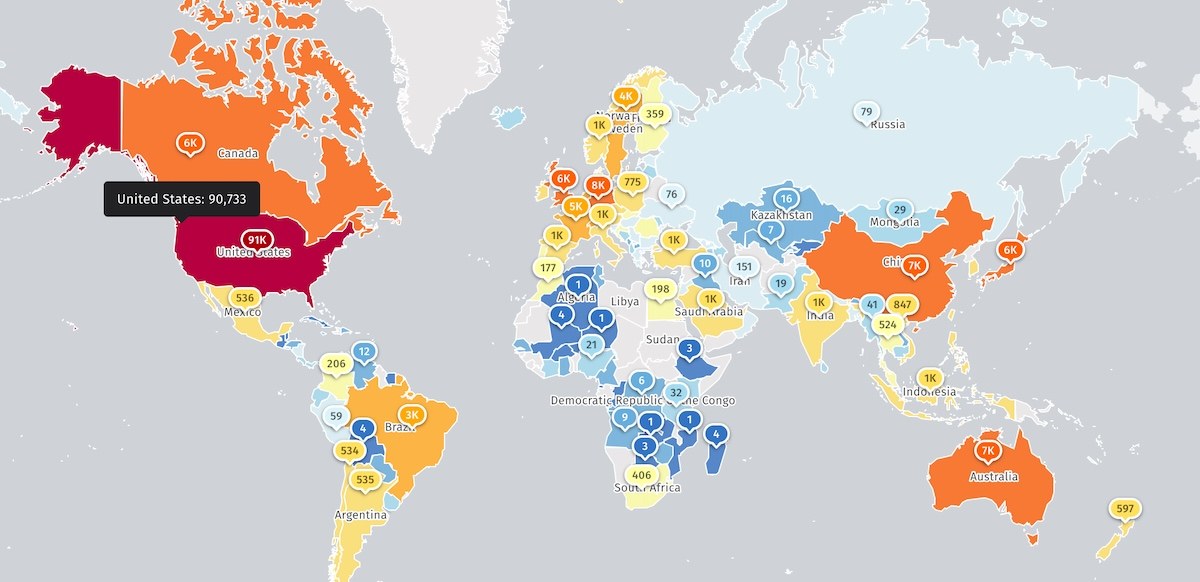
While F5 has not documented active exploitation of these particular issues, administrators should prioritize upgrading to the latest version without delay. The company's track record shows that both cybercriminal syndicates and state-sponsored threat actors have repeatedly weaponized F5 vulnerabilities in real-world campaigns. Past attacks have leveraged F5 flaws to compromise corporate networks, enumerate internal infrastructure, seize control of devices, deploy destructive malware, and exfiltrate confidential data from organizations globally.
The US Cybersecurity and Infrastructure Security Agency (CISA) has designated seven F5 vulnerabilities as actively exploited since November 2021, with four of those also appearing in ransomware gang operations. Most recently, in September, F5 patched CVE-2026-94127, a critical BIG-IP APM flaw undergoing active zero-day exploitation for remote code execution.
In August 2025, F5 disclosed that state-sponsored attackers had compromised its own systems one year prior, obtaining source code and intelligence regarding undisclosed BIG-IP security flaws. F5 operates as a Fortune 500 enterprise delivering cybersecurity, application delivery networking (ADN), and related solutions to more than 23,000 organizations worldwide, encompassing 80% of the Fortune Global 500 and 48 companies from the Fortune 50 list.