When an AI coding agent generates and executes a script, developers face critical questions about where that code should run and what resources it can access. The decision ultimately rests with the humans overseeing the system, not the agent itself.
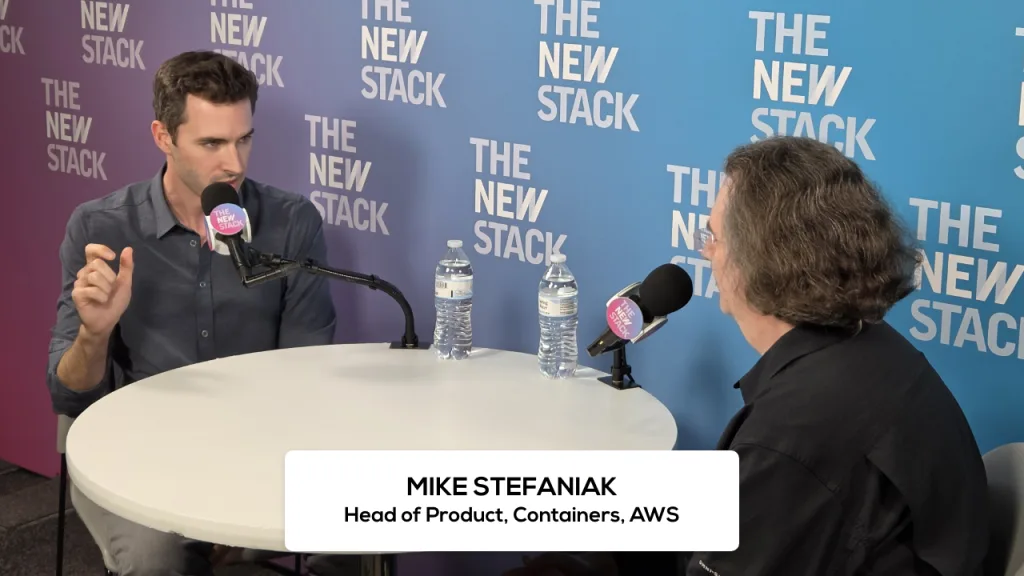
At KubeCon + CloudNativeCon in Salt Lake City, AWS Senior Product Manager Mike Stefaniak discussed barriers preventing broader production deployment of agents. While some large customers have committed to running agents at scale, many organizations remain uncertain about security and identity management. Nitro Sandboxes, unveiled at the conference, tackle part of this challenge by providing an isolated execution environment for container workloads.
Isolation without image changes
Nitro Sandboxes extend the isolation capabilities of the Nitro hypervisor to multiple workloads running on a single EC2 instance. Each sandbox consumes CPU and memory resources from its parent instance.
You don't have to change your container image.
Mike Stefaniak, AWS Senior Product Manager
On EKS Auto Mode or ECS Managed Instances, runtime configuration directs AWS to place workloads into sandboxes. This approach benefits developers with established build pipelines who want to modify workload execution without restructuring applications around different packaging models. Standard EC2 instance operators can also leverage sandboxes, though Stefaniak notes this requires additional setup to configure the runtime.
The technology extends beyond agent use cases. SaaS providers traditionally isolate customer workloads by running them on separate nodes or clusters. Stefaniak identifies an opportunity to consolidate multiple tenants onto the same node while maintaining workload isolation, reducing the operational overhead of managing multiple clusters.
Controlling sandbox egress
Nitro Sandboxes support both isolated and confidential modes. In confidential mode, the parent instance cannot inspect sandbox contents. Attestation capabilities enable software vendors and model providers to distribute encrypted code or model artifacts to customers while using policy to restrict where decryption and execution can occur.
Workloads requiring no network connectivity can run in confidential sandboxes configured without network interfaces. However, agents that need to invoke models or query services introduce additional complexity.
Isolation is one piece of the puzzle when it comes to running agents.
Mike Stefaniak, AWS Senior Product Manager
Stefaniak identifies workload identity and egress controls as two additional critical components. Organizations must determine which identity an agent assumes and which destinations it can contact. Some customers require model calls to route through approved gateways where governance policies can be applied and spending tracked. AWS is investigating enforcement mechanisms for this routing requirement, including potential involvement of Envoy.
Open source integration and production readiness
The interview covers AWS contributions to Linux and containerd, as well as the company's commitment to integrating Nitro Sandboxes with emerging open source orchestration initiatives. Integration with Agent Sandbox is already operational, and Agent Substrate work represents an early proof of concept.
I think the tipping point is close.
Mike Stefaniak, AWS Senior Product Manager
Stefaniak discusses what would encourage teams to move agents into production environments, how SaaS developers might apply similar isolation strategies, and the challenges that emerge when agents need to communicate beyond their sandbox boundaries.