Quality assurance is often scheduled as the last phase before release. Vii Studio, whose design and development work dates back to 2010, frames it differently: as something that happens at every step. The studio publishes its web and mobile development QA process as a four-stage pipeline and lists a testing toolchain that runs from browser automation to load generation. The studio's co-founders are the brothers Vidzhai Hukasian, who serves as CEO, and Viru Gukasian, who serves as COO. Kernelwire worked only from what the studio has made public; internal test metrics and incident history are not part of that record.
Four stages, with tests inside the build
The studio's published workflow is short:
- Research. Study the business, market and competitors, and understand the problem before designing.
- Design. Prototypes, UX and a design system, with logic and visuals agreed before any code.
- Build. Clean code, accelerated by AI, with testing built into each step instead of saved for the finish.
- Launch. Ship, measure and improve, and stay in touch after release.
The engineering commitment sits in stage three. Defects caught while a feature is being written are cheaper to fix than those found in a release candidate, and settling logic during design removes a class of ambiguous requirements before they turn into bugs. The studio says AI is applied to testing as well as to research, concepts and code, and credits it with a two- to threefold gain in speed that, by its account, does not reduce quality.
The toolchain behind the web and mobile development QA process
The QA tools listed on the studio's site cover most layers a web or mobile product exposes:
- Functional and UI automation: Selenium and Katalon, with Cucumber for behaviour-driven scenarios.
- Load and performance: JMeter and LoadRunner.
- Cross-browser and device coverage: BrowserStack and LambdaTest.
- API and traffic inspection: Postman for REST calls and Charles Proxy for intercepting what mobile clients send.
- Test management: TestRail and Qase.
The delivery side of the stack includes Git, Docker and Jenkins, alongside Nginx, Cloudflare, AWS and Firebase. The studio's public materials do not describe how these are combined on a given project, so a specific CI/CD layout should not be inferred from the list alone.
Real-time media in TeamScord
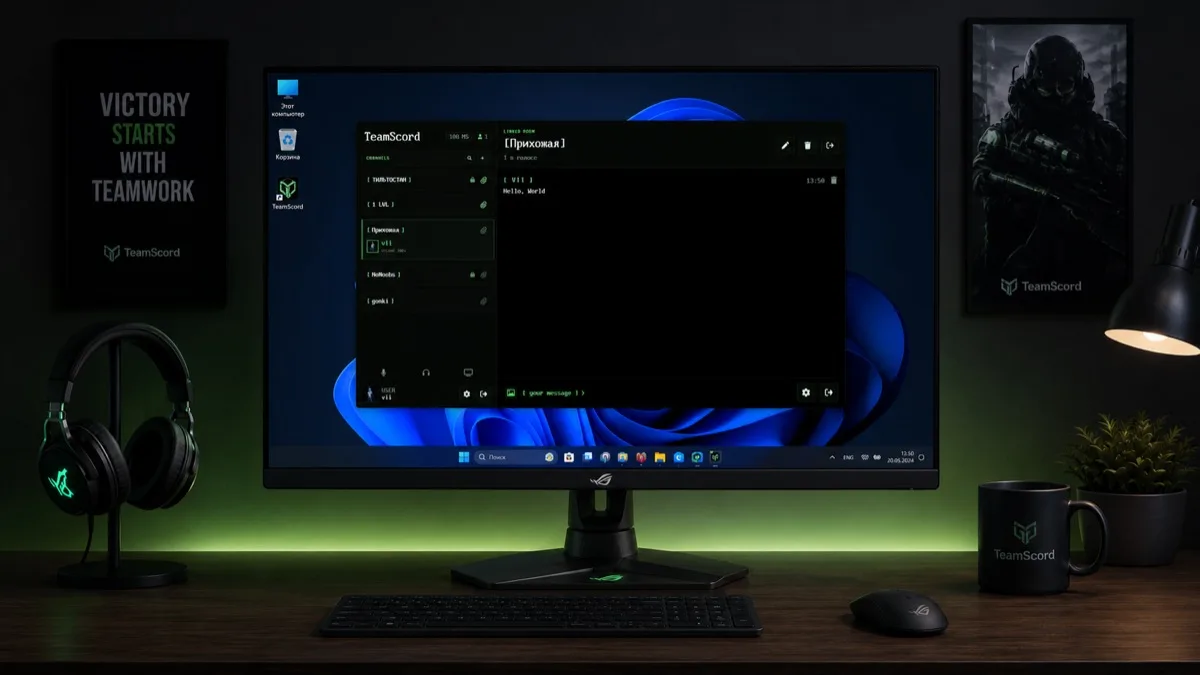
The most infrastructure-heavy case in the portfolio is TeamScord, a 2026 web app aimed at gamers, teams and groups of friends. Users get private rooms alongside voice and text channels, plus real-time streaming of screens and games. Media is handled by LiveKit, which rests on WebRTC; the desktop client targets multiple platforms using Flutter together with .NET, and a marketing landing site sits alongside it.
Real-time products change what testing has to prove. Functional correctness is only the start; latency, audio quality under packet loss and reconnection after a network drop all shape whether users stay. A desktop client built for several operating systems also multiplies the build matrix. Load tools such as JMeter or LoadRunner suit the API and signalling paths, while media behaviour generally calls for scenario testing on real networks.
REST APIs as the contract between apps and engines
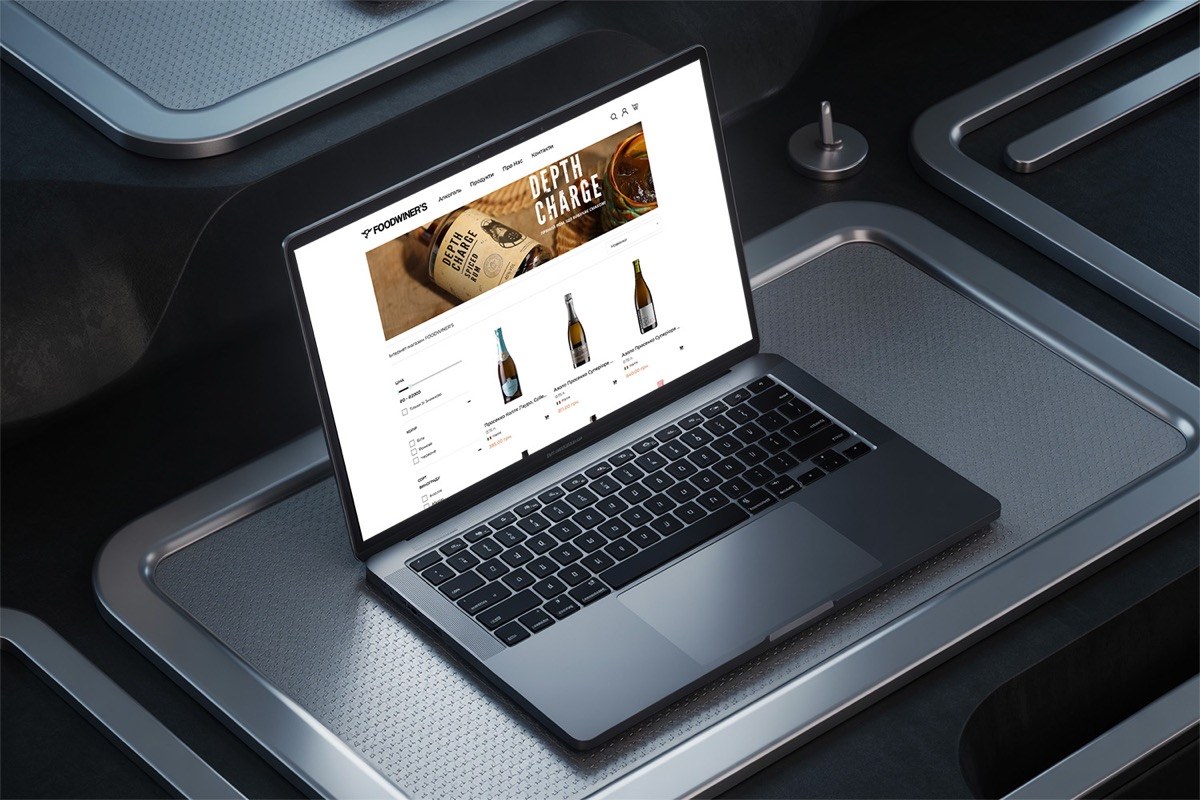
Several of the studio's products share one architecture: a native client talking to a PHP/MySQL back end through an API. The FOODWINER'S iOS app is a SwiftUI client for the online wine store's existing engine, using a JSON REST API for the catalog, search and filters, favorites, checkout and order history. Stepix, an activity tracker for iPhone, pairs SwiftUI with a PHP REST API. Duck Road, a Telegram mini-app game, combines a PHP/MySQL backend, Node.js, Cloudflare and wallet integration via TON Connect.
In that pattern the API is the component to test hardest. When a web storefront and an iOS app depend on the same engine, one regression in an endpoint can break both channels at once. The studio's tool list maps onto that risk: Postman for contract checks, Charles Proxy for seeing what the app actually sends over the wire, and BrowserStack or LambdaTest for the web side.
What a 2011 social-network engine teaches about load and security
The studio's oldest engineering reference is its own product. In 2011, under its earlier name NiceWeb, it built Vii Engine, a ready-made engine for social networks offering over 50 modules, ranging from private messaging, groups and news feeds to photos, video, a virtual in-app currency and an administration panel. The engine was licensed 89 times, the studio says, and supported communities numbering thousands of users.
Social platforms gather many hard problems in one codebase: concurrent sessions, user-generated media, privacy settings, notifications and virtual goods. The studio says the engine taught it to reason about the product as a whole, naming performance, security, usability and growth, rather than to think in terms of individual pages.
Coordination as part of quality
A testing plan only works if it is scheduled and followed. At Vii Studio, the published role descriptions show where that sits. Viru Gukasian, as COO, is tasked with keeping schedules, processes and people on track with clockwork regularity, while Vidzhai Hukasian holds the product view end to end, from the initial business concept down to the final pixel. With almost the entire team working remotely, the studio promises "no black boxes", meaning clients are told at every stage what work is under way, its cost and its delivery date.
For technical buyers, the useful questions follow from the published stack: which of the listed tools will run on this project, where load testing sits in the schedule, and how API changes are verified before web and mobile clients depend on them.
FAQ
Which testing tools does Vii Studio use?
The studio's published QA stack includes Selenium, Katalon and Cucumber for automation, JMeter and LoadRunner for load testing, BrowserStack and LambdaTest for browser and device coverage, Postman and Charles Proxy for APIs, and TestRail and Qase for test management.
At what stage does Vii Studio test its products?
According to the studio, testing is built into each step of development instead of being left for the finish, after research and design stages in which logic and visuals are agreed.
What powers TeamScord's real-time features?
TeamScord's voice and streaming run on LiveKit over WebRTC, and its cross-platform desktop client is built with Flutter and .NET.