When an AI coding agent generates a patch in minutes, determining whether that change degrades the API endpoint serving your customers requires visibility beyond the repository. The system needs to observe how software behaves in production.
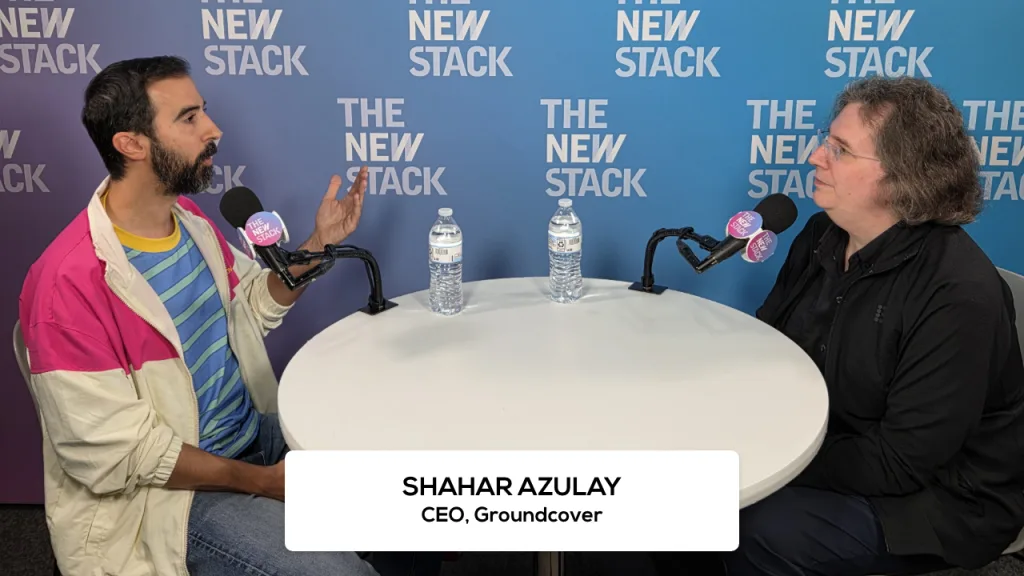
Groundcover, an observability platform, is designed to deliver production telemetry directly to developers and their coding agents. The company's CEO and co-founder Shahar Azulay discussed this approach during a conversation at KubeCon + CloudNativeCon in Salt Lake City, explaining how the same data engineers rely on for incident troubleshooting can enable agents to write and validate better changes before deployment.
Agents as primary observability consumers
Now agents are the power users of observability
Shahar Azulay, Groundcover CEO
Groundcover exposes telemetry via the Model Context Protocol (MCP), enabling coding agents to access it while performing their work. An agent analyzing a slow API could examine traces to identify which service introduces the most latency. A developer building a test could leverage observed application behavior to reproduce scenarios that actual customers experience.
The company applies this internally. Its own coding agents retrieve context from Groundcover's telemetry, and agents participating in code review can examine metrics from staging environments. This provides reviewers with concrete data to validate when a patch appears sound in a diff.
Agent activity creates new monitoring requirements. Azulay distinguishes between a standard application trace that follows a request through multiple microservices and an agent run that may span hours and execute thousands of tool calls. Such extended traces can dwarf the complexity of typical Kubernetes incidents.
Engineers may need to examine prompts and tool calls or apply evaluations to assess whether a run executed as expected. A completed run confirms the agent finished. The trace reveals what occurred during execution.
Instrumentation approach and data residency
Groundcover collects application and infrastructure telemetry using an eBPF sensor, eliminating the need for developers to integrate an SDK into every service. The platform also supports OpenTelemetry, allowing teams to continue transmitting their existing signals while adding custom instrumentation where additional detail matters. This strategy provides a foundation for new services and enables deeper visibility when specific code paths or business operations require it.
Data location forms part of Groundcover's value proposition. The bring-your-own-cloud model maintains telemetry and Groundcover's agent operations within the customer's cloud infrastructure, according to Azulay. Customers cover the underlying infrastructure costs while Groundcover manages the deployment.
For organizations deciding how long to retain telemetry, this model places infrastructure expenses in their own billing account. The approach also addresses scenarios where prompts or tool calls may include sensitive customer information that teams prefer to keep under their own control.
Autonomous action and platform migration
Questions arise about what occurs when the platform acts on observed data. Azulay highlights Groundcover's expansion into Kubernetes optimization, with current efforts focused on cost and resilience. He envisions a progression toward agents capable of addressing incidents across both application and infrastructure layers, proposing code modifications and modifying infrastructure configuration simultaneously. The discussion also addresses practical challenges of migrating observability platforms, particularly regarding dashboards and monitors that engineering teams have invested years in building.