A scenario that seemed implausible just years ago recently played out at Block: a senior engineer handed ten newly hired developers an unfamiliar codebase, gave them access to AI agents, and challenged them to resolve customer-reported issues in a day and a half on their first day of work. All of them succeeded. The outcome raises an uncomfortable question for engineering teams: what can experienced developers actually learn from their junior counterparts in this new environment?
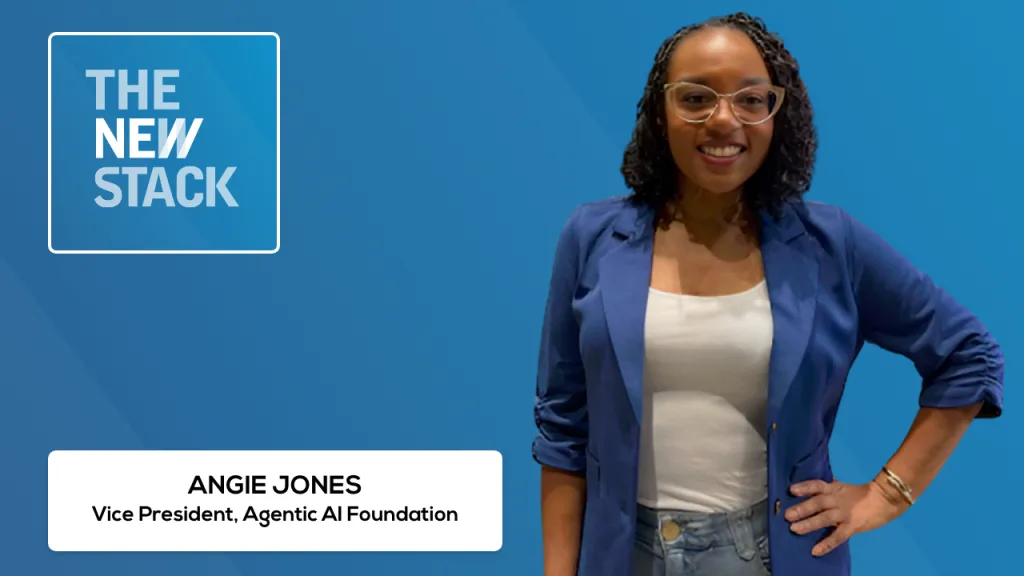
Angie Jones, who leads the Agentic AI Foundation after spearheading AI adoption at Block and maintaining the open source coding agent Goose, described the current moment to The New Stack's Frederic Lardinois during a conversation at AGNTCon + MCPCon North America in San Jose last month. "It is a rollercoaster ride," she said, capturing the tension between mastering a new workflow and watching it become obsolete as the next model release arrives.
Building on shared standards
Jones teaches developers to use the Model Context Protocol (MCP) for connecting agents to applications and points to Agent2Agent (A2A) as a coordination standard between agents. When multiple organizations align on how to solve common problems, developers gain stable interfaces to build against even as underlying tools shift. "You can bet on it and say, 'I can build on top of this now'," Jones told TNS.
The engineering work remains substantial. Developers building agents must grasp the decision loop: the agent selects an action, observes the outcome, and determines the next step. Critical choices include where to place constraints on that loop and what access the agent receives to customer data. The Agentic AI Foundation offers an MCP Associate certification so developers can validate their grasp of MCP fundamentals. Working groups within the foundation address challenges that emerge when agents enter production, spanning identity, reliability, security, and governance.
At Block, Jones tackled adoption differently. She assembled a small team of engineers to optimize the development environment for agent use. By embedding their improvements into the system itself, any developer could point an agent at a repository and leverage what the team had discovered—a safeguard against missing the previous week's lesson on effective prompting.
Gatekeeping quality in an agent-assisted world
Goose's experience as a maintained project reveals the maintainer's dilemma. Coding agents have lowered the barrier to proposing fixes and features, but every pull request still demands a human reviewer's attention. The project adopted an issue-first workflow, requiring contributors and maintainers to align on the problem and design direction before code generation begins. Jones explained the philosophy: "Let's talk about the problem and the direction that we want to take with the maintainers, then collaborate on the design."
Goose's maintainers themselves deploy agents for triage, code review, and security scanning. The same tools that simplify opening a pull request help maintainers process incoming submissions, while issue discussions give contributors space to justify why a change belongs in the project.
Jones observes a complementary dynamic between junior and senior engineers. "A new hire may know how to get an agent moving quickly. An experienced reviewer can help them see which of those changes are worth shipping," she said. This exchange mirrors what happens when teams integrate agents into their workflows: speed and judgment must coexist.