
Behavioral conditioning meets software development
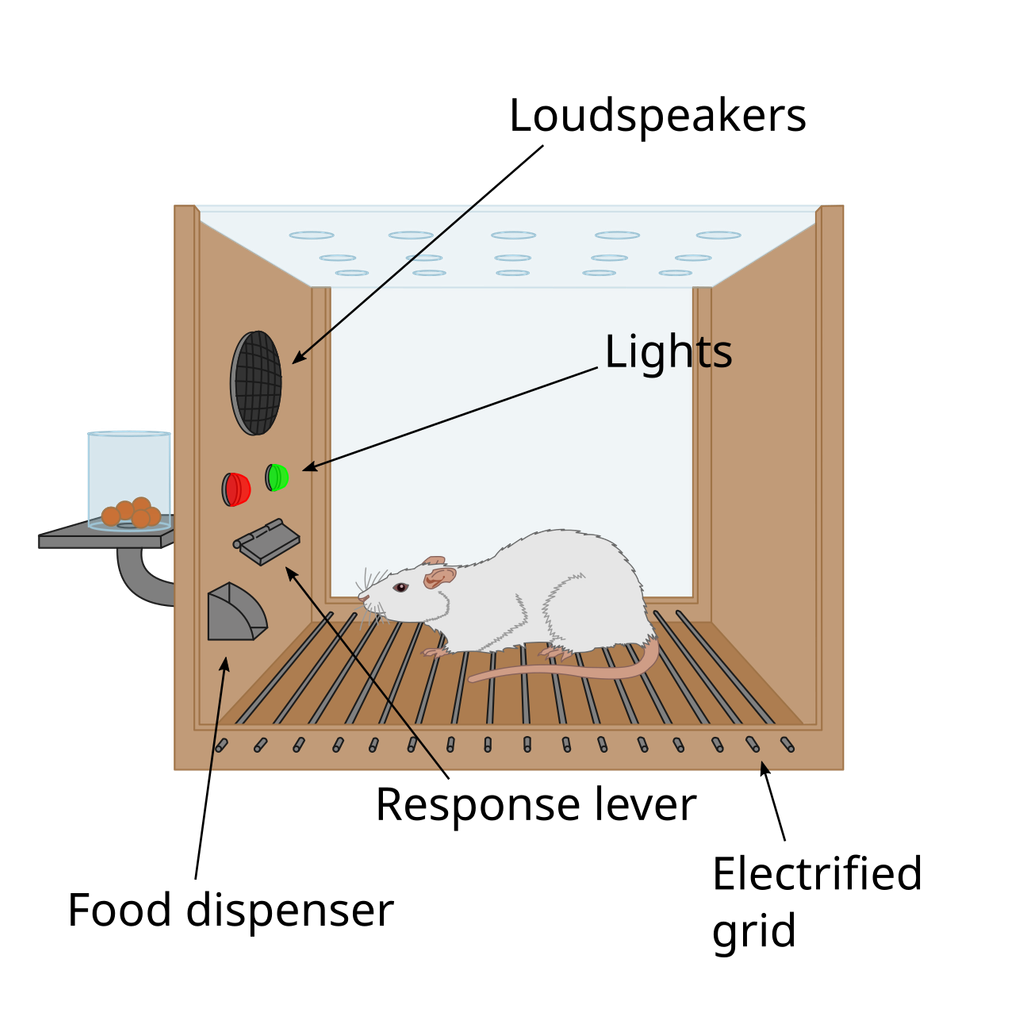
The mechanics of AI coding tools bear a striking resemblance to operant conditioning chambers—devices pioneered by psychologist B.F. Skinner to shape animal behavior through stimulus and reward cycles. Skinner's research demonstrated how creatures could be trained to perform actions by pairing signals with rewards or punishments. That same principle underlies modern slot machines, which use flashing lights and intermittent payouts to keep users engaged. AI coding assistants appear to operate on similar psychological principles, delivering frequent feedback loops and completion rewards that keep developers at their keyboards.
The AI Coding Addiction Report, based on responses from over 300 developers who use AI tools at least weekly, documents the behavioral consequences. A striking 43% of developers report staying past their scheduled end time, unable to disengage from the reward cycle. More broadly, 80% characterize their relationship with AI coding tools as "more like a dependence than an advantage." Developers report sacrificing breaks, meals, and sleep to continue coding sessions—a pattern that exceeds the addictive potential of social media or video games.
This raises a critical question: how much of the claimed productivity gains from AI actually stem from behavioral manipulation that simply extends work hours while reducing rest and recovery? The distinction matters significantly for organizational health.
Tool choice correlates with after-hours coding patterns
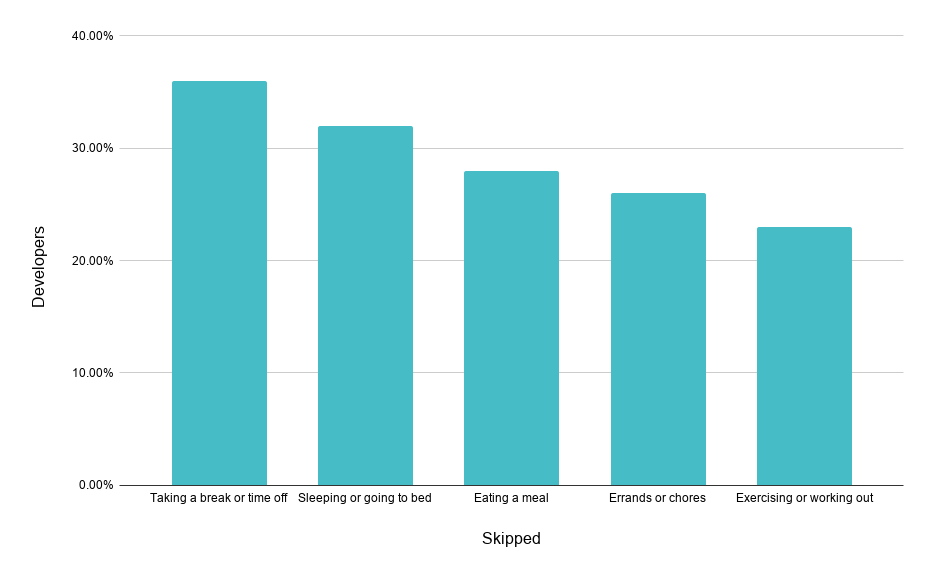
Not all AI coding assistants produce identical behavioral outcomes. The report found meaningful variation in after-hours usage rates depending on which tool developers employed. OpenAI Codex showed the highest rate of off-hours coding at 62%, while Google Gemini registered 45%, Claude Code 40%, and GitHub Copilot 36%. These differences suggest that specific design choices within each tool may amplify or dampen the stimulus-reward cycle characteristic of Skinner boxes.
Understanding which interface elements, feedback mechanisms, or completion patterns drive the most compulsive usage could enable organizations to moderate their impact on developer wellbeing and personal time. The stakes extend beyond individual fatigue: senior developers are most prone to extended work hours, meaning organizations risk placing exhausted personnel in positions requiring critical decision-making.
Incentive structures reward the wrong behaviors
The report documents a troubling misalignment between organizational rewards and code quality. Developers with the heaviest AI tool usage were more likely to receive raises and promotions, despite 71% of those same developers shipping code they did not fully understand. This inverts the pre-AI norm, where copying code from Stack Overflow required developers to comprehend and adapt examples as part of their work. Now, managers are financially rewarding developers who remain glued to their tools without pausing to assess what they are committing.
This creates a cascading problem. When organizational rewards flow to those exhibiting the most compulsive behavior, other developers face pressure to mimic the pattern or at least appear to. Those who prioritize understanding their code feel pushed to compromise their standards to compete for advancement. The result resembles a tragedy of the commons: individual incentives drive collectively destructive outcomes.
The quality problem hiding in productivity metrics
Software value emerges from sound decision-making, not from volume. Hustle-driven development erodes the quality of those decisions by prioritizing speed and output over comprehension and care. Many organizations measure software success by counting features shipped, lines of code written, or hours spent at the keyboard—metrics that reward the very behaviors the addiction report documents as harmful.
The world already faces an excess of content, code, and overwork. Organizations do not need more output; they need better outcomes. Sustainable software development requires developers who understand what they build, make deliberate choices, and have the rest necessary to think clearly. Rewarding compulsive tool use undermines all three.