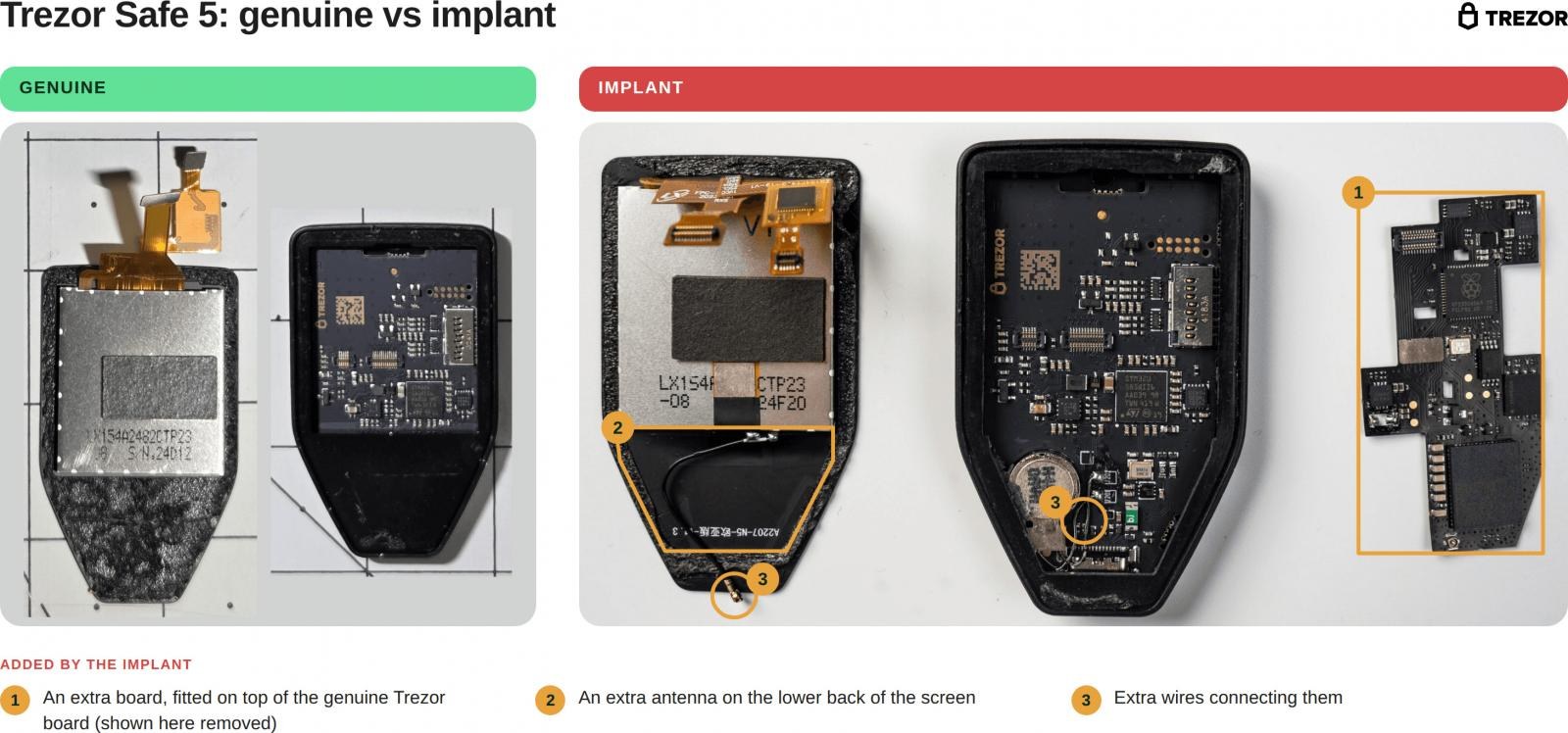
Trezor has verified that three Safe 5 hardware wallets distributed by CryptoBilis, a Southeast Asian reseller, contained unauthorized circuit boards engineered to intercept wallet recovery phrases and transmit them to attacker infrastructure via cellular connections.
The confirmation came after an investigation that began in October when a customer reported discovering an extra circuit board inside a Trezor Safe 5 purchased from the Indonesian reseller. Trezor's laboratory analysis of the original device, combined with photographic evidence from two additional affected customers, identified the malicious hardware. All three compromised devices were purchased between August 20 and September 23, 2026.

Following Trezor's October warning, 48 CryptoBilis customers reached out to the company. The manufacturer examined these devices either directly in its laboratory or through photographs of internal components. Inspection of devices from other regional resellers revealed no signs of tampering.
How the implants operated
Trezor's engineering team reverse-engineered the malicious firmware and determined that the implant could intercept sensitive data shown on or entered into the wallet's display. The unauthorized circuit board was positioned between the Safe 5's primary processor and its screen, enabling it to observe screen activity without altering the device's legitimate firmware or Secure Element.
The implant captured wallet recovery words when they appeared during wallet creation or restoration procedures. It also collected passphrases displayed on screen, encrypted the stolen data, and sent it over mobile networks to servers controlled by attackers. Should network connectivity fail, the implant retained the captured information and repeatedly attempted transmission until successful.
Similar hardware implants had previously been discovered in Ledger devices sold through the same CryptoBilis channel, incidents that were connected to cryptocurrency thefts.
Firmware protection and customer guidance
On November 11, Trezor deployed firmware version 2.13.1, which incorporates defenses against the discovered implants. According to the company, "Our latest firmware update 2.13.1, released on November 11th, includes a protection that stops the implants we've found from capturing anything on devices that run it, making the current batch of implants useless."
The company cautioned that the update cannot recover recovery phrases that were already stolen before installation. Although no Trezor customers have reported fund losses, those who obtained Trezor devices from CryptoBilis are advised to move their holdings to a newly created wallet with a fresh recovery phrase.
Reseller network overhaul
In response to these supply-chain compromises, Trezor has pruned its global reseller network by approximately 80%, substantially reducing the number of authorized third-party distributors. The company had signaled intentions to restructure its reseller base in October, before discovering implants in its own products, following the earlier Ledger incidents.
Trezor stated that the removed resellers posed no security risk but failed to satisfy new supply-chain security standards. Remaining partners must now adhere to stricter protocols governing device procurement, storage, and handling.
The company is providing replacement devices to anyone who purchased a Trezor wallet from CryptoBilis since March 2026, regardless of whether their device has been confirmed as compromised. To date, Trezor reports no evidence of implants from other resellers and has received no reports of funds stolen through the affected Safe 5 wallets.