
Credential theft has become increasingly accessible through a proliferation of phishing kits that package attack infrastructure into turnkey platforms. These toolkits now rival commercial software in their sophistication, offering administrative dashboards and continuous operator support while targeting a specific prize: Microsoft 365 session tokens rather than passwords alone.
An attacker with minimal technical skill can capture a stolen session token and immediately gain access to an authenticated session where login and multi-factor authentication have already been satisfied. This grants immediate entry to the victim's cloud infrastructure and email systems without needing to know the original password.
Huntress researchers examined three modern phishing kits to understand how they operate, how they capture and replay tokens, and what defensive measures can counter them.
What's inside a phishing kit
A phishing kit consists of pre-built code, page templates, and operational instructions for launching campaigns and monetizing stolen data. Entry-level kits may be nothing more than HTML and JavaScript files that deploy a single fraudulent login page.
More sophisticated versions include administrative interfaces that allow operators to monitor victims in real time, alter phishing page content, and intercept credentials as they arrive. Understanding why these kits pose such a serious threat requires examining how they transform phishing campaigns into usable authenticated sessions.
When attackers pivot from passwords to sessions
Modern phishing kits employ three distinct techniques to deliver authenticated sessions to attackers rather than just passwords.
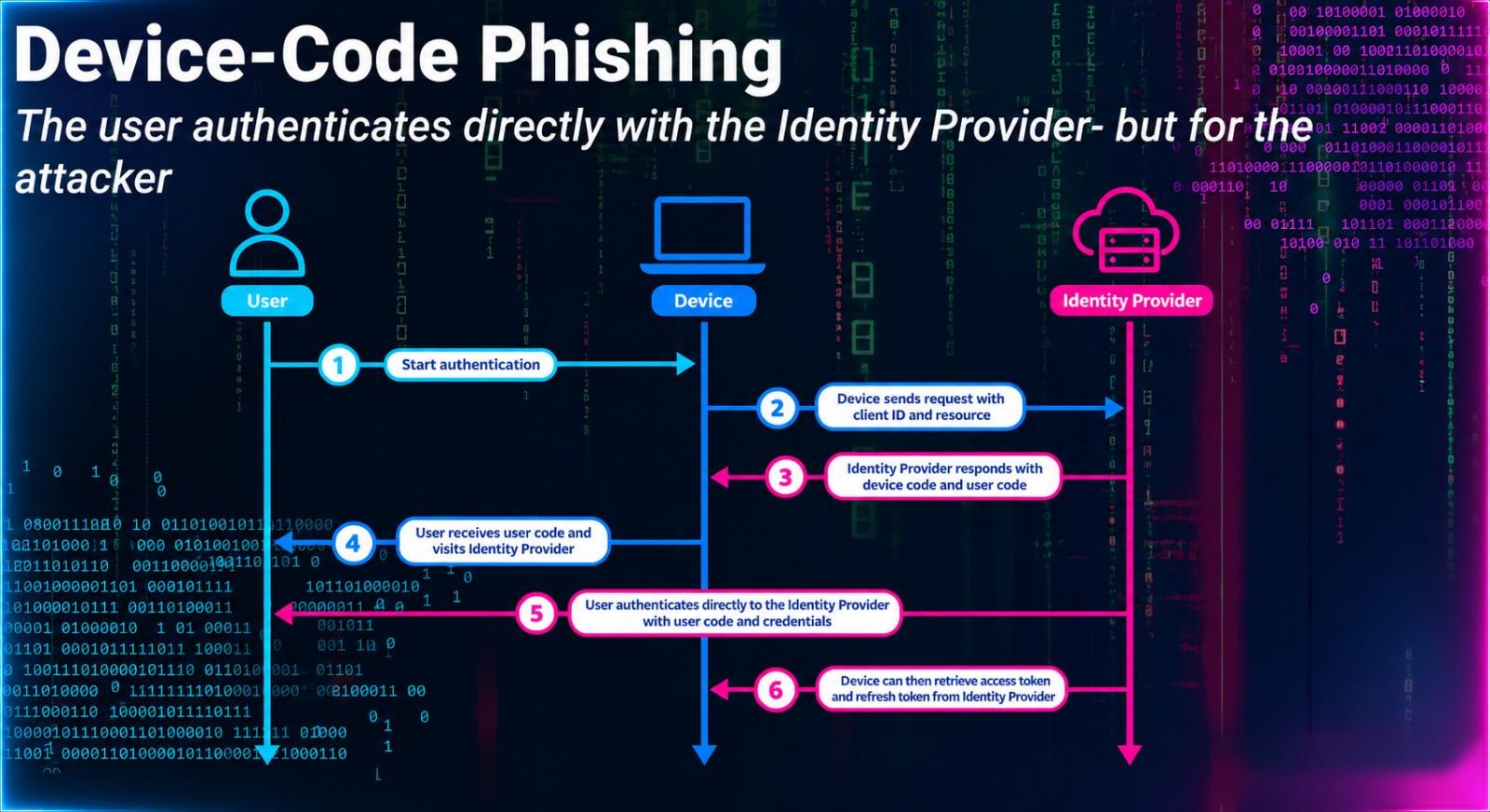
Device code phishing allows victims to authenticate directly with the identity provider while the attacker silently captures the resulting authorization. This approach reduces friction because the victim never enters credentials into a suspicious page, making the entire process feel like a legitimate sign-in.
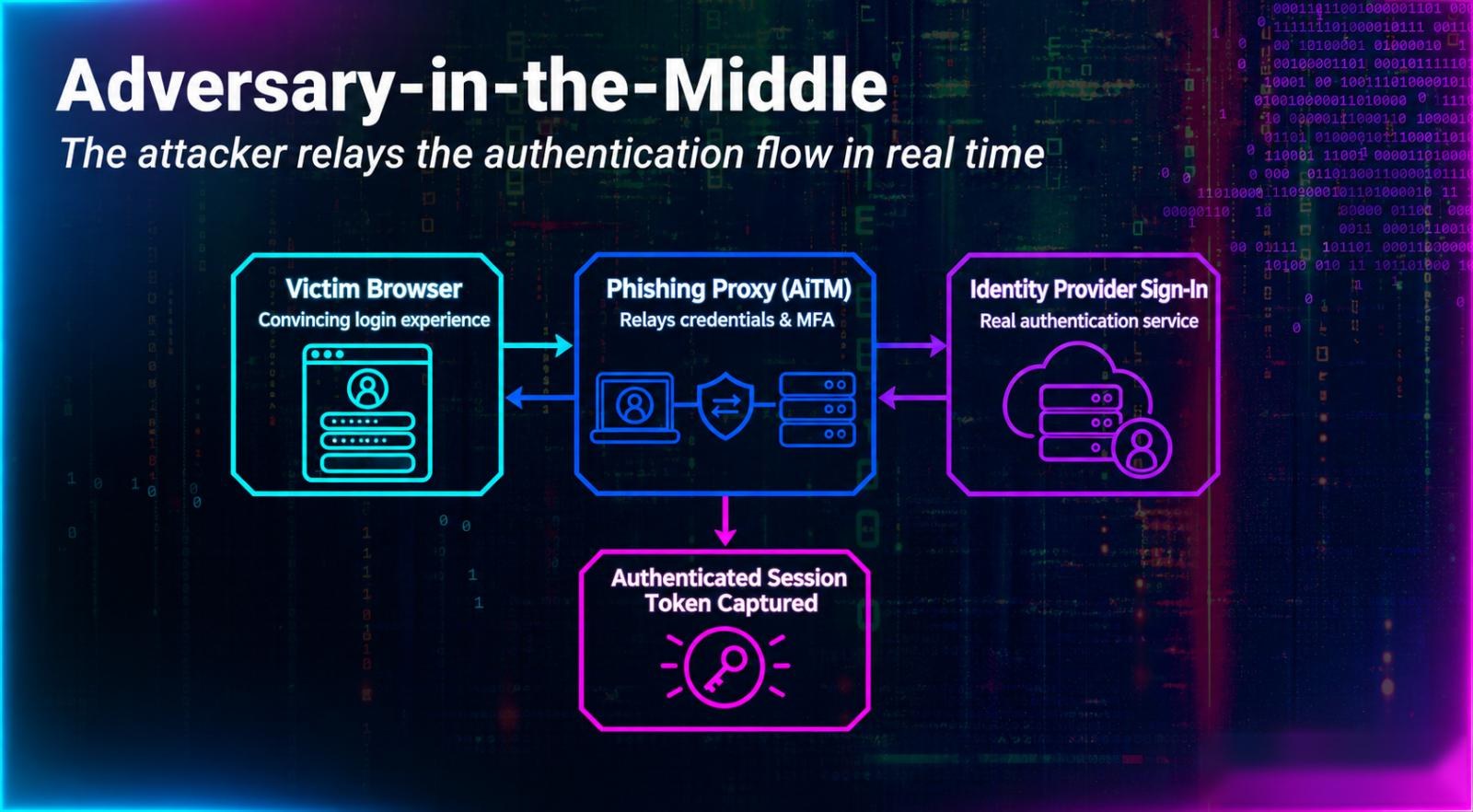
Adversary-in-the-middle (AitM) attacks expose a fundamental weakness in multi-factor authentication. The attacker relays the authentication exchange in real time, either through a fake login page or by intercepting traffic within the legitimate application. The victim completes the MFA challenge while the attacker captures the resulting session data. This demonstrates that successfully completing MFA does not guarantee session integrity.
Session tokens represent far more valuable targets than passwords alone. Once an attacker obtains a sign-in token, phishing kits such as Kali365 can replay it into an active session, granting access to cloud resources and email accounts. Investigators should look beyond the initial phishing page and trace how the token was subsequently used.
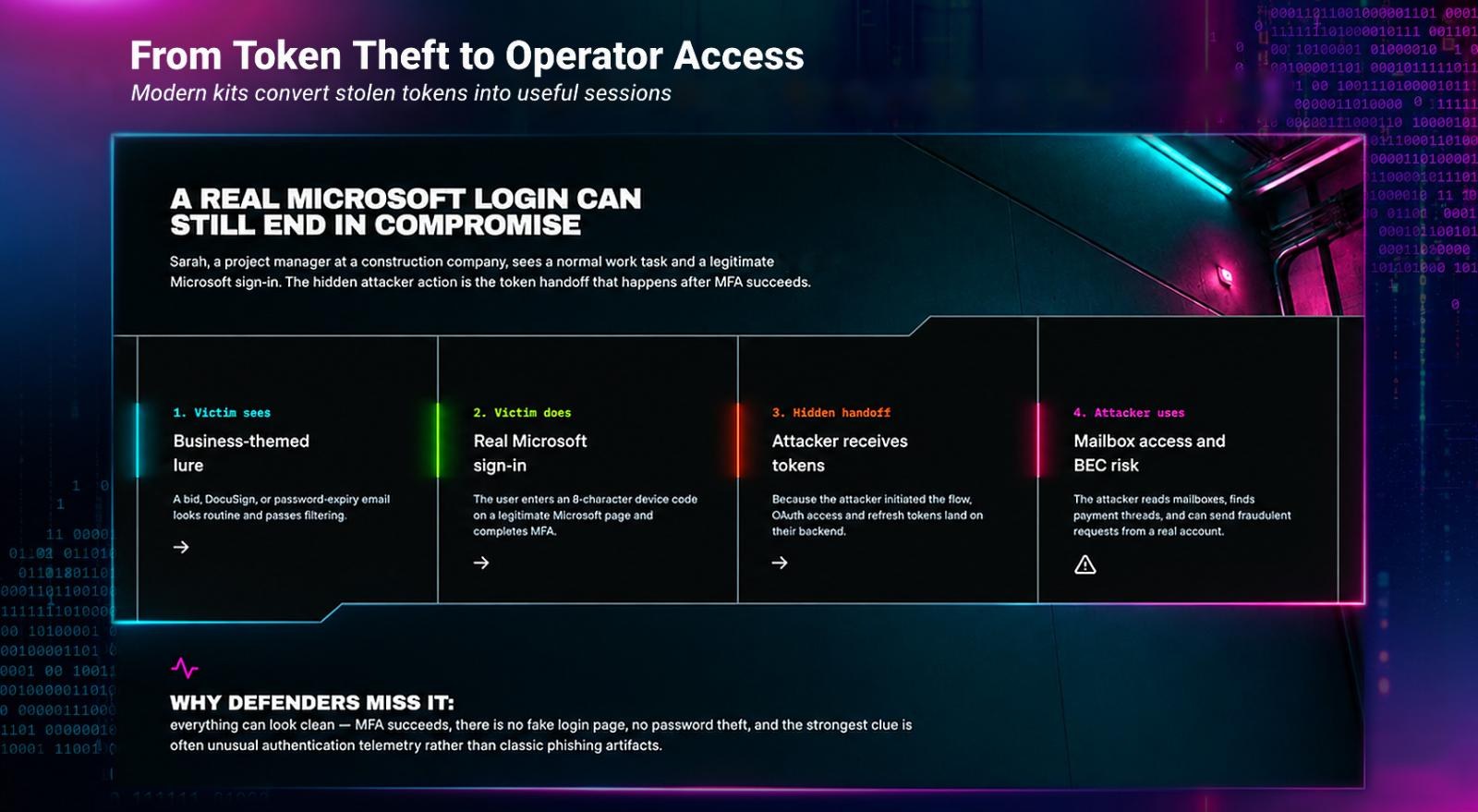
These techniques frequently operate in combination. During recent months, Huntress identified several advanced phishing kits focused on Microsoft 365 tokens, including EvilTokens, Knight Office, and Kali365.
Three phishing kits targeting Microsoft 365 tokens
Huntress identified EvilTokens in early 2026 during a device code phishing campaign that leveraged the Railway Platform-as-a-Service (PaaS) platform as infrastructure for harvesting and replaying tokens. Microsoft's Digital Crimes Unit and the FBI collaborated later that year to arrest one of the kit's alleged operators.
Knight Office functions as an adversary-in-the-middle phishing kit that captures valid Microsoft 365 session tokens and delivers them to an operator interface. Attackers can then replay those sessions and establish persistence mechanisms across tenant accounts.
Kali365 consolidates a complete Phasing as a Service (PhaaS) operation into a single control panel. Operators can harvest tokens through device code flows and reverse-proxy lures, replay them into active Microsoft 365 sessions, maintain ongoing access, and expand operations using integrated artificial intelligence features. These kits enable attackers to achieve persistent access rather than merely obtaining usernames and passwords.
What every defender can do about token theft
No single indicator tells the complete story of an attack. Defenders must trace the entire chain from the initial lure through authentication, token generation or compromise, device enrollment, and mailbox activity to fully understand identity compromise within their environment.
Organizations should search for these indicators of session compromise:
- Successful authentication attempts originating from unfamiliar cloud infrastructure
- Device code authentication patterns and automated token refresh cycles
- Newly registered devices, additional authentication methods, and mailbox access patterns
When responding to token theft, maintain these operational priorities:
- Containment must target identity artifacts beyond the phishing page itself
- Invalidate refresh tokens, remove unauthorized devices, and delete Windows Hello credentials
- Disable or restrict device code authentication where feasible, and examine mailbox access, forwarding rules, and outbound phishing activity
Investigation should continue beyond initial containment. Monitor for token replay attempts or re-entry, and maintain active hunting even after the original phishing domain goes offline.