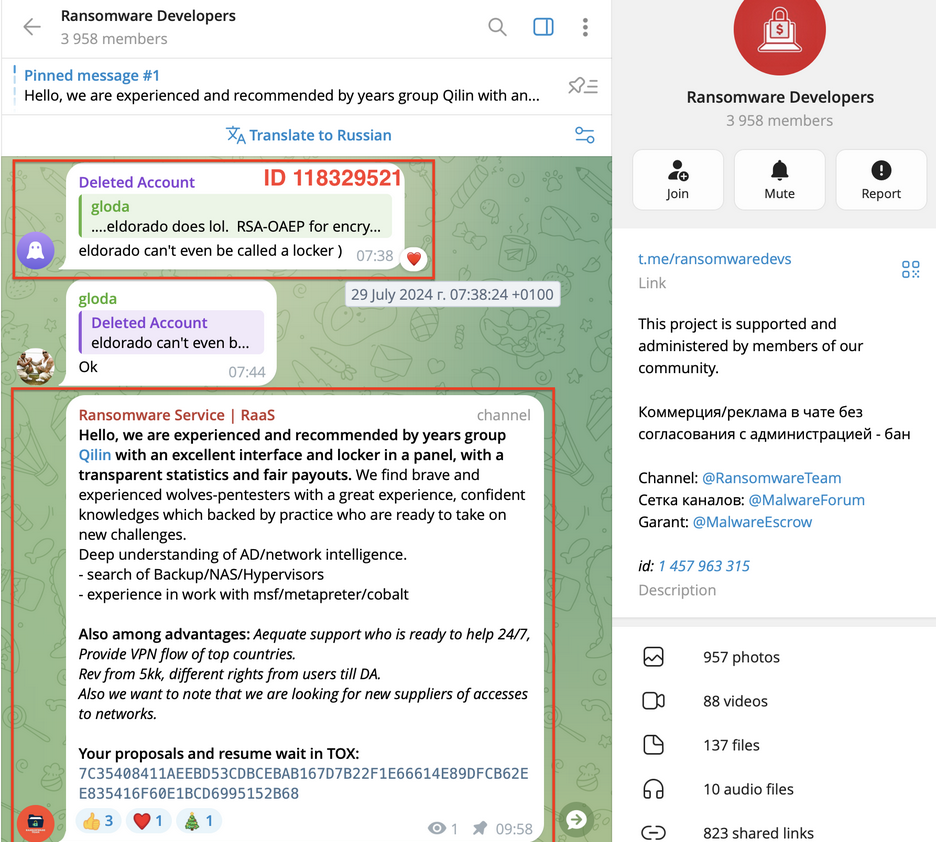
Qilin stands out as the most active ransomware affiliate network globally, with at least 365 organizations victimized within a single three-month window. Yet despite the sophistication of top-tier cybercriminals, even the most careful operators leave traces when they fail to compartmentalize their digital identities properly. A series of interconnected missteps by Qilin's leader has led security researchers to pinpoint a specific individual in St. Petersburg, Russia.
Since launching in September 2022, Qilin has become the most prolific ransomware-as-a-service organization according to research published this month by NCC Group. The operation recruits affiliates by offering them a minimum of 80 percent of any ransom payments extracted from victims. The group employs the double extortion model—exfiltrating data before locking systems and threatening public disclosure—and notably welcomes English-speaking partners, a rarity among Russia-based ransomware syndicates. Leadership has publicly stated on Telegram that collaborations have included groups such as Scattered Spider and RansomHub.
From Haise to Rjun: Tracking Identity Changes
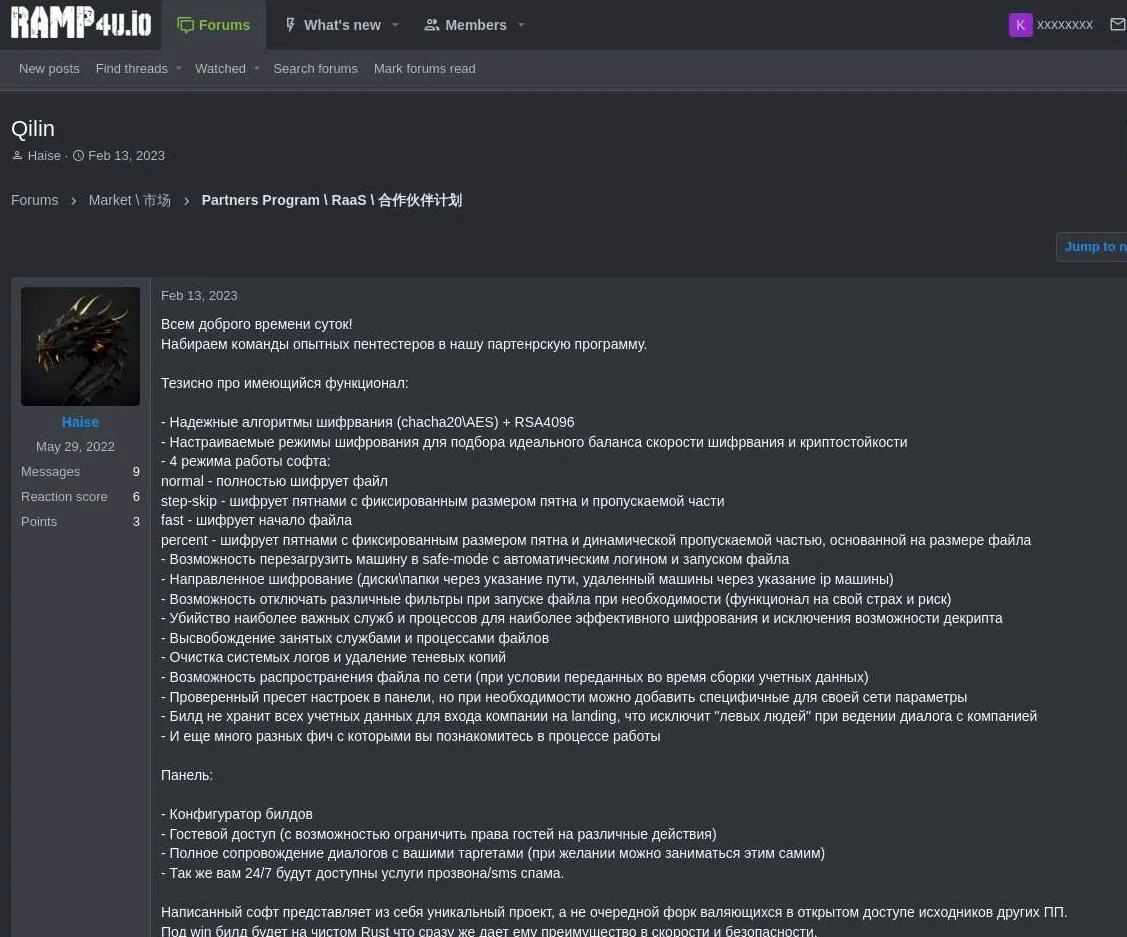
The Qilin administrator operates under the handle "Haise," though this was not always their chosen moniker. Cybercriminals frequently rotate usernames as an operational security tactic to sever connections with earlier identities that may have been careless about separating their real lives from criminal activity. However, when joining new forums, users often must reference previous handles, and when those forums are eventually compromised or seized, the historical record becomes exposed. This vulnerability proved critical in Haise's case.
Intel 471 documented that in June 2022, Haise submitted an application to RAMP, an exclusive Russian cybercrime forum designed as a refuge for ransomware affiliate programs. Direct messages from RAMP—seized by the FBI in January 2026—show the forum administrator approved the application, identifying the applicant as both Haise and by the Telegram handle Alexbigboss44. A search within Intel 471's database revealed that Alexbigboss44 had been used two years prior by a user named Rjun on the Russian forums Exploit and XSS in 2020.
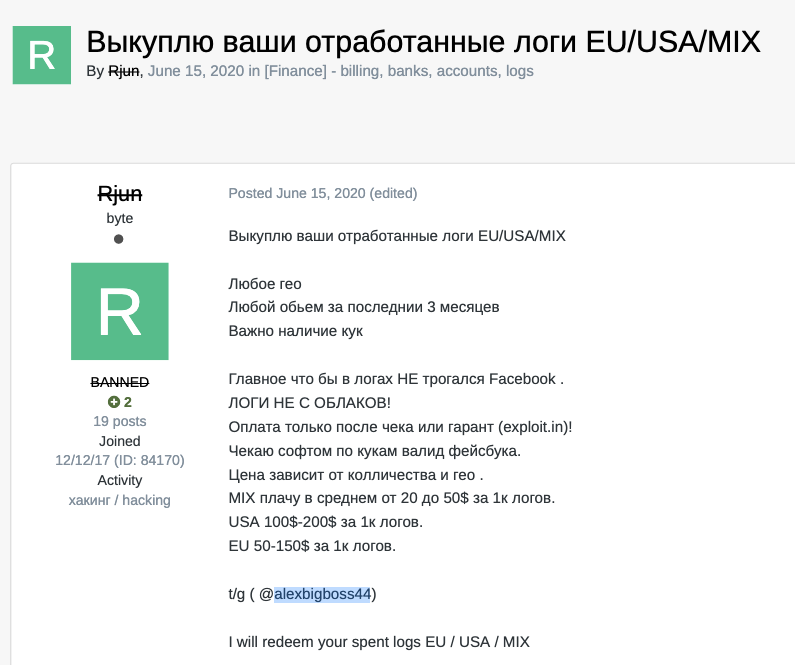
Flashpoint's analysis identified Alexbigboss44 as a prolific actor across cybercriminal forums and Telegram channels, with primary involvement in the illicit trade of traffic logs and corporate access credentials. The account holder engaged in large-scale acquisition of compromised Facebook login credentials and Google Ads accounts to support fraudulent advertising and gambling operations, functioning as both a broker and operator overseeing networks of data traffickers.
The Progression from Fraud to Ransomware Leadership
IntelHawk, an AI-driven platform specializing in de-anonymizing threat actors through historical usernames, stylometry, and behavioral signals, privately shared the connection between Haise and the older Rjun and Alexbigboss44 identities earlier this month. IntelHawk founder and chief technology officer Leo Bogod characterized the pattern as showing "a progression from novice arbitrageur and credit card fraudster in 2018–2019 to a more experienced participant and organizer of complex cybercrime-related activities in 2020–2023, with increasing attention to malware, botnets, and payment infrastructure."
Email and Breach Data Reveal Identity
By the time Alexbigboss44 applied to RAMP, Rjun had already established membership across multiple Russian crime forums including Darkmarket, Verified, and Zloy. Intel 471 determined that Rjun registered at all these sites using the email address mail-30a@mail.ru. Spycloud identified that this email had been protected with the password "Rjun132."
Constella Intelligence, a breach tracking service, located mail-30a@mail.ru in records from gosuslugi.ru, the official digital services platform for Russian state and municipal government. The Gosuslugi breach, occurring in late 2025, exposed more than 20 million records containing full names, birth dates, and phone numbers. According to the leaked Gosuslugi data accessed through Constella, mail-30a@mail.ru was registered to 36-year-old Aleksey Mikhailovich Yakovtsev from St. Petersburg, Russia.
Connecting Phone Numbers and Travel Patterns
Flashpoint documented that Haise has maintained a Telegram account with user ID 118329521, which has generated more than 5,000 messages since 2018. Records from Rosobrnadzor, Russia's education oversight agency, indicate that Yakovtsev attended grade school in Murmansk and holds a master's degree in computing and information systems.
A search of Constella's database using the Telegram ID linked it to the Russian phone number +79602347275. Pivoting on this number revealed connections to the email addresses aleksey1990yakov@mail.ru and rjun123321@mail.ru. IntelHawk determined that the phone number belongs to Yakovtsev's biological sister, and that Aleksey frequently used his sister's email when registering accounts across various platforms.
The phone number appears on airline records from Russian travel agencies that experienced data breaches, showing that Aleksey Yakovtsev, born August 18, 1990, flew between St. Petersburg and Murmansk at least three times between 2013 and 2014. More recent flight records indicate that while Yakovtsev has not traveled internationally by air, he flies regularly between Saint Petersburg and Sochi, Russia's largest resort city on the Black Sea coast, approximately 1,200 miles south of St. Petersburg by plane.
Attempts to contact Yakovtsev through email and phone proved unsuccessful. Gang Exposed, an anonymous Twitter/X account with a track record of successfully identifying suspected ransomware operators, reached parallel conclusions about Haise's real-world identity, citing IntelHawk's platform in connecting the evidence.