
OpenAI and Cisco have jointly released Shirudo, an open-source security tool designed to provide temporary runtime protections against exploits targeting unpatched Linux systems. The tool allows administrators to defend vulnerable infrastructure while they prepare and deploy patches, all without interrupting running services.
At its core, Shirudo relies on eBPF (extended Berkeley Packet Filter), a Linux kernel mechanism that permits controlled program execution within the operating system without modifying kernel source code or requiring system restarts. This technology enables real-time visibility into system and network behavior, performance measurement, and deployment of targeted security measures—making it well-suited for Shirudo's architecture.

The tool's protective mechanisms, referred to as "shields," are engineered to intercept malicious activity in a granular manner while preserving normal application function. OpenAI identifies four principal features:
- Live protection: Defends against vulnerable code paths without service interruption, permitting operators to evaluate shield behavior before full deployment
- AI-assisted defense: Allows automated agents to analyze vulnerabilities, construct shields, and test their effectiveness, with final deployment decisions remaining with human operators
- Trusted deployment: Employs cryptographic signatures, the eBPF verifier, and kernel-level security mechanisms to guard against unauthorized shield modifications
- Hardware-backed verification: Leverages Trusted Platform Modules (TPMs) to create verifiable audit trails of shield installation and removal
In testing, OpenAI and Cisco researchers successfully deployed custom shields to block a Java4Shell exploit targeting an active Elasticsearch instance without disrupting service continuity.
Marcus Hutchins, principal threat researcher at Expel, a managed detection and response provider, acknowledged the significant potential of eBPF for runtime exploit mitigation but expressed concern about delegating kernel-level rule generation to AI agents. He also noted that Shirudo's scope is restricted to Linux, as macOS and Windows lack the necessary kernel-level components for the tool to function effectively.
Researchers at Isovalent, the cloud networking and security firm acquired by Cisco in 2024, clarified that Shirudo represents a redesign of Tetragon, an eBPF-based runtime security platform the company introduced in 2022. Tetragon serves as the underlying foundation for Cisco's existing Live Protect offering.
Shirudo is built to support agentic control planes with configurable levels of autonomy for deploying mitigations. Beyond eBPF-based protections, the tool can also modify application and userspace runtime bytecode to expand defensive coverage where necessary. When shields are activated, operators receive hit counts that reveal attempted exploits and highlight areas requiring stronger defenses.
https://www.youtube.com/embed/VesOL1cZk04
The two organizations intend to distribute pre-tested shields alongside vulnerability announcements until permanent patches become available. These shields will be packaged as cryptographically signed .bee files and distributed through an OCI registry.
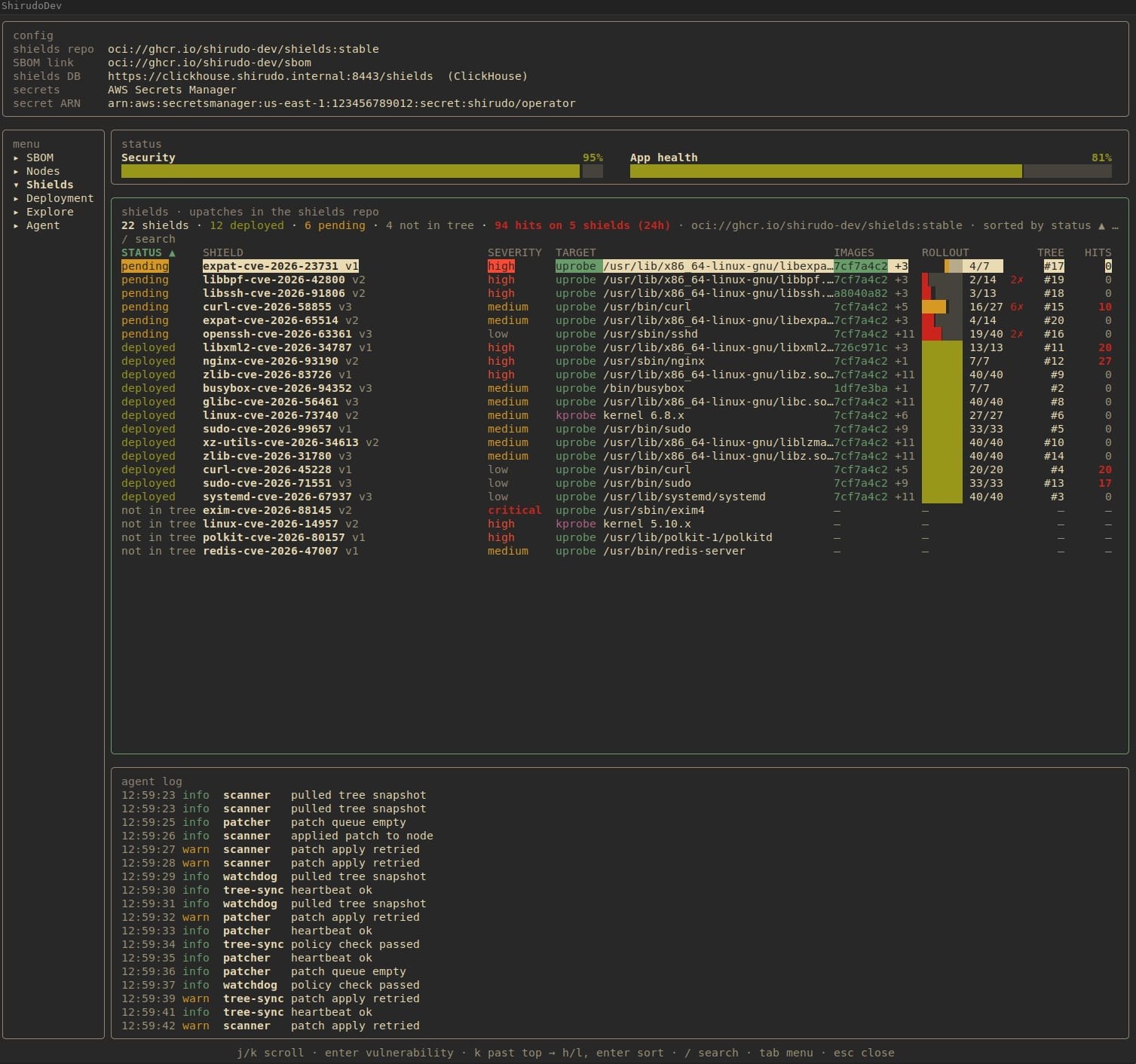
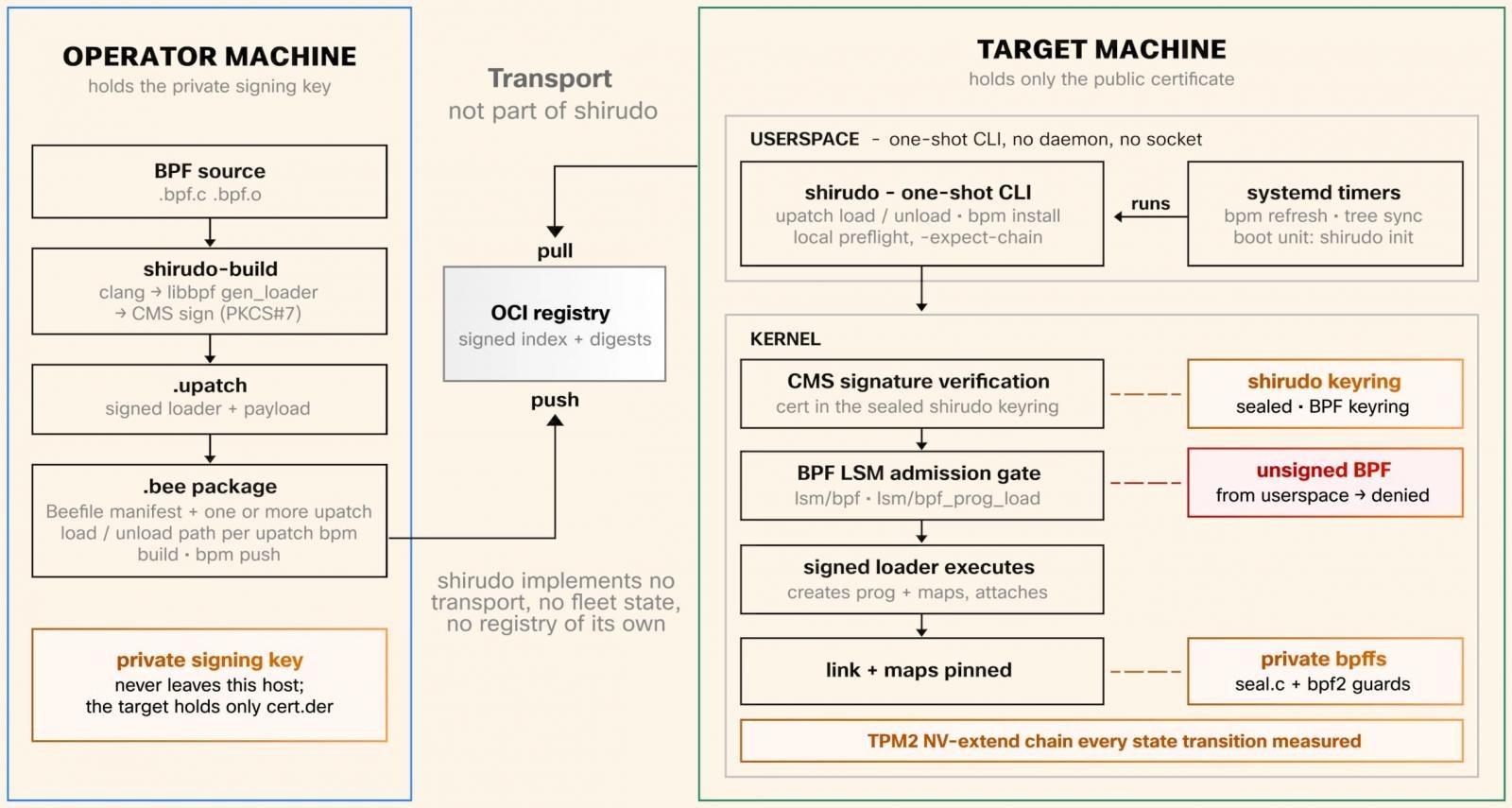
Shirudo can be activated through command-line tools and does not require a persistent daemon process on the system. The project is distributed under a BSD + GPL open-source license and includes quick-start and getting-started documentation from Isovalent.
The Shirudo project is only the beginning, but it already shows the true potential of combining agents as a workforce with machine interfaces to let agents output what they are best at: code
Isovalent researchers
The researchers anticipate that Shirudo will mature and inspire related projects, eventually enabling self-defending systems capable of running applications and agents in parallel.
OpenAI will host a technical webinar on December 15 to explain Shirudo's architecture and demonstrate how it integrates eBPF and artificial intelligence to identify and neutralize emerging threats.