N-able has released patches addressing a cluster of zero-day flaws discovered in N-central, its remote monitoring and management platform. The vulnerabilities came to light over the weekend when publicly disclosed, triggering N-able to shut down all hosted N-central environments globally until remediation could be deployed.
The vendor took the step of taking all hosted N-central infrastructure offline across the Americas, Europe, and Asia-Pacific to prevent exploitation of the unpatched zero-days in active circulation.
N-able is actively responding to non-responsible communication of critical vulnerabilities in N-central late Sunday night, November 8, found by an independent researcher. As a precautionary measure, we took our Hosted N-central environment offline today, November 9, and provided guidance to customers operating on-premises N-central servers to temporarily take their servers offline until further notice.
N-able statement to BleepingComputer on Monday

N-central provides IT departments and managed service providers with centralized, web-based tools for monitoring, managing, and maintaining client networks and devices.
Patches released for seven critical CVEs
N-able released N-central 2026.4 HF2, which includes security patches and updates addressing several of the disclosed zero-days, including what the vendor describes as "the most critical" flaws:
- CVE-2026-125883 - Multiple XXE Vulnerabilities
- CVE-2026-125878 - Multiple OGNL Injection vulnerabilities
- CVE-2026-125879 - Local privilege escalation to root via nable-writable syslog-ng config
- CVE-2026-125880 - Stored XSS via MMS3 patch metadata (admin context)
- CVE-2026-125881 - Schema-hint SSRF via service import schema validation
- CVE-2026-125882 - RCE via file repository upload path traversal (Credit Nate Fair, Sprocket Security)
- CVE-2026-91000 - Insecure IPC Channels lead to local privilege escalation
By Tuesday, N-able confirmed that all hosted N-central servers across every region had been upgraded. The vendor urged all on-premises customers to apply the new version "as soon as possible" and emphasized the importance of following published upgrade guidance before restoring access to their N-central deployments.
Customers should follow the published upgrade guidance carefully before restoring normal access to their N-central environment. Earlier incident guidance advised On-Premises customers to keep their N-central servers offline while remediation was being developed.
N-able
Active scanning detected within 24 hours
Although N-able has not yet confirmed exploitation of these flaws in the wild, threat intelligence firm Defused reported on Tuesday that threat actors have begun probing for vulnerable instances. The company warned administrators to immediately take N-central servers offline.
During the past 24 hours, we have observed probing of N-able N-central for the 0-days that were dropped publicly yesterday. We have seen opening of anonymous agent sessions, pulling appliance config and hitting the remote control endpoint without auth. These pathways are part of the 0-day exploit surface.
Defused
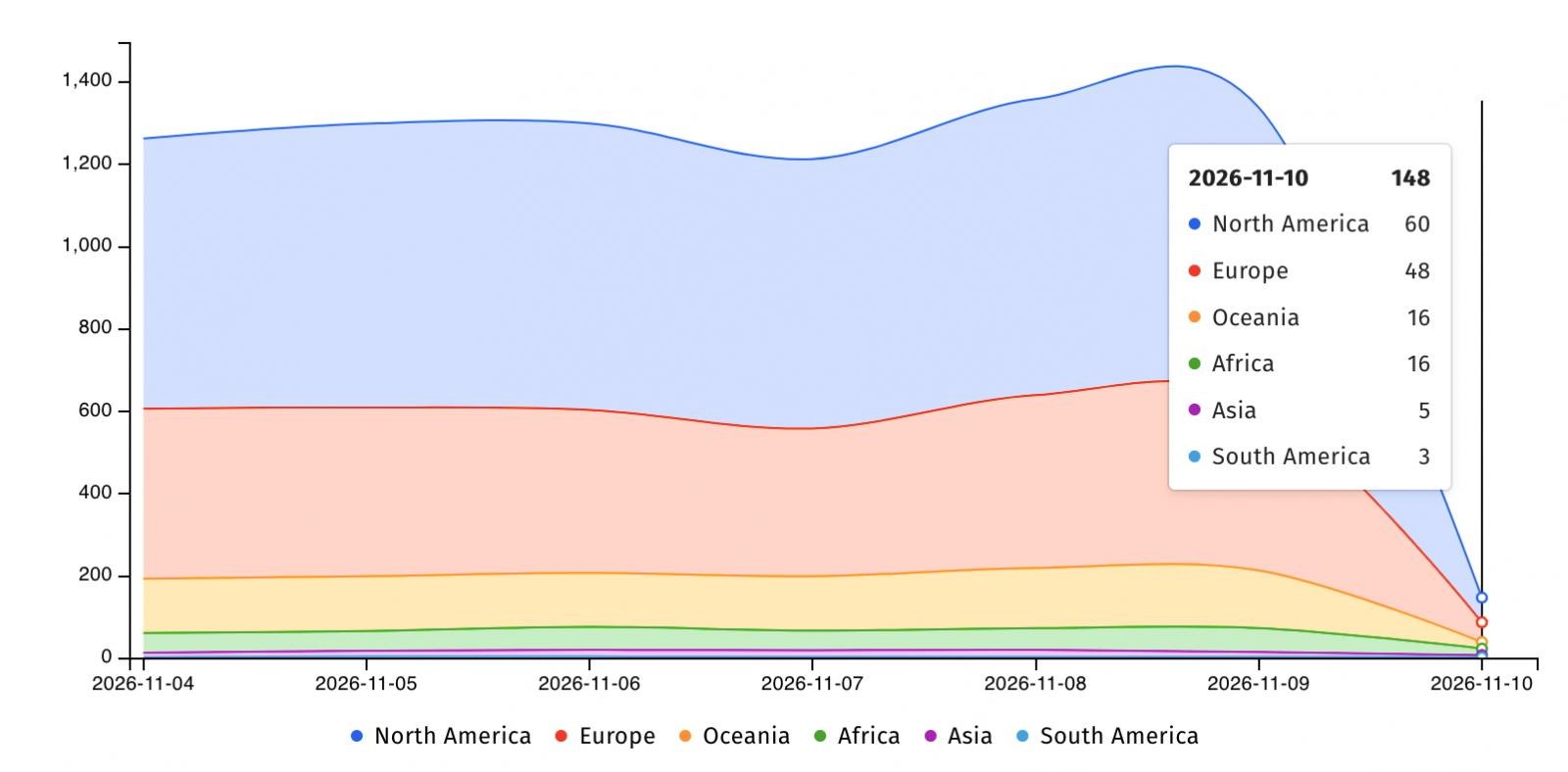
Internet security nonprofit Shadowserver documented a significant drop in exposed N-central servers online, falling from 1,338 detected on Monday to just over 148 by the time of the patches.
Disclosure follows alleged inaction on prior reports
Security researcher Sean Bales disclosed the vulnerabilities late Sunday, November 8, and published a GitHub repository named Able2Shell containing proof-of-concept code for the flaws.
Bales indicated that the zero-days affect N-central Appliance 2026.4.0.31, a pre-release version, and suggested that most or all of the flaws likely impact earlier versions as well.
The disclosed flaws span a broad attack surface: remote code execution, authentication bypasses, credential theft, arbitrary file writes, directory traversal, XML external entity injection, and cross-site scripting vulnerabilities.
Bales demonstrated a particularly severe unauthenticated XXE-to-RCE chain that exploits N-central's service-import capability to obtain a trusted local session, reset account passwords, and run commands as the nable user. The same attack vector could allow adversaries to establish a Default Administrator account with attacker-supplied credentials, granting them administrative control of the N-central interface.
https://www.youtube.com/embed/wSBr52uIhWs
Bales explained to BleepingComputer that he released the N-central zero-days without first contacting N-able because the vendor had allegedly failed to patch vulnerabilities he reported in a separate N-able product approximately five to six months earlier. Those prior issues included two unrelated remote code execution bugs and a privilege-escalation flaw.
When asked to address Bales' claims about the unpatched earlier vulnerabilities, N-able declined to comment and instead issued a statement focused on the N-central incident and its precautionary measures.
N-able delivers cloud-based remote monitoring, cybersecurity, and data protection solutions serving more than 500,000 organizations across 140 countries, primarily targeting managed service providers and enterprise IT operations.