
Attackers are increasingly turning to AI-driven agentic workflows and offensive frameworks to automate the discovery and exploitation of vulnerabilities, compressing attack timelines to speeds that outpace human response. The Google Threat Intelligence Group (GTIG) has documented widespread adoption of these techniques across both financially motivated and state-sponsored threat actors.
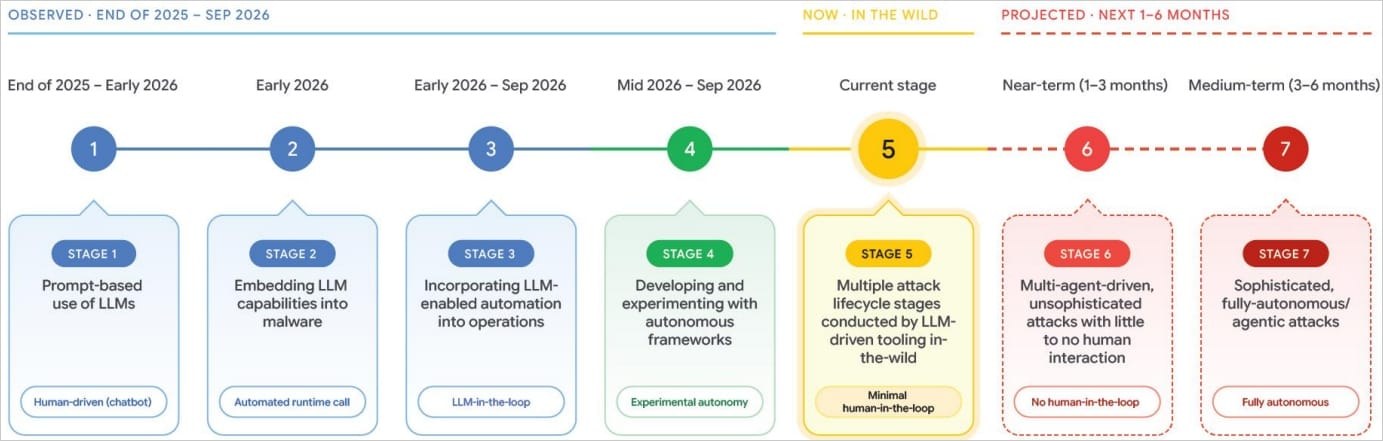
Recent incidents underscore the trend. The open-source penetration-testing framework CAIRN was deployed in attacks targeting the U.S. aerospace sector, while suspected North Korean hackers leveraged Claude Code to deliver malware. GTIG researchers project that within three months, threat actors will launch unsophisticated attacks requiring "little to no human interaction" powered by multiple AI agents, with fully autonomous sophisticated attacks likely to materialize within six months.

Last week, the FBI issued an advisory detailing how multiple threat actors have weaponized the ARTEX AI pentesting framework since August, launching campaigns against organizations across financial services, government, technology, defense, healthcare and other sectors.
Automated frameworks accelerate vulnerability research
Google documents systematic abuse of open-source pentesting suites in fully automated attacks, including ARTEX, CAIRN, CyberStrikeAI, and HexStrike AI. Attackers deploy these tools to conduct adaptive assaults targeting internet-exposed endpoints running vulnerable software, leveraging large language models (LLMs) to rapidly generate working exploits against low-complexity flaws.
In one case detailed in GTIG's AI Threat Tracker report, attackers employed a multi-agent system called 'exploit_agent' to fully automate the discovery and exploitation of vulnerabilities in attacks against French media, entertainment, and education websites. Google discovered this framework on an exposed staging server belonging to the attacker, which also contained stolen victim data, reconnaissance information, webshells, and brute-forcing scripts.
In the past quarter, GTIG identified threat actors using LLM frameworks to fully automate vulnerability discovery and exploitation without a human in the loop for the first time.
Google Threat Intelligence Group
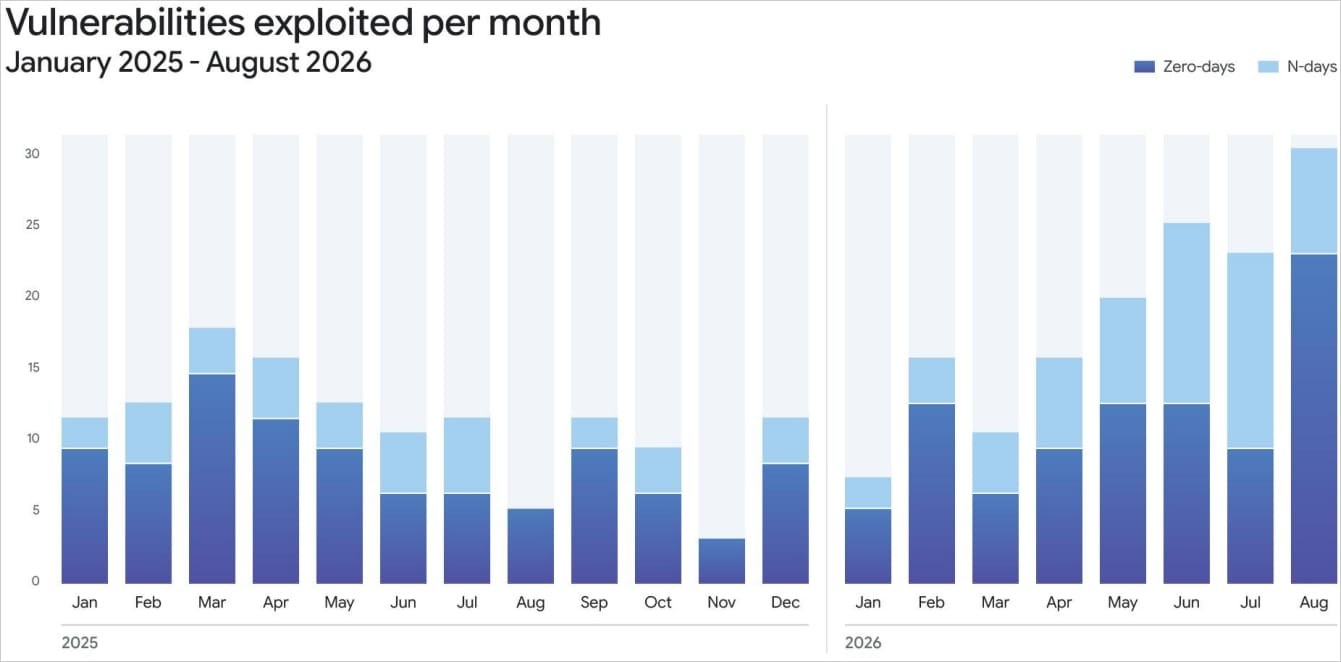
The exploit_agent framework analyzes software updates from popular web applications to identify indicators of security flaws, then automatically attempts to weaponize them. This approach has substantially compressed the window defenders have available for patching, while simultaneously generating false positives that consume resources.
The PHP2Shell incident illustrates the challenge. Hundreds of purported proof-of-concept exploits, predominantly AI-generated, surfaced shortly after PHP disclosed two vulnerabilities. Defenders faced significant overhead verifying the code and developing protections against the flood of largely duplicative PoCs.
Broader AI exploitation trends
Beyond automated vulnerability exploitation, Google identified attacks from UNC6836, an activity cluster with suspected ties to "Midnight Neptune," targeting cryptocurrency firms across North America and Europe using modified Claude Code. Following initial compromise, the attackers reconfigured the Claude Code application to trigger automatic download of the SOMBERMEME backdoor upon launch.
AI deployment extends into influence operations, where state-backed groups, commercial vendors, and political networks now routinely employ the technology. Additionally, LLMjacking has emerged as a widespread problem, with attackers increasingly exploiting this revenue stream at substantial cost to affected organizations.