
Threat actors are distributing compromised security projects through GitHub aimed at cybersecurity professionals, delivering backdoor and information-stealing payloads. The operation has been active for approximately two years, evolving from an initial focus on cryptocurrency wallet users to now impersonating legitimate security automation tools.
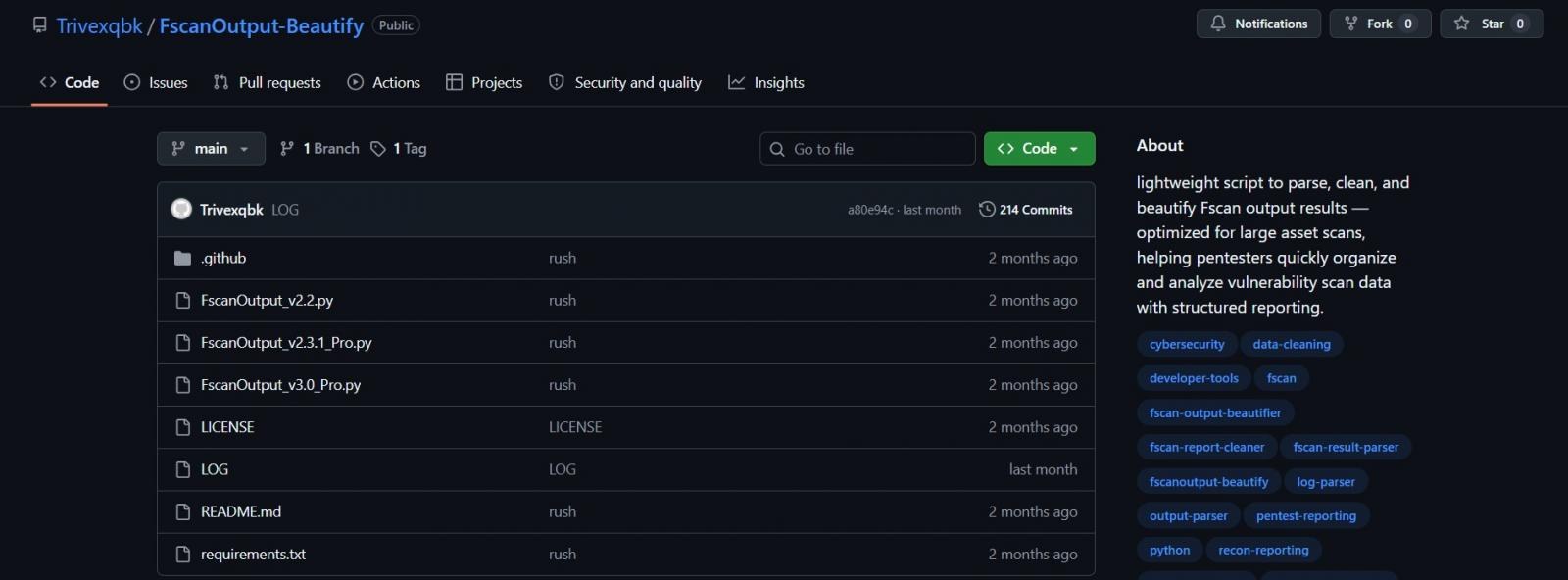
Researchers at Dr. Web identified more than 2,000 Windows machines that have fallen victim to the campaign. Among the discovered malicious repositories was a counterfeit tool marketed as a lightweight utility for parsing and formatting output from the Fscan network scanner.

Earlier iterations of the campaign relied on different lures, including blockchain-based games, bot software, and cheat utilities that primarily appealed to blockchain and gaming communities. The shift toward security-focused tooling represents a deliberate pivot in targeting strategy.
Obfuscation and Delivery Mechanisms
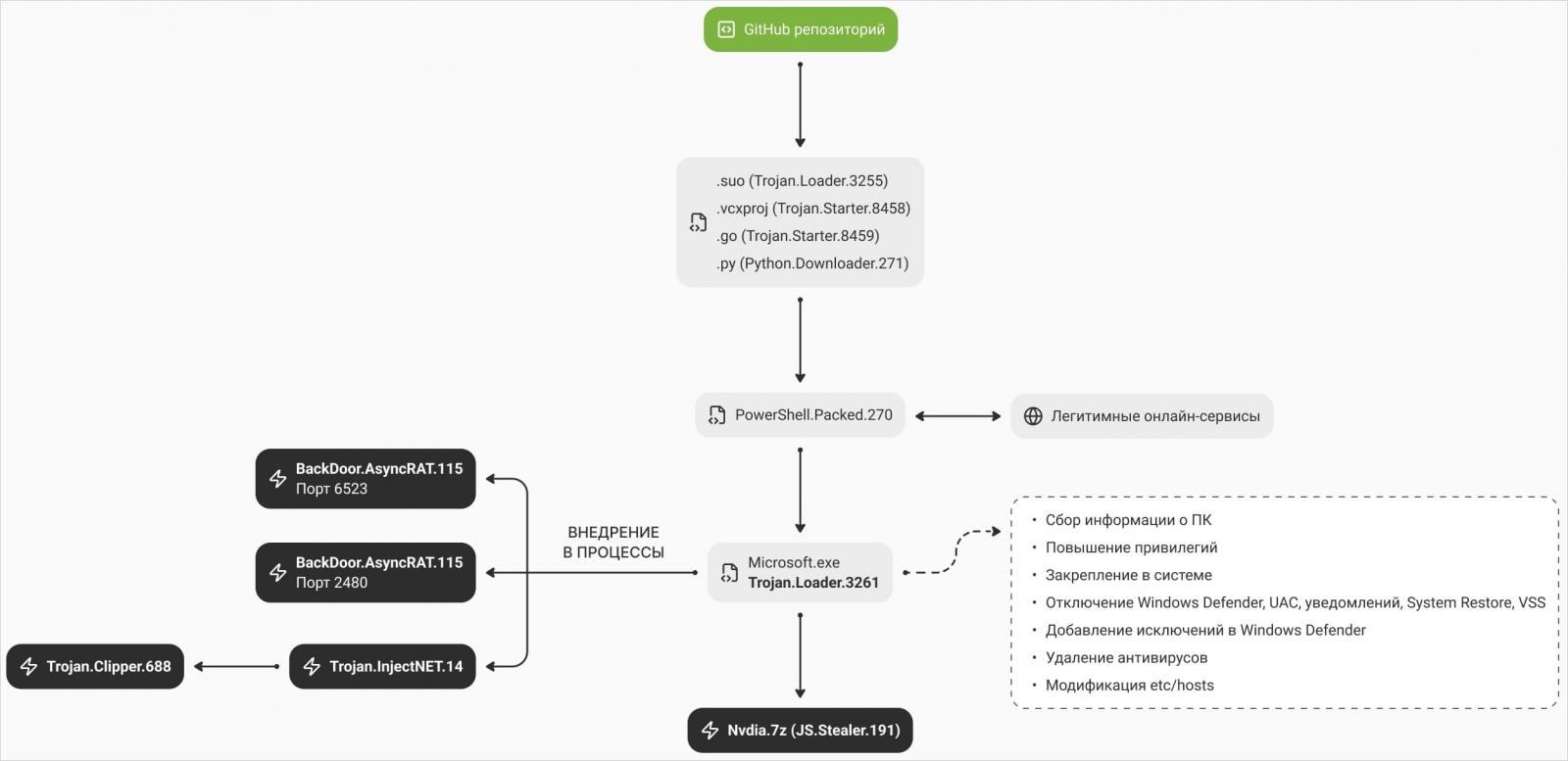
Dr. Web's analysis revealed malicious code inserted into Visual Studio project files, Python scripts, and Go source code, concealed using extensive whitespace—a longstanding evasion method that remains surprisingly effective. In certain Visual Studio configurations, a pre-build event executes the malicious code before the compilation process begins.
The infection sequence employs PowerShell to obtain an encrypted download URL, which retrieves a modular Electron-based loader identified as 'Microsoft.exe.' This loader performs several critical functions: establishing persistence, escalating privileges, disabling Windows security mechanisms and recovery options, and injecting subsequent-stage malware into running processes.
Evasion Techniques in Mode3
Dr. Web documented six evasion techniques employed by the loader's Mode3 configuration, which serves as its standard operational state:
- Spoofs explorer.exe as the malware's parent process
- Modifies Windows registry to deactivate Smart App Control
- Restores original ntdll.dll from disk to eliminate security software hooks
- Executes direct Windows system calls that bypass security tool interception
- Patches EtwEventWrite in memory to block event tracing
- Patches AmsiScanBuffer in memory to prevent antivirus script analysis
Should Mode3 fail to execute, the loader switches to Mode2, which adds Microsoft Defender exclusions and deploys a PowerShell script to decrypt and inject payloads into 'RegAsm.exe.'
Payload Delivery and Data Exfiltration
Compromised systems receive three distinct payloads: the AsyncRAT backdoor, clipboard-hijacking malware targeting cryptocurrency wallet addresses, and an information stealer. The infostealer harvests browser data, VPN configurations, FTP client settings, gaming credentials, and Discord tokens, transmitting stolen information through a Telegram bot.
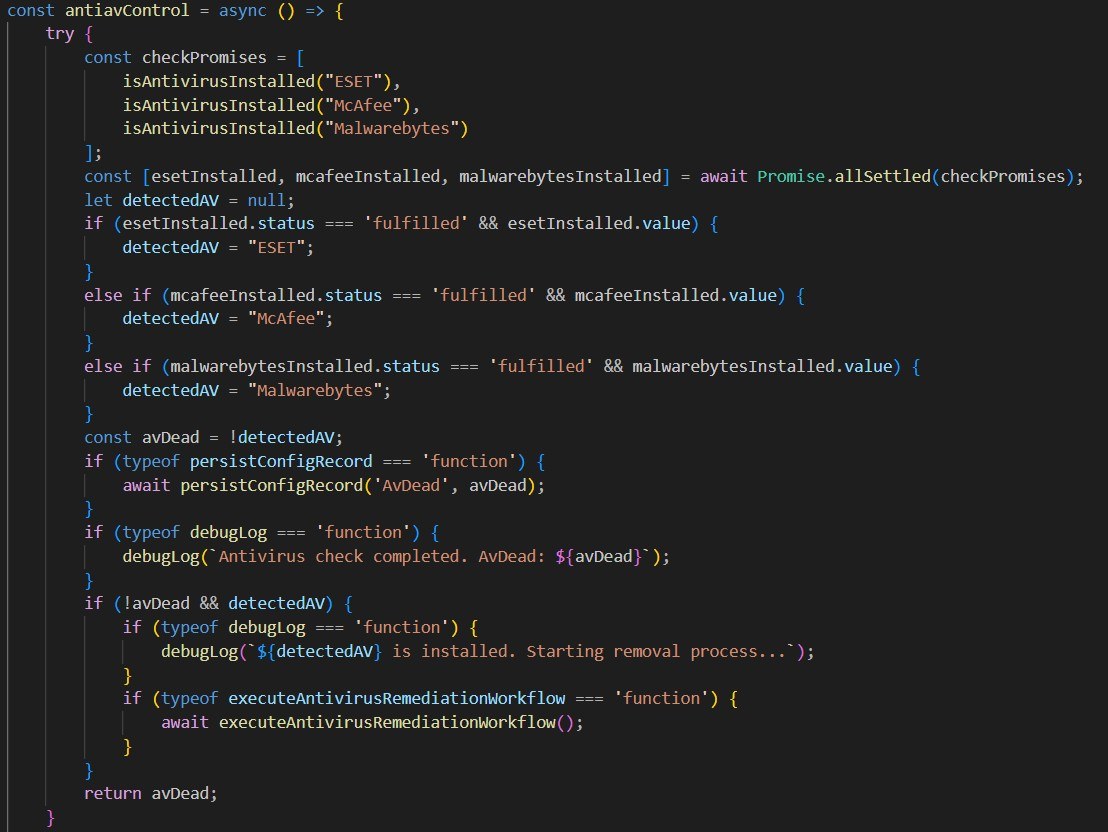
The malware attempts to uninstall ESET, McAfee, and Malwarebytes antivirus solutions, blocks their communication with update servers, and interferes with Windows backup functionality. Researchers also identified an incomplete component designed to maintain loader persistence and facilitate redownloading if the initial infection is removed.
The presence of this unfinished component indicates the threat actor continues developing the malware with additional capabilities. Dr. Web has published a comprehensive set of indicators of compromise related to this campaign.