
Vanderbilt University is managing response efforts following a cyberattack attributed to the BYOD ransomware gang. The threat actors claim responsibility for encrypting the institution's databases and exfiltrating sensitive information tied to students, employees, and research activities.
The university acknowledged the incident on Monday, notifying the campus community that university-owned devices, systems, and cloud infrastructure may have been compromised. The institution's Information Technology division launched an active investigation and containment operation.

In a statement posted to X, Vanderbilt stated: "We are currently responding to an active cybersecurity incident that may impact university devices, systems, and cloud-based services. Our Information Technology team is actively investigating and working to contain the situation."
The university directed members of the campus community to power down university equipment, disconnect from institutional wireless networks, and remain vigilant for indicators of compromise. Staff members were advised to watch for unexpected interface elements or security prompts, unauthorized modifications to stored files or access controls, missing or altered documents, unfamiliar software installations, and unsolicited login requests.
Anyone observing potentially malicious activity was instructed to refrain from independent investigation or remediation attempts. Instead, affected users should immediately shut down their systems and reach out to the university's IT support team.
To date, Vanderbilt has not released specifics regarding the attack methodology or confirmed data loss. The university has not publicly stated whether encryption occurred on institutional systems.
BYOD claims responsibility and threatens disclosure
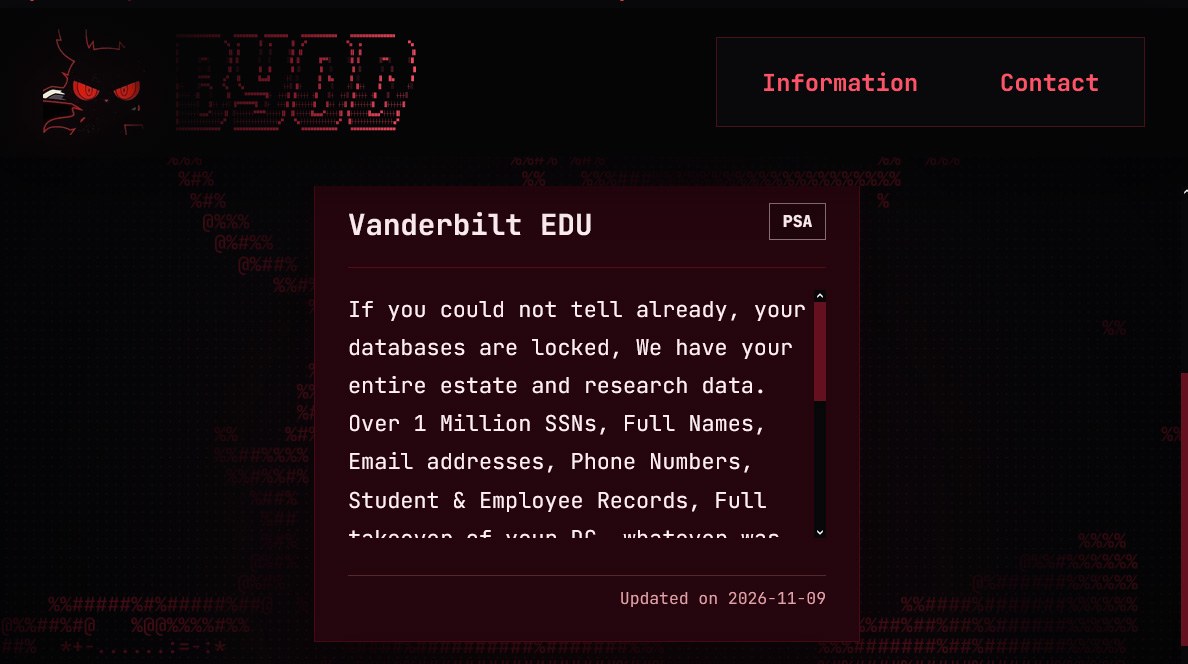
On Monday, BYOD posted a claim of responsibility on its data leak portal, asserting that it had locked Vanderbilt's databases and obtained sensitive records from the institution. The group's statement on the leak site read: "If you could not tell already, your databases are locked, We have your entire estate and research data. Over 1 Million SSNs, Full Names, Email addresses, Phone Numbers, Student & Employee Records, Full takeover of your DC, whatever was on your network, we possess."
A screenshot provided to BleepingComputer depicted a compromised computer screen containing Vanderbilt-associated icons alongside a ransom notice file named README_BYOD_31.txt. The ransom message included a reference to the BYOD leak site and contact details for the SESSION encrypted messaging application to facilitate negotiation with the attackers.
The ransom note stated: "Oh no, you have been compromised by BYOD :<. We have all of your data including your backups, your entire network is compromised. Yes, this affects your student and employee data the most, every single SSN is archived, full names, email addresses, phone numbers, work addresses, roles, birthdays, quite literally everything."
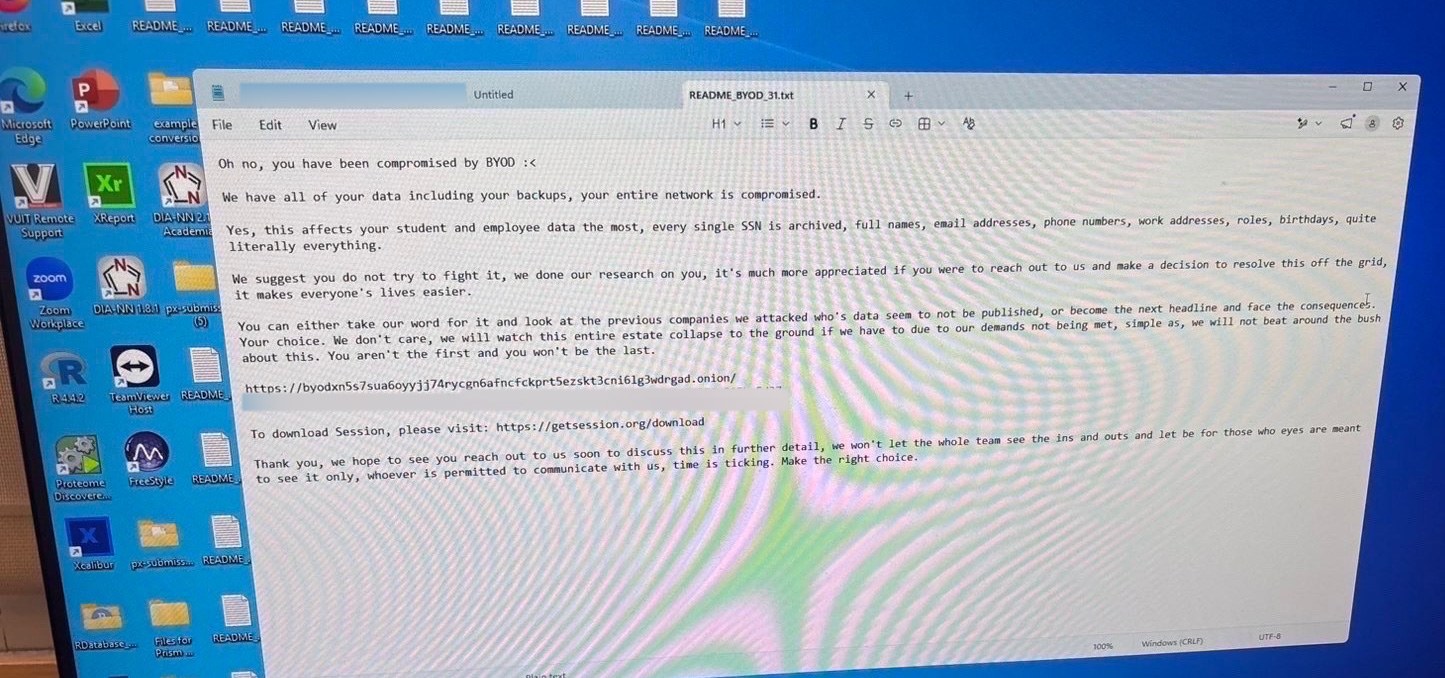
The threat actors warned of data release and additional network disruption if the university declined to engage in ransom discussions. Additionally, video content posted to YouTube and shared with BleepingComputer documented infected systems playing audio notifications declaring that the network had been compromised by BYOD.
https://www.youtube.com/embed/EevtphQIH6s
Although the ransom note and video evidence point to BYOD involvement, Vanderbilt has neither officially confirmed the group's participation nor verified whether encryption affected institutional systems.
BYOD emerged as a ransomware operation in 2026 and currently maintains five other organizations on its public leak site. The group claimed responsibility for a previous attack against the University of New Mexico Health Sciences Center last month, an incident that resulted in system failures and disrupted patient services and educational operations.