
Cloudflare's Radar platform delivers live visibility into global Internet activity by tapping into the company's worldwide network infrastructure. The tool supports Cloudflare's broader mission of building a better Internet by transforming network data into insights that are transparent, understandable, and useful across different audiences. Since its 2020 debut, Radar attracted a core following of technically sophisticated users—network operators and academic researchers who monitor industry patterns and worldwide developments through the platform's data.
Yet Radar holds untapped potential as a public resource for journalists, human rights organizations, government officials and ordinary Internet users. Expanding Radar's reach to these groups represents a key strategic objective, prompting a comprehensive reassessment of how the interface works: Could the platform become more welcoming to new audiences without sacrificing the analytical rigor and precision that current users depend on?
Problems in the original interface
The previous landing page successfully displayed the breadth of Radar's dataset, but its presentation structure created comprehension obstacles. A bento box arrangement treated all elements with equal prominence, vertical card layouts interrupted typical reading flow, and the visual treatment felt misaligned with Cloudflare's design identity.
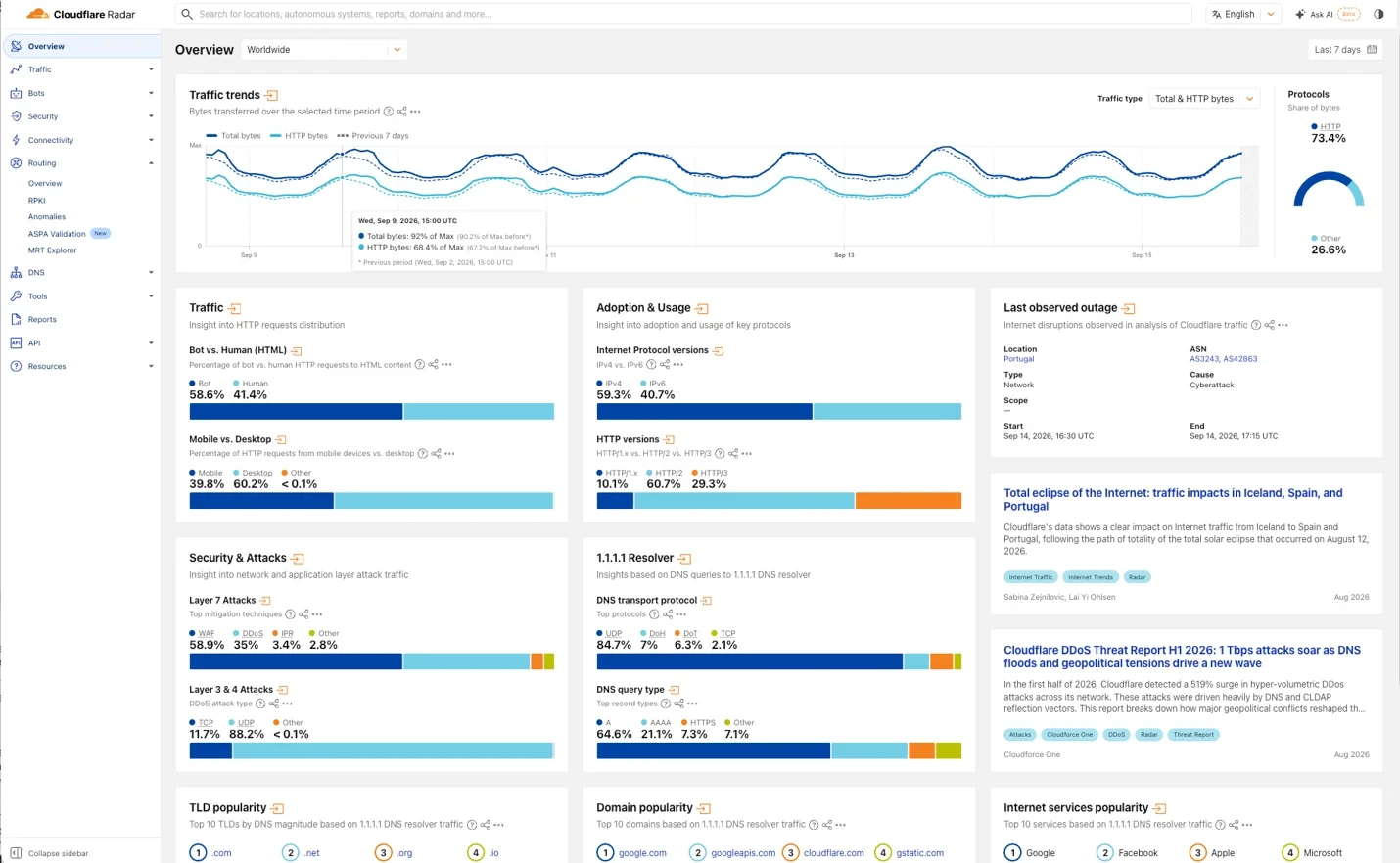
User feedback highlighted these shortcomings. An external user noted that demonstrating Radar to his students proved challenging—a signal that the platform could seem daunting to first-time visitors. This input shaped a key design goal: constructing a landing page that creates a logical progression through information rather than forcing users to process everything simultaneously.
Improving accessibility extended beyond simple content reorganization. The team recognized that alignment with Cloudflare's broader visual system mattered significantly. For outside users, design consistency directly influences both confidence and ease of use. A unified Cloudflare experience reinforces Radar's credibility as an authoritative platform, while recognizable interface patterns reduce cognitive load when navigating intricate information.
The redesigned Radar landing page
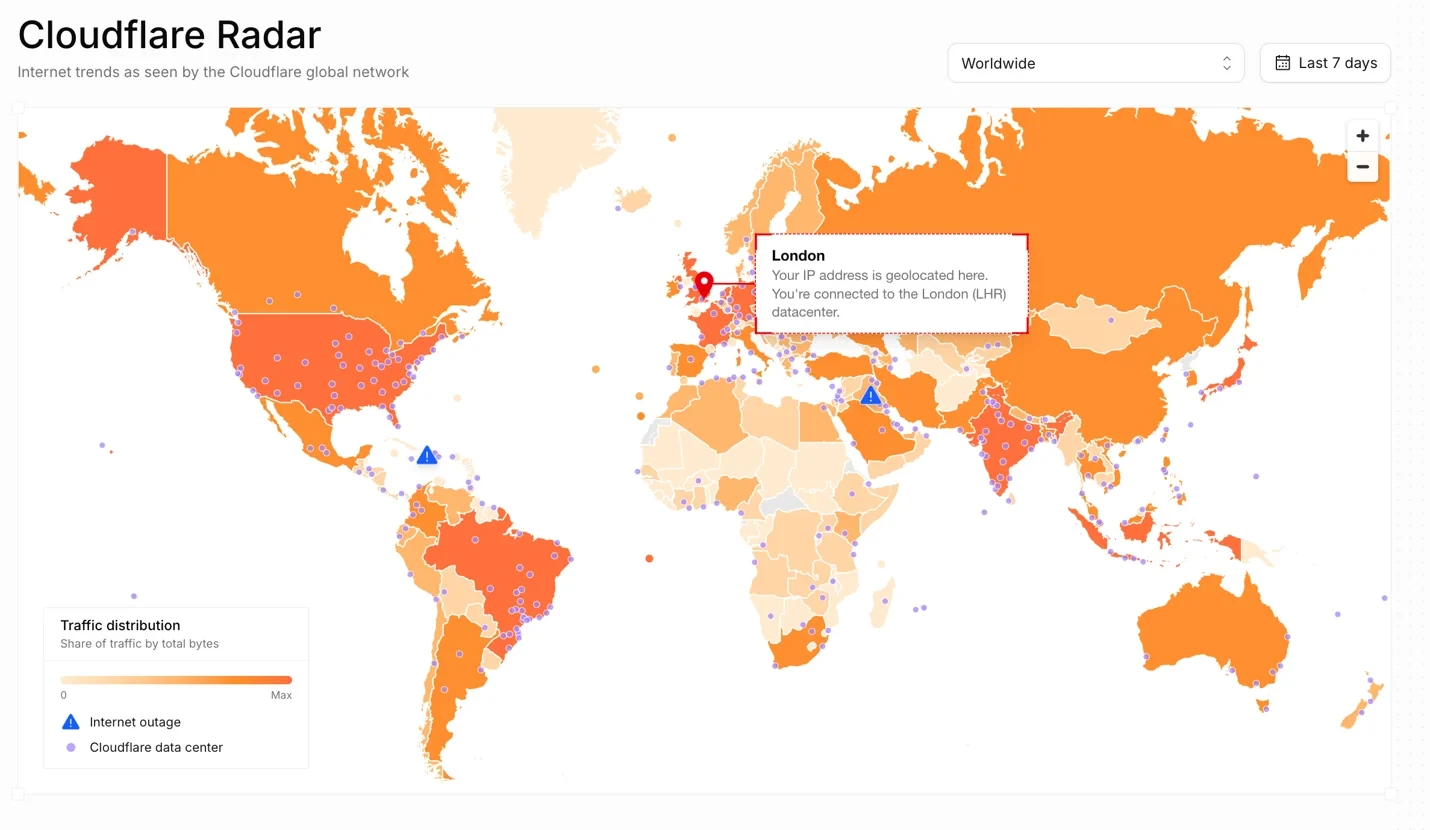
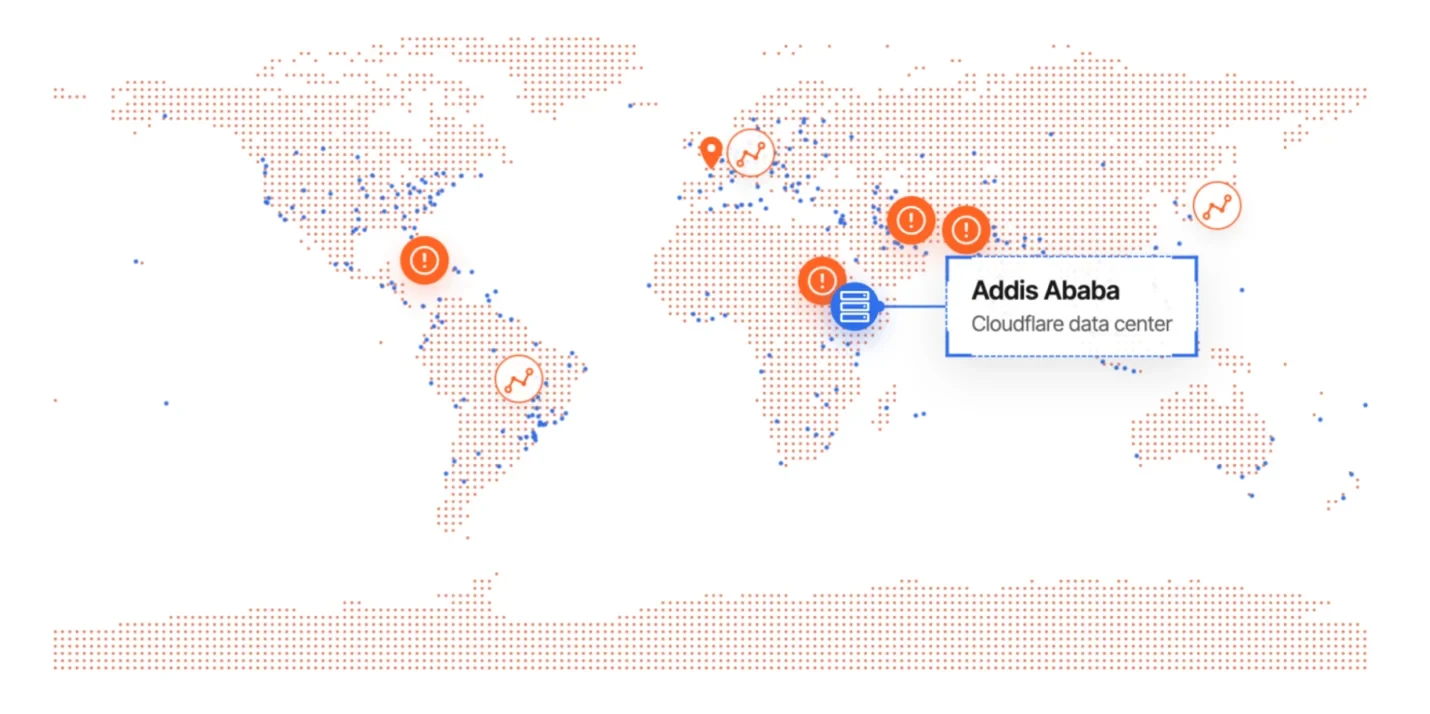
The updated Radar adopts a visual metaphor that audiences across skill levels understand intuitively—a geographic map. Though the Internet transcends physical geography in many respects, its practical significance for daily life remains grounded in geographic context.
The upper section emphasizes traffic patterns and service disruptions. Outages appear first because they represent the most concrete, timely, and noticeable indicators of Internet health. Traffic data demonstrates the scope and scale of Radar's information assets. The map simultaneously functions as a navigation tool, directing users from a worldwide perspective into specific regions, patterns, and analytical narratives.
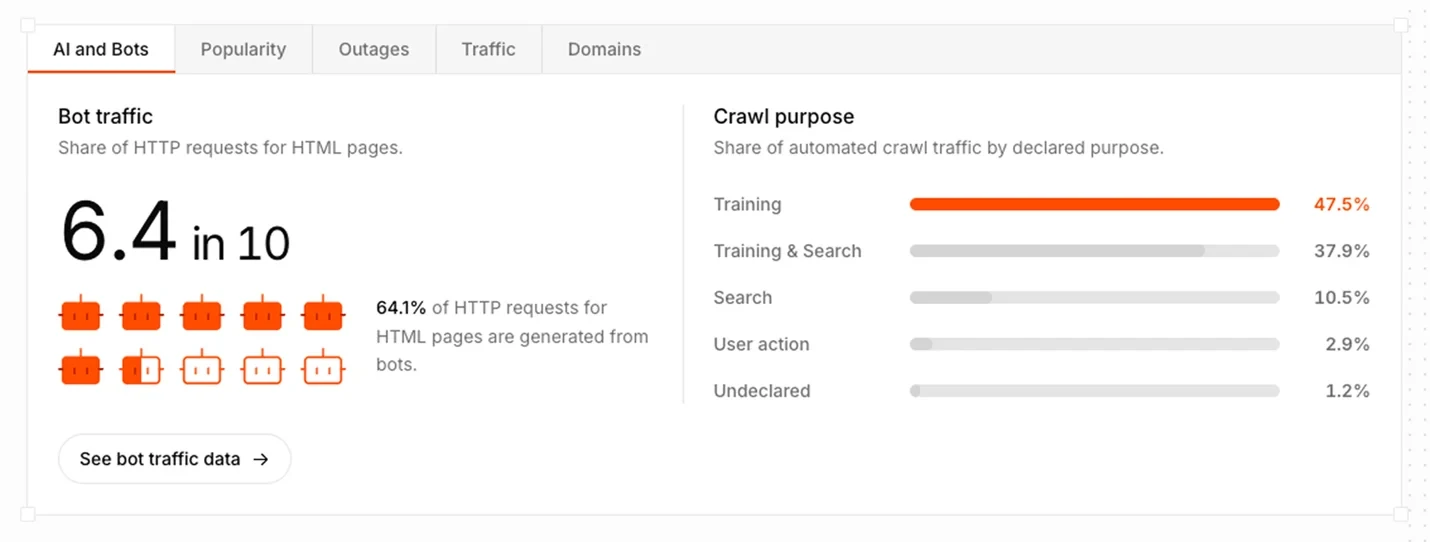
The previous bento box chart arrangement transformed into a tabbed navigation system that encourages deliberate exploration of information. Tabs display summary metrics that illustrate Radar's scope while prompting deeper investigation. This tabbed design establishes clearer information hierarchy, prevents cognitive overload, and showcases the variety of data Radar offers.
Design process and evolution
Building Radar's design system
The design team examined Cloudflare's existing content landscape, which spans three distinct categories:
- Marketing properties (including cloudflare.com)
- Content platforms such as the Cloudflare Blog and Developer Docs
- Product interfaces
The team determined that Radar occupies a position spanning all three domains. Fundamentally a data product, Radar also functions as a public-facing, information-dense platform. The final approach synthesizes design principles from each area: marketing-level accessibility, content-style organization and navigability, and maintainability through Kumo components from Cloudflare's product design system.
Design iterations
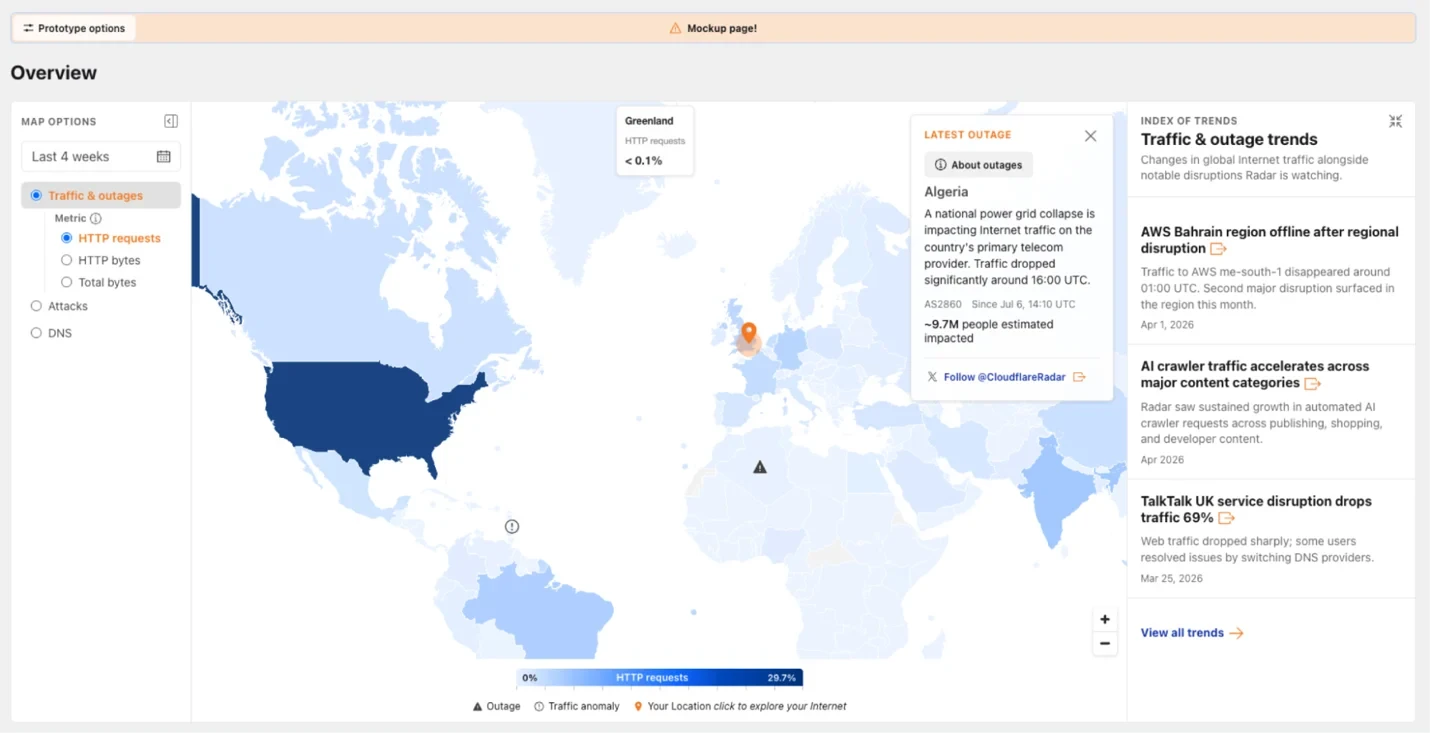
From the beginning, the team recognized that the landing page needed to convey Radar's worldwide scope. Since Radar enables understanding of Internet activity across nations and regions, a map represented the most direct approach to immediately communicate this geographic breadth.
The map underwent numerous refinement cycles as designers balanced data density against user-friendliness. Initial concepts proved overly complex—the team attempted to establish authority through information-heavy visualizations. Subsequent versions swung toward marketing aesthetics, appearing more approachable but risking the perception that Radar's current data felt static or oversimplified. The final design settles between these extremes: it conveys the character of live data while remaining legible.
Radar's strategic direction
Cloudflare processes roughly 20% of worldwide web traffic, positioning Radar to communicate distinctive and significant narratives about the Internet. Realizing this potential requires equipping all users with instantaneous information on security, performance, and traffic patterns.
This redesign represents a starting point toward that vision. Going forward, Radar will emphasize tools, data representations, and narrative approaches that lower barriers for new users while strengthening the underlying data infrastructure. By combining technical precision with an intuitive, user-focused design, Cloudflare aims to enable broader audiences to examine, interpret, and communicate Internet conditions.
Feedback sought
This redesign marks the initial phase of creating a more intuitive and scannable Radar interface. The work continues, and user input remains essential. What features perform well? Where do gaps remain? Which insights demand easier discovery?
Cloudflare welcomes comments through @CloudflareRadar on X, radar.cloudflare.com on Bluesky, or by email at radar@cloudflare.com.