
Monitoring how regimes pursue dissidents abroad, connecting people in mental health crisis with counselors, and pushing for online free speech protections—these represent just a sampling of projects civil society groups are pursuing with Cloudflare's infrastructure. The company announced today that it has distributed more than $7.5 million in credits to dozens of nonprofits building with its developer services, and is accepting applications for a second cohort of its nonprofit startup program.
Artificial intelligence is reshaping how organizations operate, and Cloudflare Impact aims to ensure nonprofits access these tools early. The first cohort demonstrates what becomes possible when AI applications are both secure and affordable to build and deploy.
From security to building
Cloudflare's mission centers on enabling free expression and diverse viewpoints online. A cornerstone of this work is Project Galileo, which supplies free cybersecurity services to civil society organizations and currently shields more than 3,400 domains across more than 120 countries.
Through these partnerships, the company learned that organizational priorities have shifted. Groups no longer seek only to protect existing systems—they want to construct new ones. AI has enabled non-technical staff to design, build, and expand applications tailored to their specific workflows and missions.
The sector faces headwinds. Many civil society groups report financial hardship following government funding cuts that triggered layoffs and program closures. Some have turned to AI to accomplish more with constrained resources. Yet adoption remains scattered. A CIVICUS survey found that more than half of civil society respondents identified privacy as a barrier. These organizations manage sensitive information—activist locations, anonymous source identities—and face disproportionate cyberattack risk, according to Cloudflare's own data. Cost presents another obstacle: 48 percent of CIVICUS survey respondents cited financial constraints as limiting their AI adoption.
Cloudflare's developer services embed security and privacy from inception. Applications running on its global network gain automatic protection against distributed denial-of-service attacks and unauthorized system access attempts. Civil society groups can build and operate applications more affordably. The lightweight, serverless architecture scales with actual demand, eliminating the need to provision or pay for unused capacity. Workers AI removes the requirement to operate dedicated GPU hardware, while AI Gateway supplies rate limiting, visibility into AI usage patterns, and intelligent model routing that cuts unnecessary model calls and manages expenses.
First cohort: $7.5 million awarded to 30 organizations
During Birthday Week last year, Cloudflare expanded its startup program to include nonprofits and public interest entities, offering each up to $250,000 in credits toward developer services. The company selected 30 organizations for its inaugural nonprofit startup cohort, which have built tools addressing climate science, humanitarian aid, mental health, civic participation, and education.
LebTown—local news rebuilt through automation
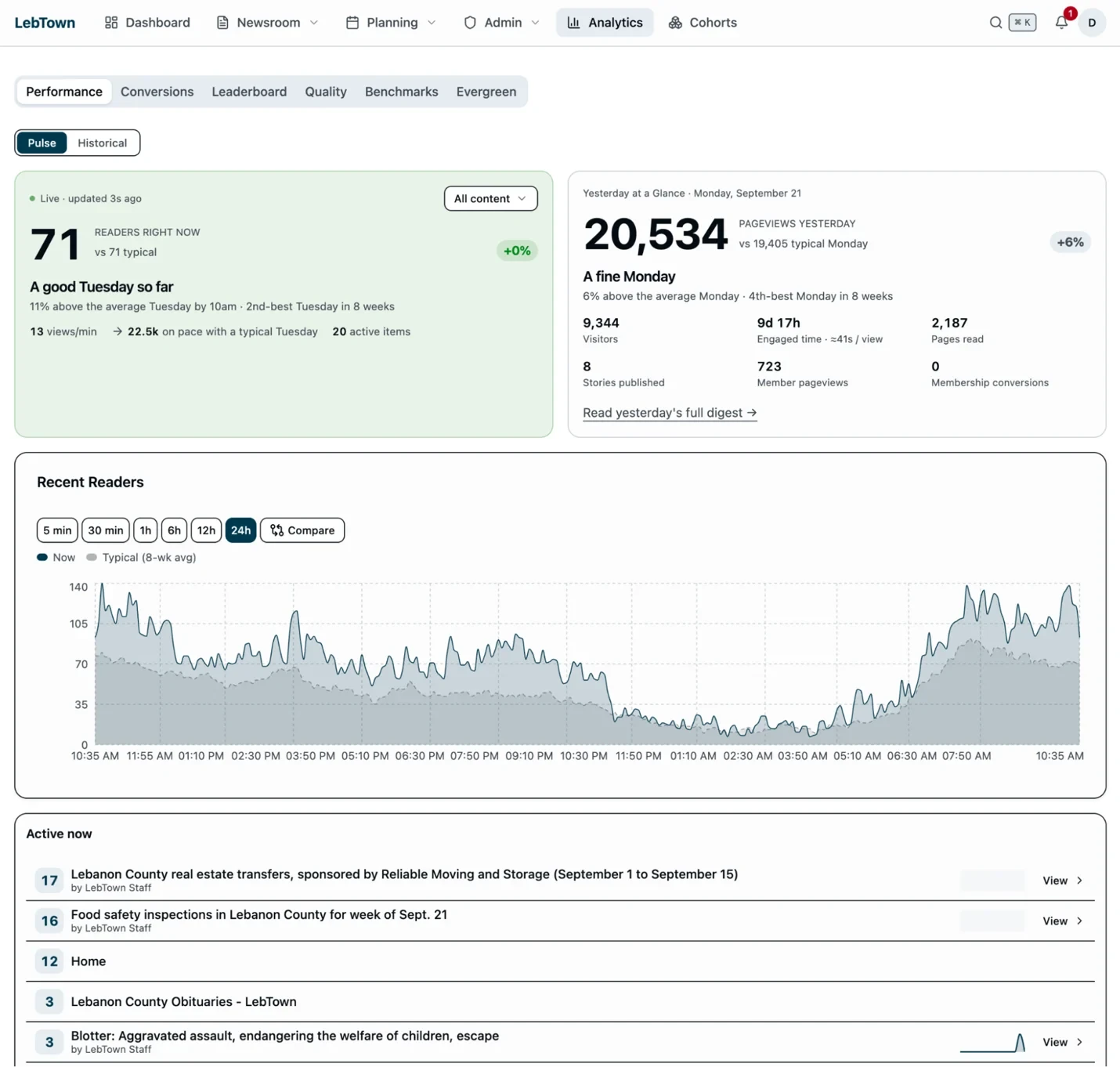
LebTown, an independent nonprofit newsroom covering Lebanon County, Pennsylvania, previously managed its entire operation through two Google Docs, a Google Calendar, Discord, and Gmail. The outlet has now deployed a custom editorial management system that tracks stories from initial pitch through publication, measures audience reach, and allows reporters to log community impact via app or Discord. The team also constructed tools that transform county real-estate transfer records from PDF files into structured data, plus a real-time copyeditor agent integrated with LebTown's WordPress installation.
Kaya Guides—expanding mental health reach
Kaya Guides operates a WhatsApp-based mental health platform that matches people experiencing depression in India with trained lay counselors, providing accessible support without the expense or delays of conventional therapy. As of September 2026, the platform has served 10,439 people, with 2,325 currently active. To meet growing demand, the team migrated its care management system to Cloudflare and now handles approximately 500,000 WhatsApp messages monthly. They developed a live AI system that monitors counseling calls and delivers real-time guidance to counselors to maintain session quality. Kaya reports these tools have produced a program that remains consistent and self-correcting as it expands, without substantial added cost or complexity.
The Snorkelling Society—mapping global snorkeling locations
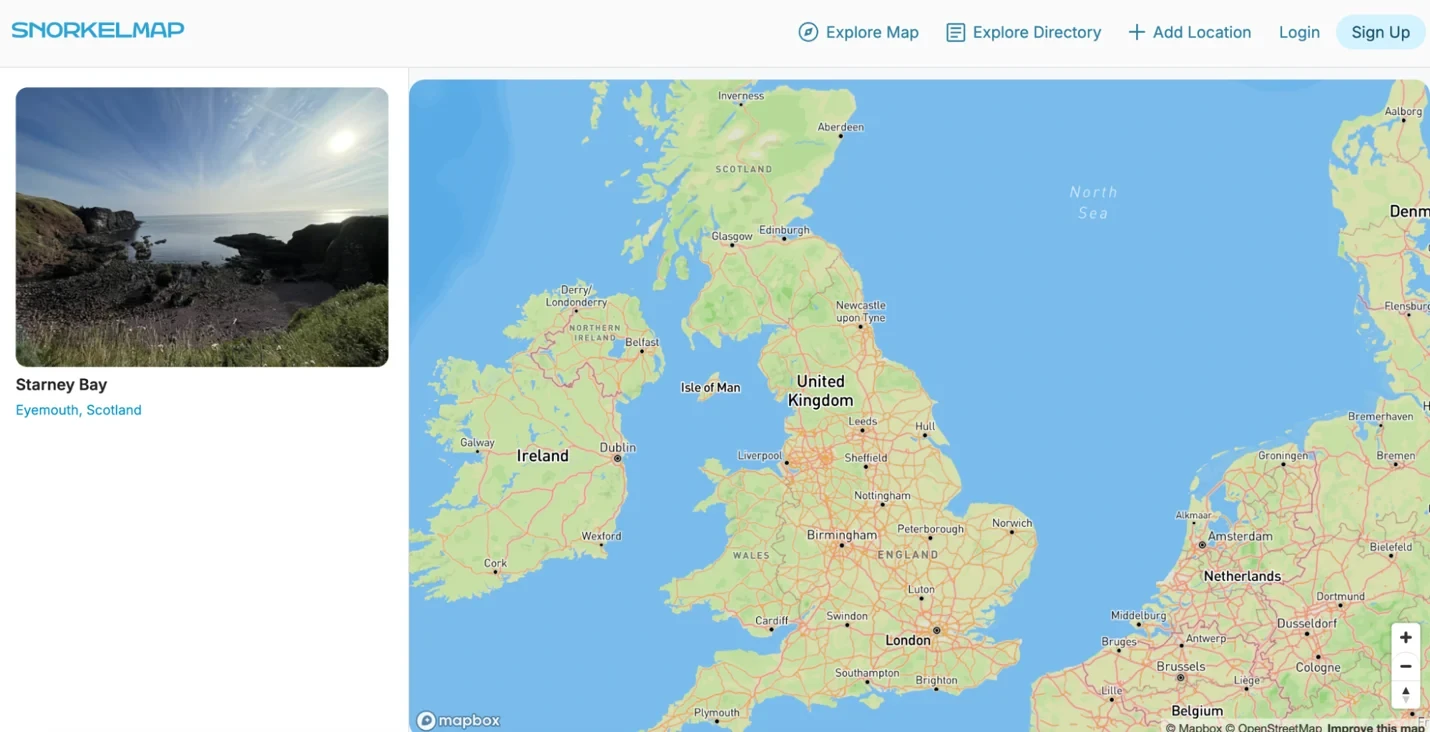
The Snorkelling Society, a UK nonprofit, is developing a web and mobile application called SnorkelMap for the international snorkeling community. The platform enables users to discover snorkeling destinations, review location information, and share their own experiences. Since volunteers maintain the application, the organization relies on Cloudflare to secure storage for community contributions and uploaded images while defending against cyberattacks.
Building complex automation for human rights work
Larger civil society organizations sought to develop intricate workflows and requested additional engineering assistance. These initiatives addressed a recurring challenge: vast quantities of manually gathered, scattered information requiring integration, review, and structuring for meaningful analysis. The data was often sensitive—names of human rights abuse victims—where unauthorized access, data leakage, or AI hallucinations could carry serious consequences.
Beyond providing free developer service access, Cloudflare assembled volunteer engineers—product specialists, front-end developers, back-end engineers, and security experts—to design and build these systems. The team is examining where automation delivers value, which models suit each task, how to embed necessary security controls, and where human judgment remains essential.
Freedom House—tracking transnational repression
Founded in 1941, Freedom House advances democracy and freedom worldwide. The organization maintains the world's most thorough database of transnational repression incidents—instances when governments cross borders to suppress dissent among diaspora and exile populations. Manually identifying incidents and coding transnational repression patterns requires reviewing thousands of potential cases and is labor-intensive. Cloudflare is creating an interactive dashboard that ingests, structures, and flags potential transnational repression cases from public sources. The tool is fine-tuned to Freedom House's methodology to boost accuracy, with the organization participating in every phase. Given the subject's sensitivity, security and data minimization have guided every choice. Automating this initial research stage frees staff to pursue deeper analysis, produce reports, and engage policymakers on transnational repression.
Global Network Initiative—tracking regulatory developments
The Global Network Initiative is a membership organization of civil society groups, academics, investors, and technology companies (including Cloudflare) dedicated to advancing free expression and privacy online. GNI monitors a rapidly shifting landscape of regulatory proposals, policy changes, and legal developments spanning dozens of jurisdictions, from EU online transparency mandates to Asia Pacific data localization rules. Cloudflare is constructing a dashboard that identifies these proposals and recommends advocacy opportunities aligned with GNI's mission and prior work. The tool surfaces, explains, and classifies relevant news, comment requests, and legislative activity. It also manages opportunities by monitoring the internal review process and notifying staff of approaching deadlines.
Article One—assessing human rights impacts
Article One is a specialized consultancy helping companies understand and reduce human rights impacts of their policies, products, and operations. This work involves reviewing and condensing extensive documentation, including factory audits and country-context reports. Cloudflare is collaborating with Article One to develop a risk assessment tool that processes and organizes this information, identifies significant human rights risks, and generates preliminary recommendations for staff review and refinement. AI structures the information, but Article One retains all judgment calls.
Opening the second cohort
The evolution of civil society work in the AI era is remarkable, and Cloudflare sees itself as contributing to this progress. Direct collaboration with these organizations advances their missions while informing how the company approaches security and privacy in high-risk settings and scales similar initiatives.
The first nonprofit startup cohort demonstrates how automation enables the next generation of community service organizations to deploy AI and automation securely and affordably.
Cloudflare is now accepting applications for a second cohort of nonprofit organizations. Interested organizations can apply and select the nonprofit checkbox.