Microsoft has positioned the Surface Laptop Ultra as a direct competitor to Apple's MacBook Pro line, targeting creatives, developers, and particularly those working with AI. The device combines Nvidia's N1X-based RTX Spark platform featuring a Blackwell RTX GPU with up to 6,144 cores, a CPU with up to 20 cores, up to 128GB of unified memory, and pricing that undercuts Apple's offerings. For developers seeking to deploy local AI models while maintaining a capable machine for video editing and other demanding tasks, the combination presents a compelling alternative.
Testing focused on the high-end $4,300 configuration with 64GB of RAM and a 1TB SSD over the course of a week, including mobile use. The test environment included standard tools for local model deployment such as Unsloth Studio, Ollama, Hermes Agent, and others. Compared to a Mac Studio with the M4 Max chip running at home, the Blackwell GPU generally demonstrated comparable or slightly faster performance for the same workloads, with no noticeable compromises in running local models.
Inference speed varies significantly by model architecture
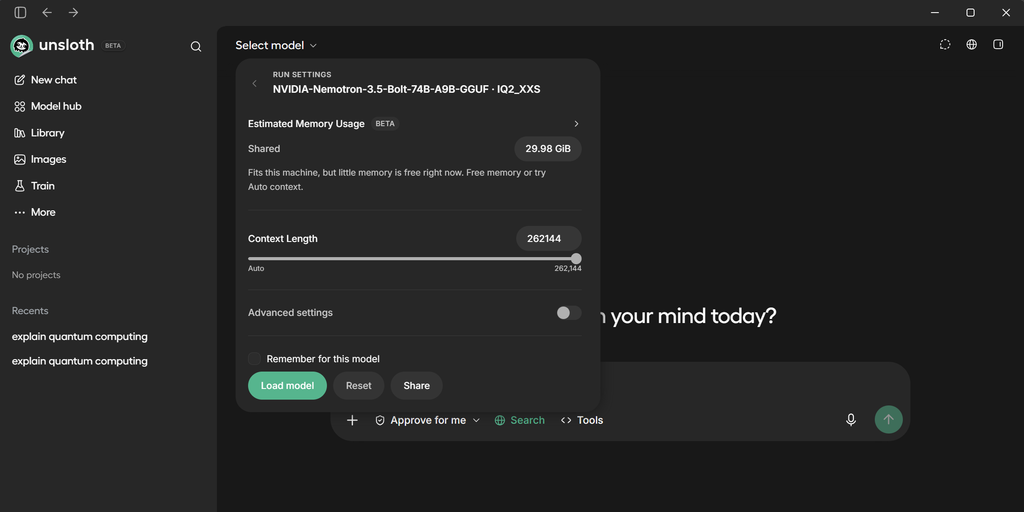
The newly released Nemotron 3.5 Bolt model delivered particularly strong results, achieving 56 to 60 tokens per second and occasionally higher. As a heavily quantized model with 9B active parameters, this performance level makes it suitable for deployment in agent frameworks like Hermes Agent or OpenCode.
Denser models presented different challenges. The Qwen 3.8 27B model at 8-bit quantization achieved only 8 to 9 tokens per second in Unsloth Studio—marginally usable at best. Reducing quantization to 4-bit improved throughput to 25 to 28 tokens per second. The 8-bit Gemma 4 26B-A4B, which employs mixture-of-experts architecture, reached approximately 40 tokens per second, demonstrating that this technique remains essential for running diverse models locally at practical speeds.
Battery operation introduces substantial performance penalty
All previous measurements were conducted with the laptop connected to its 140W charger. While Microsoft claims its benchmarks show 99.6% performance retention on battery power, real-world AI workloads exhibited far more dramatic degradation.
The 4-bit Qwen 3.8 model dropped from 25-28 tokens per second to approximately 18 tokens per second on battery. Nemotron 3.5 Bolt performance fell to 42 to 45 tokens per second. Across tested workloads, a realistic expectation is a 20% to 25% performance loss when unplugged. Gaming workloads showed similar degradation patterns. Microsoft specifies 12 hours of active web usage on battery, but sustained local AI workload execution would likely yield only a few hours of runtime based on observed power consumption.
Memory configuration presents optimization questions
The 64GB configuration creates an interesting positioning challenge. Current model availability clusters heavily in the 27B to 30B parameter range, leaving substantial headroom for KV cache and concurrent applications. However, relatively few models exist in the 32GB to 48GB range that would fully utilize this capacity without requiring the maximum configuration. Upgrading to 128GB of RAM increases the Surface Laptop Ultra's price to $5,900.
Thermal management and acoustic output
The computational density—Microsoft specifies up to 1 petaflop of FP4 AI performance—generates considerable heat and noise. The dual-fan cooling system produces audible operation that becomes noticeable during sustained AI workloads, particularly when coding agents or language models process complex queries. The noise level is not extreme but sufficient to become distracting during extended work sessions. The separate Surface RTX Spark Dev Box, built on the same N1X platform, incorporates approximately one thousand air vents, likely enabling higher sustained performance through improved thermal management. Outside of GPU-intensive tasks, the laptop remains quiet with fans remaining inactive during typical daily use, and thermal load decreases rapidly once GPU utilization drops.
Additional hardware and software observations
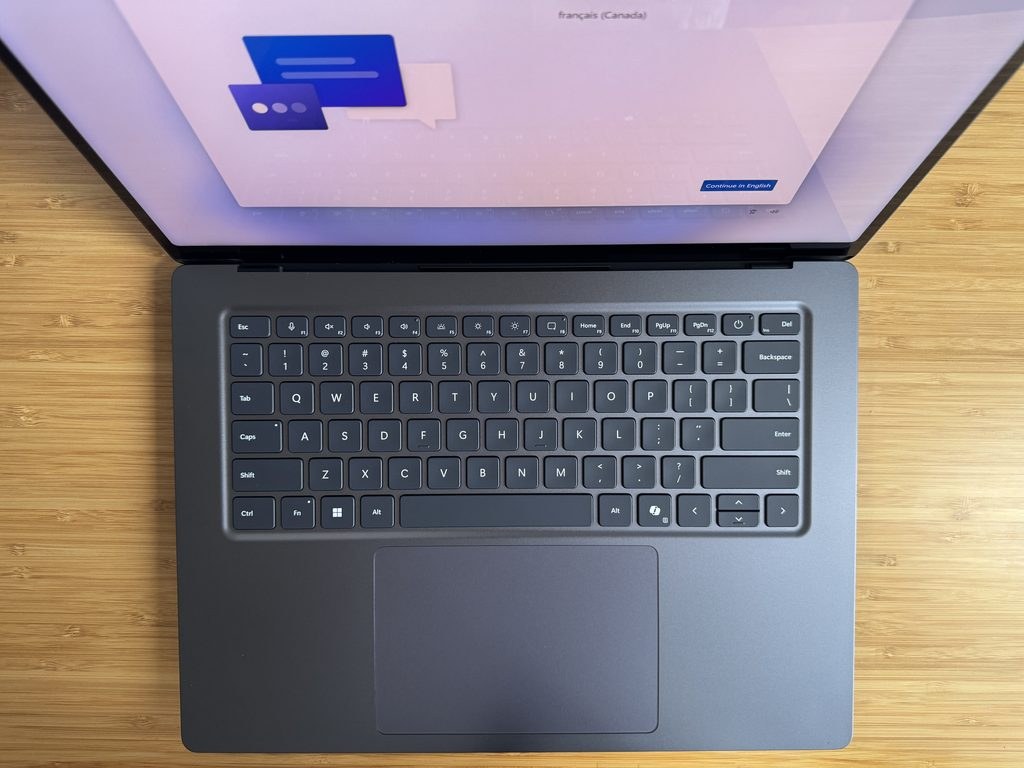
- The touchpad offers substantial surface area with haptic feedback support. Limited application support currently exists, though DaVinci Resolve demonstrates the feature's utility for editing workflows by providing tactile feedback when the playhead snaps to alignment points.
- Speaker design incorporates side vents near the front bezel that produce a notably wide stereo field, particularly evident in gaming scenarios.
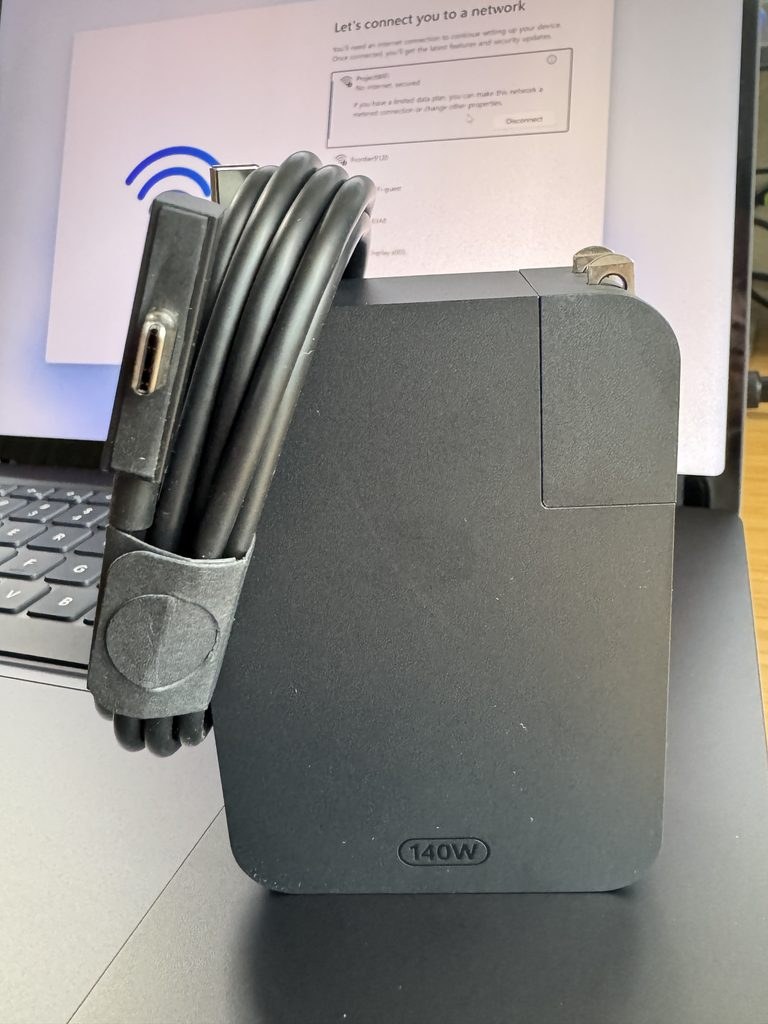
- A new magnetic USB-C charging connector resembles the magnetic Connect used on other Surface devices, though cable loss remains a practical concern.
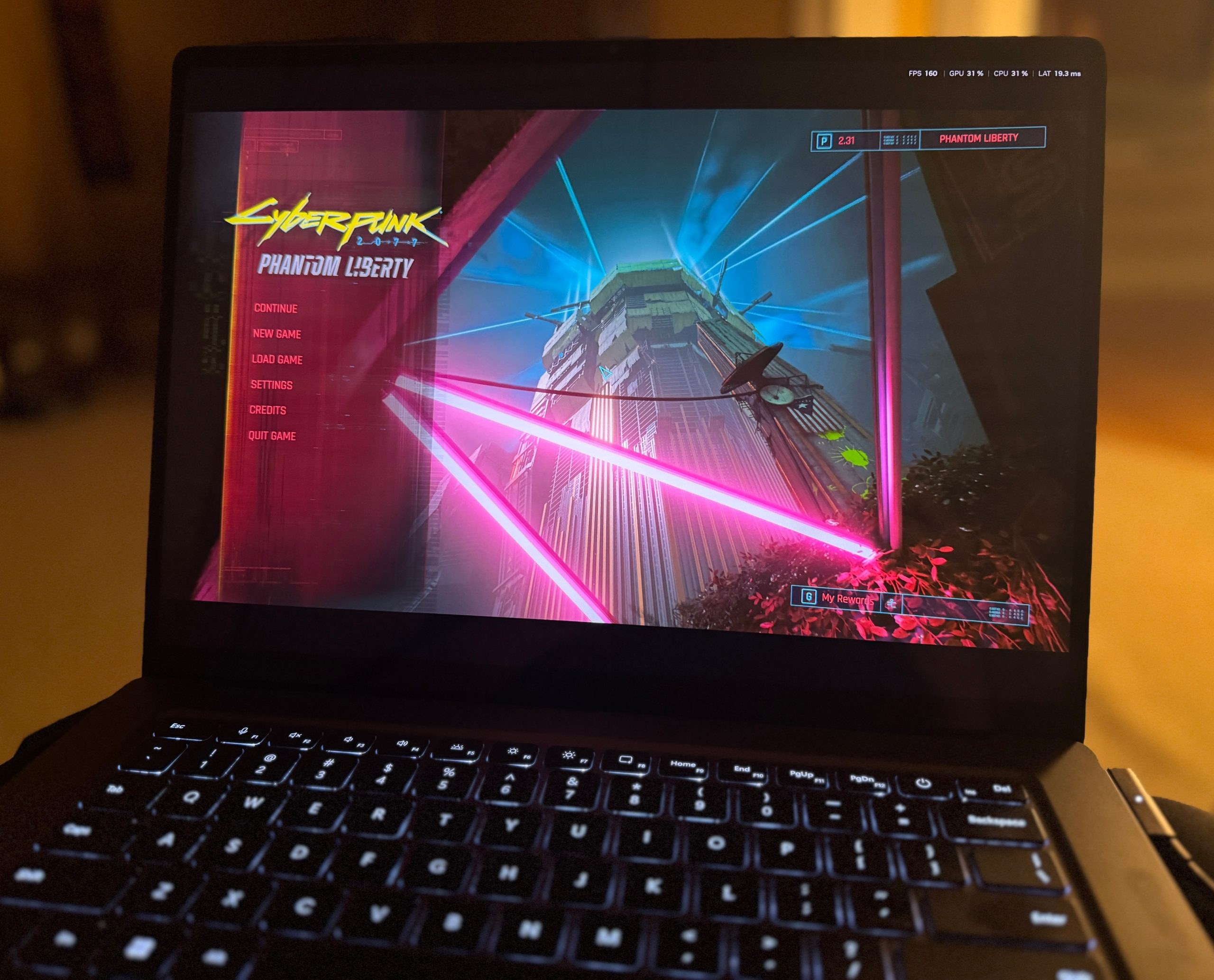
- Gaming performance on Windows ARM remains early-stage but functional through Microsoft's emulation layer. GPU-focused titles perform better than CPU-bound games. Cyberpunk 2077 ran at approximately 60fps in 2K resolution with ray tracing enabled, and frame generation plus settings optimization enabled 4K gaming. The Witcher 3 remaster maintained 60fps in 4K with ray tracing disabled. The 15-inch 3:2 touchscreen (3270×2180 resolution) functions as an effective 3K display, making 4K gaming impractical without an external monitor.
- Windows on ARM has matured considerably over the past year. While certain applications and games remain incompatible or suboptimal, no significant compatibility issues emerged during testing. Developer support is expanding, with projects like OpenCode now offering Windows ARM64 builds.
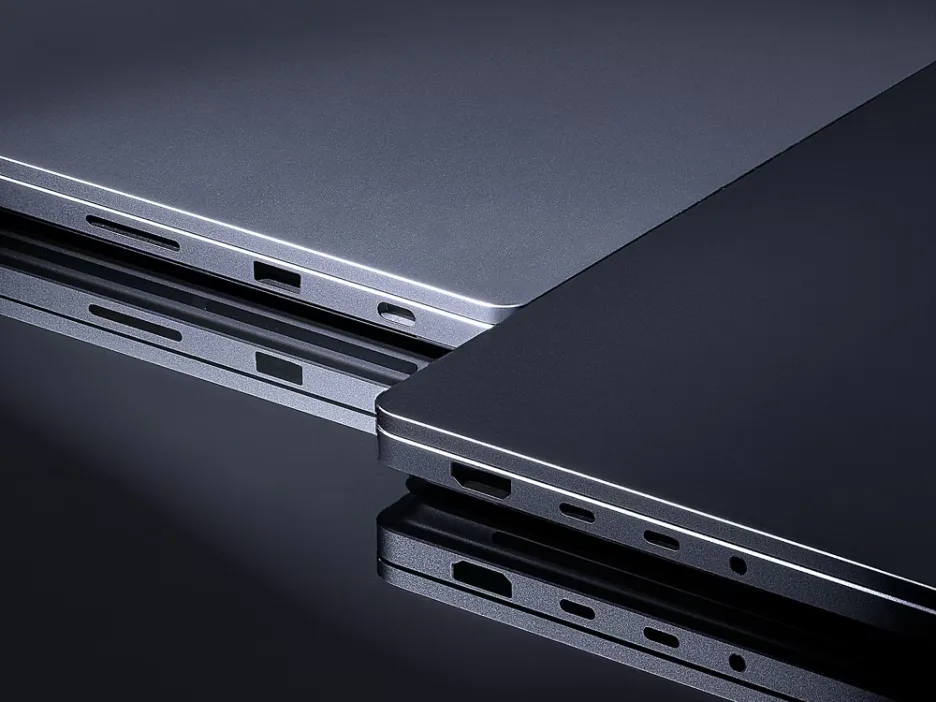
- Port selection includes two USB-C, one USB-A, HDMI, a headphone jack, and an SD card reader, eliminating the need for a USB-C hub with most legacy accessories.
- At 4.41 pounds (2kg), the device is noticeably heavier than typical MacBook Air models.
- The SSD is user-replaceable via four screws on the bottom panel without voiding the warranty.
The display delivers excellent image quality and brightness but exhibits high reflectivity that can prove distracting in certain lighting conditions.