Cloud invoices reveal total GPU expenditure, but they rarely answer the questions that matter most to engineering teams. When finance wants to know which workload triggered a cost spike, or when an engineer needs to assess whether a cluster can absorb additional jobs without scaling up, a line item on a bill provides little insight. GPUs may appear fully allocated at the device level while portions of their capacity assigned to specific workloads remain unused—a distinction that standard billing cannot capture.
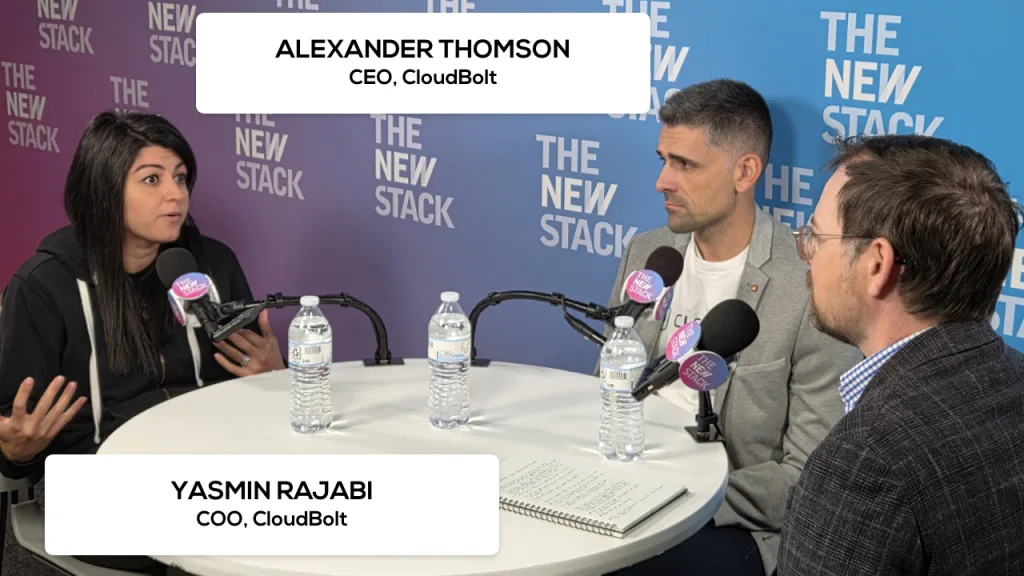
At KubeCon + CloudNativeCon in Salt Lake City, The New Stack's Matt Burns spoke with CloudBolt CEO Alexander Thomson and COO Yasmin Rajabi about why AI infrastructure costs have become a priority for corporate leadership and boards. Infrastructure concerns that once remained internal to engineering teams now arrive with executive deadlines and calendar invitations from finance departments. "We have to be more efficient with what we're spending," Thomson said.
Tracking expenses down to individual pods
CloudBolt unveiled GPU optimization capabilities for Kubernetes at the conference. The solution gathers pod-level usage data and correlates it with cloud cost information at one-minute intervals, enabling platform engineers to pinpoint which workloads are driving cost increases, identify underutilized GPU capacity, and measure power consumption across GPUs. The system also suggests optimization actions, including reassigning workloads to alternative node types.
We map that back to the cloud cost so that you have per-pod accurate GPU cost
Yasmin Rajabi
This granularity shifts how conversations happen between platform and application teams. Rather than issuing blanket directives to reduce GPU usage across the board, engineers can target specific workloads and question whether their current placement aligns with business needs. When certain jobs can run on different node types, that decision may unlock scarce capacity for workloads that genuinely require it.
The interview also touched on CloudBolt's efforts to attribute network and storage charges to individual containers, a capability that can shed light on why bills continue climbing even when GPU costs appear stable.
Safety matters when automation takes over
Rajabi noted that optimization suggestions begin appearing within minutes after CloudBolt's agent deploys. Teams retain the ability to review recommendations before automation activates them. This safeguard proves essential because production clusters often mix workloads on idle capacity with others already under resource pressure. The system includes detection for CPU strain, allowing teams to allocate additional resources to a workload before performance degrades.
When the agent does something wrong, do you have the failsafes, the automatic rollbacks, the pieces in place to govern that?
Yasmin Rajabi
Risk escalates significantly when an agent can execute recommendations autonomously. Thomson drew a distinction between low-stakes decisions and production systems, noting he would accept an agent booking a hotel reservation since rebooking carries minimal consequence. Production outages, by contrast, leave little room for error. Rajabi framed the engineering challenge around what safeguards exist after an agent makes a poor decision.
The executives discussed how policies can restrict which recommendations agents can pursue and how audit trails enable teams to review actions as they delegate more responsibilities. The governance question extends in both directions. If an agent can provision infrastructure, who controls its budget? CloudBolt views this as part of a larger framework for managing agent permissions, determining which credentials they can access, and controlling how they communicate.
The full interview covers Rajabi's demonstration of the platform engineer experience after installation, Thomson's perspective on when customers begin realizing returns on AI infrastructure investments, and their analysis of strategies for reclaiming capacity while preserving sufficient headroom for demand spikes.