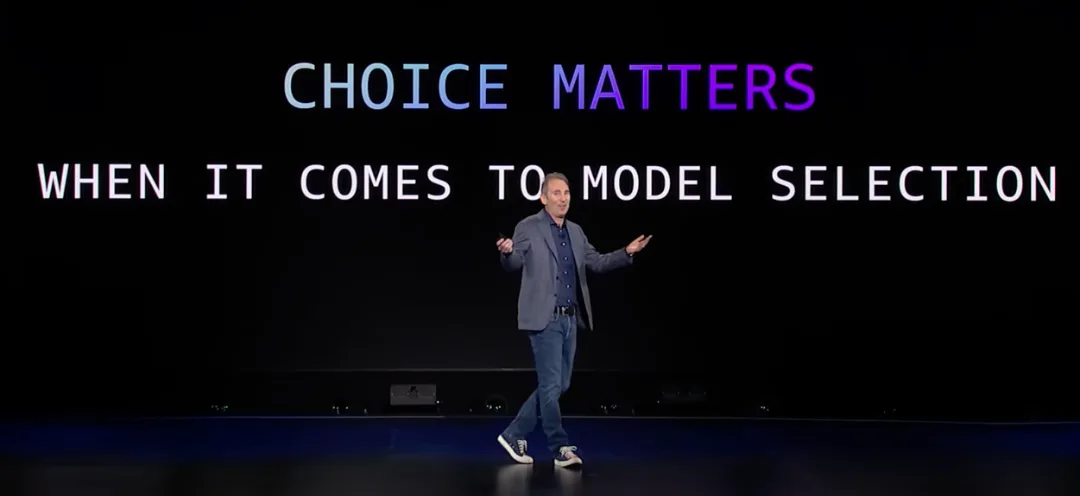
The past week underscored a shift in how teams approach frontier models: the calculus has moved beyond raw capability to encompass cost, latency, and task fit. Three new models arrived on Amazon Bedrock to illustrate this trade-off. OpenAI released GPT-6 Sol, designed for the sustained demands of development and operations work, alongside GPT-6 Luna, which handles focused, repeatable tasks at volume. Both carry substantially lower price tags than their GPT-5.6 counterparts. Anthropic's Claude Opus 5.5 completes the trio, consuming fewer tokens than Opus 5 while optimizing for agentic coding and extended operations. The common thread across all three is pragmatism: selecting the right model for the job rather than defaulting to the largest available option.
Major launches this week
Amazon CloudWatch Omni emerged as a significant step forward for observability in the age of AI agents. The service consolidates application and agent monitoring into a unified interface built on OpenTelemetry, eliminating the need to reconfigure existing telemetry pipelines. Teams access the platform through a single URL with enterprise SSO, bypassing console access requirements. The system automatically discovers services, maps their interdependencies, and integrates AWS DevOps Agent into investigation workflows to correlate signals and identify root causes.
Amazon EventBridge introduced an enhanced custom event bus tailored for organizations deploying event-driven architectures across multiple teams and accounts. A centralized bus can now span an entire organization through AWS RAM, with optional event ordering, a streamlined Subscriber resource that consolidates filtering, targets, and retry logic, content-based deduplication, and synchronous invocation for targets such as AWS Lambda. The new pricing structure—based on ingress and egress—replaces the cascading charges that accumulated with multi-bus cross-account routing, while existing buses remain functional as "classic" deployments.
Amazon SageMaker HyperPod Inference Gateway brings Kubernetes-native, GPU-aware routing to LLM inference workloads. Deployed as a single Amazon EKS managed add-on without application modifications, it replaces round-robin load balancing with real-time inference metrics—KV cache utilization, queue depth, prefix cache hit rates, and predicted latency—to reduce first-token latency by up to 82% in mixed-hardware and bursty scenarios. The gateway supports any OpenAI-compatible model server, including vLLM and SGLang.
AI agent skills for Amazon SES and AWS End User Messaging enable teams to compose and dispatch messages through natural language commands to coding agents. Both services publish AI agent skills to the AWS MCP Server, offering step-by-step, validated workflows for identity verification, production email dispatch, and branded RCS agent construction with cards and buttons. The skills integrate with Claude Code, Codex, Cursor, and Kiro, allowing teams to complete messaging tasks without switching between documentation and console interfaces.
Additional announcements and resources
The Strands Agents team released Strands harness, an open-source, general-purpose agent framework available under Apache 2.0 for local execution or deployment anywhere. A single line of Python or TypeScript connects to models across Amazon Bedrock, Anthropic, OpenAI, Google, or local Ollama instances. The harness includes built-in defaults for prompt caching and context management—truncating oversized tool outputs, compacting when context windows approach capacity, and preserving memory across sessions. Testing shows it achieves approximately 28% lower costs than comparable harnesses on identical models while maintaining accuracy.
AWS earned Leader status in the 2026 Gartner Magic Quadrant for Container Management for the fourth consecutive year. The recognition reflects progress across Amazon ECS Express Mode, Amazon EKS Auto Mode, and the 99.99% availability SLA on the EKS Provisioned Control Plane. Containers are increasingly becoming the default infrastructure layer for building and running AI agents.
The AWS Executive in Residence team published the new AWS Reimagine report on AI following nine months of interviews with 154 leaders across 27 countries. The research examines what distinguishes organizations that extract value from AI investments from those that do not. A recurring finding: once development velocity increases, the constraint shifts to decision-making, resource allocation, and governance of AI initiatives.
Upcoming events
- AWS re:Invent returns to Las Vegas from November 30 to December 4, with session schedules, venues, and speaker lineups now available. Reserved seating registration opens October 6.
- AWS Summits conclude the year with a final stop in Dubai on September 30 at the Dubai World Trade Center, featuring 60+ sessions, an AWS Village, and hands-on workshops.
- AWS Community Days, organizer-led conferences, include events in Manchester, UK (October 1) and Rome, Italy (October 2).